














Final Judgement: The day the critics will be silent
Claiming justice is history’s refrain, and it has a significant echo in the Bible. We all dream of a happy ending and a fair judgement as soon as possible. Heaven itself is surprised that God has delayed His holy justice. While some wait for it, others quash even the very thought that it might come.

Suicide: What does the Bible have to say about it?
Every human being, without exception, is a potential suicide. If we look at suicide as a process of self-judgment, condemnation, and execution, every human being walks down this path, at least some of the way.

The death of Death: Easter and eternal life
Ultra-rich Silicon Valley tech magnate Bryan Johnson has been regularly having transfusions of his own son’s blood plasma in an effort to live longer. The treatments are expensive and are essentially still being trialled.

Prayers of thanksgiving and praise
When we think of gratitude and a lack of gratitude, the biblical scene that comes to mind is the healing of the ten lepers, of whom only one, a Samaritan, returned to thank the Saviour, worshiping and praising God in a loud voice (Luke 17:15-16).

Divergence and confluence
My daughter recently posted on our family website a photo of our niece celebrating while holding a beautiful fresh rose, tall and slim, just like her. I looked at the photo for a long time then wrote under it: "Two vines." I pondered some more then wrote, "One of these vines knows why it is here on Earth, but I wonder if the...

The portrait of religion, in scientific colours
More than a century ago, when the social sciences were just beginning to study the relationship between religion and health, elite scholars such as sociologist Émile Durkheim, Sigmund Freud, the father of psychoanalysis, and philosopher Friedrich Nietzsche repudiated religion consonantly, claiming that it had a toxic effect on individuals.

Marathon ended
I doubt there’s a person who hasn’t heard of the Boston Marathon bombing, which took the lives of three people. As runners entered the home straight, with the finish line in sight, first one then another explosion ripped through the happy, watching throng.
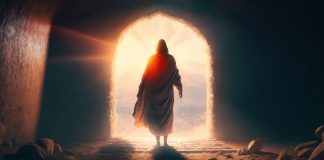
What did Jesus think about Himself?
Jesus Christ is certainly the most fascinating and controversial person in human history, if we look at how He has been understood throughout the history of Christian thought. But how did Jesus understand Himself?

Misleading bridges, and better prayers
Bridges seem to be the emblem of existential stress for Romanians. In the face of a difficult situation, even Romanian folk wisdom recommends: "Make a pact with the devil until you have crossed the bridge."

Broken dreams: The lessons we learn through failure
We often say God is good, especially when, after threatening to go dangerously off track, life resumes its regular course. But what is left to say when all that remains of our dearest dreams is a handful of shards that can no longer be glued together?

The lost faith
Faith is a commonly used concept, but it is rarely understood in its rich semantics and philosophical implications. Christian faith rises above being defined by lists of doctrines, beliefs, moral principles, commandments, and liturgical rituals in the communicator's mind for its nature and content to be faithfully represented.

Cynicism as helplessness
The events of July 2016 deepen the social gaps that have become a mark of the 21st century. In an increasingly absurd dialogue of violence, the fighters are radicalizing. Some become religious fanatics, others nationalists. Some become terrorists, others xenophobes. What is constant is the spiral of resentments. On the other hand, the disarming spectacle of political imposture continues. Trump and, more recently...

Does God listen to my prayers?
If there is a crossroads where both the path of faith and the path of doubt or unbelief begin, it is prayer.

A meaningful Christmas
Christmas involves a financial and, at the same time, an emotional expense. Even in times of crisis, the spending season lasts longer than the holiday itself.

The inexhaustible Jesus
I am captivated and deeply impressed by Jesus's perspective on life and the world. He did not seek popularity, did not pursue power, and did not promote revolution. He did not rely on strategies and did not do politics. He did not come to criticize, He did not build His authority on the backs of other people's weaknesses, and He did not come...