












My Friend’s Friend | Friendship and God
You really don't realize what your thoughts about God are until you have nothing left but the conviction expressed in the book of the prophet Jeremiah: My Father, my friend from my youth (Jeremiah 3:4).
Jesus: The Word and His words
Jesus' principles can still shape a sincere discourse even though many centuries have passed since the moment they were displayed in His life.
The counterfeit motif in the apocalyptic scenario
There is a lot of talk today about the fact that things are not what they seem. It is not easy to distinguish between conspiratorially motivated speculation, and the real hidden things of our world—but most of the time the sources make the difference.

The tower dedicated to pride
Jeddah is different, at least according to its city motto. This Saudi Arabian port city on the Red Sea is home to more than 4 million people and is a gateway to Mecca: the holiest city in Islam. Millions of pilgrims come through Jeddah to visit Mecca, some 65 kilometres to the east, and Medina, Islam’s second holiest city, 360km to the north.

I believe in God even when He is silent…
I have always liked to participate in public worship and to practice some of the spiritual disciplines. I did not experience a stormy conversion. God revealed himself to me, instead, like “a gentle whisper” (1 Kings 19:12).
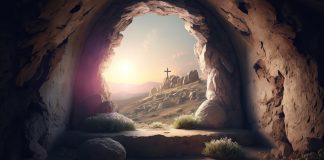
The miracle of my resurrection
By the year 2022, I had not lost anyone close to me, but I had the feeling, as never before, that death was approaching with unexpected speed. The war that was taking place to the east of Romania, and the news that we were in second place in the world in terms of the number of deaths per thousand inhabitants, made me think...
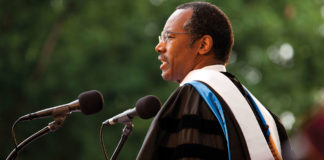
On the side of God and logic: An interview with Dr Ben Carson
Benjamin Solomon Carson is the famous American neurosurgeon who, in 1987, became the first to successfully separate twins conjoined at the head.

Hope from the pit
Fire falling from the sky. A massive tsunami. An abandoned city. Let’s be real—it’s probably Los Angeles or New York (although sometimes Sydney or Hong Kong makes a cameo). These are the images we most often associate with the end of the world. Whatever comes to mind for you, no doubt it has been shaped in large part by literature, art and, of...

How to enjoy closeness in your relationship with God
Could we have a quality Christian ministry without an authentic relationship with God? Anyone can pretend in the short term, but to truly succeed in the long term you need a devotional life full of passion and a continual closeness to Jesus Christ.
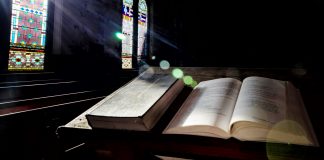
Pietism within the Protestant Reformation
Pietism was a movement of spiritual revival that took place between the seventeenth and nineteenth centuries mainly in Germany and Bohemia.

The emancipation of a free man
Louis Zamperini experienced the bizarre smell of death so many times that he came to the verge of losing his mind. However, he survived, and by choosing to forgive the unforgivable, he was able to breathe life into an entire world.

The mystery of the incarnation
The birth of Jesus Christ is one of the most significant events in human history. Celebrated at Christmas, by some with emotion, by others with indifference, most of the time the holiday loses sight of the main Character. Religious meanings remain in the shadows, while commercial dimensions are pursued at all costs.

The end of the world, according to Jesus’ teaching
Much has been written about the end of the world, but, if this end coincides with Christ’s second coming, then we should enquire from Jesus Himself what he teaches about His return. We will do this by using the material of the Christian Gospels.
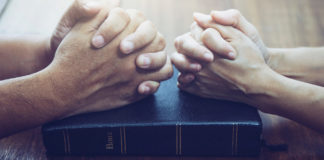
When faith falters, and couples drift apart
Live the questions now. Perhaps you will then gradually, without noticing it, live along some distant day into the answer. – Rainer Maria Rilke
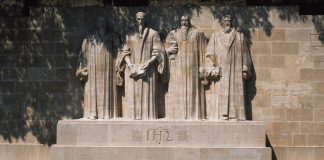
John Calvin
In The Legacy of John Calvin, David W. Hall divides leaders into two categories. Some predict the future, and others change it. Calvin, Hall said, is in the second category.