














Prayer “in the Name of Jesus”
"And I will do whatever you ask in my name, so that the Father may be glorified in the Son. You may ask me for anything in my name, and I will do it" (John 14:13–14).

What is the purpose for which God created us?
Life is a fascinating mystery and a constant challenge. Yet, often, we are not content with merely experiencing life as it is.

Two steps back, but three steps forward
On the morning of the 15 November 2016, I awoke in a hospital bed, with no memory of how I got there. My favourite pyjamas had been torn from my body, and I lay in a hospital gown, a piercing pain in my head, impaling my brain. I was barely able to think and incapable of speech. I was scared, though this was...

Redefining the impossible
The mix of emotions a family goes through when expecting a baby is both wonderful and terrifying.
When everything seems to be in order, the...
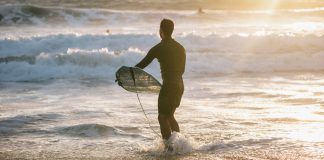
Not by sight
Born into a family of surfers, one could say the love of the salty ocean air courses through the veins of his body. Named after legendary surfer Derek Ho, even his name embodies the hopes and expectations of what he was to become.

Consoling faith
I generally don’t like going to funerals, but they come in many different forms and feels. Some seem sadder than others; some feel more hopeful. But often there’s an unexpected bittersweetness. We are all there because of something good—the life, love and relationship that we are there to remember and honour—that has come to a tragic end, always too soon.

Decoding the EU’s connection to end times and Bible prophecy
With news that the far-right Freedom Party (PVV) has won the election in the Netherlands, once again there is talk of an exit from the European Union on the horizon—this time being called “Nexit”.

COVID-19: What have we learned about ourselves?
Courage is not the opposite of fear, nor of caution. True courage is what you do right in the midst of fear.
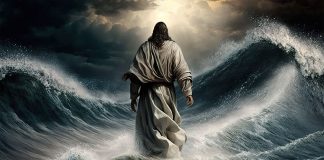
Through the storm with God by your side
"Even to your old age and gray hairs I am He, I am He who will sustain you. I have made you and I will carry you; I will sustain you and I will rescue you" (Isaiah 46:4).

Strong prayers to the hidden God
No one has ever seen God, but the One who knew Him before He was born on this earth taught us all to address Him in prayer.

How does God answer prayers?
“I will stand at my watch and station myself on the ramparts; I will look to see what he will say to me” (Habakkuk 2:1).

Insomnia and God’s bird
Carolynn Yakush inherited her taste for the good life from her Czech grandparents, and her interest in faith from her mother and the Christian schools she went to. For many years, the desire for money and a life of luxury overshadowed her spiritual and religious concerns. One day, almost without thinking about it, she entered a church again, and was amazed at the...

The greatness of an ordinary life
From an early age, we are bombarded with messages telling us to stand out, to make something of ourselves, to do something great with our lives. Many times the voices are religious in nature: God has great plans for us, He will do truly remarkable things with our lives.

What do you do when you reach the end of love?
When I'm tired I can't love! Many times I have lived this reality and even assessed it as the exact end of love.

Does life have meaning, or not?
When I ponder the statement, “Life holds potential meaning under any condition, even the most miserable,” the story of an anonymous woman comes to my mind. She made a deep impression on me and taught me about two existential states: having, and being.