










The surprise of this very night
''The ground of a certain rich man yielded an abundant harvest. He thought to himself, ‘What shall I do? I have no place to store my crops.’ Then he said, ‘This is what I’ll do. I will tear down my barns and build bigger ones, and there I will store my surplus grain. And I’ll say to myself, 'You have plenty of grain...
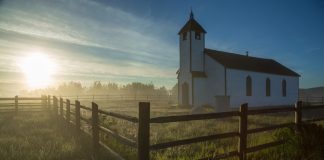
Into the wilderness with God
This year marks the 58th anniversary of Time magazine's controversial cover question: Is God Dead?

What do dreams mean?
Last night I had one of those dreams. You know, the kind you wake up from and remember. Basically, there were a lot of things that were unusual, but people and places that were familiar—common themes for many who remember their dream content.

Reasons for the cross of Christ: why was His sacrifice needed?
The name of Jesus brings to mind the gift of the incarnate Godhead—their supernatural acts, astonishing wisdom, incomparable goodness, unmitigated innocence, supreme sacrifice, offered salvation, and our only certain hope.

What we can learn from children facing death
For many years, Dr Jonathan Ward was a military chaplain. When I talked to Dr Ward about his long career, we touched upon some sensitive topics: Does the presence of a Christian chaplain in the military mean God’s approval of military operations? How does a military chaplain serve in the context of a conflict?

How to grow together with God
We’d been married only a few weeks when we discovered that growing our spirituality as a couple was going to be much more complicated than the instructions on the packet suggested.

Staring loss in the eye | Lessons from life’s disasters
In the aftermath of Hurricane Harvey, Max Lucado wrote an article summarising the spiritual lessons we can learn from an event that the news described as a "once in a thousand year flood".

The spiritual community of readers
For almost six years, I relentlessly pursued Dr. Bill Knott to interview him for the programme Starting Point. He had been editor-in-chief of the Seventh-day Adventist Church's official publication, Adventist Review, for a decade. Finally, in early 2016, we sat down for an interview in which we discussed how he developed his talent as a writer and the current significance of the Adventist...

Conspiracy: from Lord of the Rings to the era of fake news
Towards the end of the Lord of the Rings trilogy, there is a final showdown between Frodo and Smeagol. Smeagol tries to regain possession of "My Precious", and when Frodo resists, Smeagol tries to strangle him. One scene in this part shows Frodo shocked that Smeagol has broken his promise and, though on the brink of death, sees fit to plead for honour:...

Evolution: Impossible
Dr. John Ashton of Newcastle, Australia, is a compelling example of a serious research scientist who bases his beliefs regarding the origins of the universe and life on the Bible.

The Second Coming: Escape or Energiser?
"Lianne struggled with the idea of God," Don DeLillo’s narrator says of one of the characters in his novel, Falling Man. "She was taught to believe that religion makes people compliant. This is the purpose of religion, to return people to a childlike state… . We want to transcend, to pass beyond the limits of safe understanding— and what better way to do...

Happiness is under the shadow of closeness
The first few seconds are confusing, voices and blurred figures buzzing nearby, and it seems to me that some clumsy hands are trying to pull me out of this zigzag between sleep and wakefulness. I clearly hear a woman's voice announcing that I'm waking up and, before I'm completely out of this state of drowsiness, I realise I'm in intensive care.

The migration of trust in the digital age
Trust is the main currency of the age in which we live, and people seem to be changing the directions they invest in faster than in the past. How is our life of faith influenced by how we relate generally to trust?

The last tear
I found myself at the airport, waiting to board my flight. At one point, the speakers announced the names of four people who were expected at a nearby boarding gate. Their names were called three times. Eventually, the airport staff withdrew, and the door closed behind them. Shortly afterward, a modest-looking family appeared. The confusion in their eyes, as they glanced left and...

Jim Ayer | Forever a fisherman
Jim Ayer was, for most of his life, a slave to his own dreams—a fisherman of thrills and addictions. From when he was a child, he attached a ball and chain to each ankle, closed himself up in his own world, and threw away the key.