












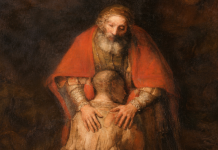

The opposite of love is not hatred (part 1)
For centuries, the sacrifice of God the Son and the divine plan for man’s salvation have generated several dilemmas and raised more questions than we could imagine. And the answers that have been found have revealed more implications of the cross than we used to believe, whether we are Christians or non-Christians, believers or skeptics.

COVID-19: The pandemic that transforms us into different people
In Europe, one in twenty people suffer from depression, and one in four will experience depression during their lifetime. In the United States, major depressive disorder affects about five percent of the population.

COVID-19: A certain God in an uncertain world
“If anything kills over 10 million people in the next few decades, it’s most likely to be a highly infectious virus rather than a war — not missiles but microbes. We are not ready for the next epidemic” – these were the words Bill Gates said at the beginning of his speech at TED Talk conference on April 3, 2015.

Never enough: an imperfect article on perfectionism
The end of the line for Christian perfectionism is not perfection, but atheism. This is because what we imagine to be the constant unsatisfied look of God upon us, is a burden too heavy for any human to bear.

Why did Jesus have to die for us?
Taken as a whole, this question sounds like a painful cry, springing forth from the depths of the human being, in the midst of the darkness of uncertainty and doubt. This question, however, consists of multiple sub-questions. We will address these essential questions that will open our minds to the light of the teachings of Him who holds all knowledge and truth.

Reasons for the cross of Christ: why was His sacrifice needed?
The name of Jesus brings to mind the gift of the incarnate Godhead—their supernatural acts, astonishing wisdom, incomparable goodness, unmitigated innocence, supreme sacrifice, offered salvation, and our only certain hope.

Lewis and the Lion
We have become so accustomed to authors and researchers being highly specialised in niche fields, that we are tempted to be skeptical of works they produce outside of their accepted field of expertise. It seems bizarre therefore that an author of children's literature could also be a professor at Oxford and Cambridge and an expert on the medieval era.

Evolution: Impossible
Dr. John Ashton of Newcastle, Australia, is a compelling example of a serious research scientist who bases his beliefs regarding the origins of the universe and life on the Bible.

COVID-19: Could giving up ever be the key to success?
Pray! If not to God, then to a god. Admit that we are defeated, because this is the first step towards victory.