













COVID-19: Hope overcomes the fear of the unknown
In the spring of 1936, the members of the Lykov family made a decision that would change their lives forever: they disappeared into the Siberian taiga, completely isolating themselves from the world for the next 40 years.
What do you do when you reach the end of love?
When I'm tired I can't love! Many times I have lived this reality and even assessed it as the exact end of love.

How did Jesus view the Scriptures?
Jesus had the highest regard for the Scriptures. The Gospels show that He was familiar with the content of the Scriptures, which He saw as the final authority for establishing truth, rejecting temptation, and choosing the way forward in the present and the future.

The God of love, the God of justice
Centuries ago, the German theologian and philosopher Gottfried Wilhelm Leibniz used the term “theodicy”1 for the first time—“God’s justification”. By theodicy, Leibniz meant the ultimate reality of justification, once and for all, of God and all of His ways before the whole universe.
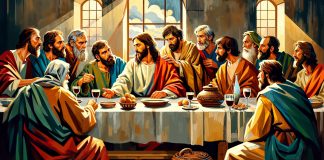
Paul’s savage class critique in 1 Corinthians
If you’ve ever been to a Christian church, there’s a good chance that you’ll have experienced a unique ritual involving bread and grape juice: the Lord’s Supper, or as we’ll refer to it, Communion. Depending on the denomination, your experience may vary wildly. You may be offered a cup that everyone collectively sips out of, accompanied by a piece of bread. Others will...

Uncertain certainties and the fragility of reason
“For a long time I supposed that somewhere in the university, there were really clever people whom I had not yet met, and whom I should at once recognise as my intellectual superiors, but during my second year, I discovered that I already knew all the cleverest people in the university. This was a disappointment to me, but at the same time gave...

Can I trust the Bible?
The Bible is not the product of an event or a circumstance, but of time, study and especially of the journey that humanity took on its way to its development. But could it be that all the time that has passed has also eroded its relevance? How much confidence can we still have in the Bible, in the 21st century?

COVID-19: Life in the shadow of death
I am not an expert on the phenomenon of death. But like all of us, I have to live in its shadow, and watch the restlessness and greed it causes. The same gloomy reports that circle the planet also reach me. I feel especially conscious of this as COVID-19 claims its first victims in my country.
The courage to believe
Who was Jesus really? While His historical existence is no longer questioned, many people believe that He was at best an exceptional personality of His time, a reformer whom His disciples later transformed into a deity. Why is neo-atheism concerned with promoting such a Jesus, and why is He nothing more than a new form of doubt?

The end of the world: on the list of convictions that frighten us
A good survey of people's thoughts on the end times would not seek to find out whether people believe the world will end or not. Rather, it would seek to know what their thoughts are on when and how the end will come. Regardless of the source of their belief—religious or secular—most people have come to see the idea of the end of...
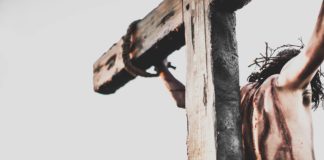
The opposite of love is not hatred (part 1)
For centuries, the sacrifice of God the Son and the divine plan for man’s salvation have generated several dilemmas and raised more questions than we could imagine. And the answers that have been found have revealed more implications of the cross than we used to believe, whether we are Christians or non-Christians, believers or skeptics.
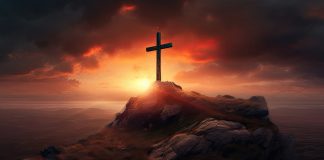
Foreshadows that illuminate | How Christ was known before the incarnation
The Passion and Resurrection of Jesus Christ—or the Christian Easter—stand out distinctly in the crowded landscape of global religious beliefs and ideas. No other religious tradition contains the concept of a divine person offering Himself as the unique and sufficient mediator through whom God draws near to humanity, and humanity draws near to God.


The only stranger in Jerusalem
On the days of the death and resurrection of Jesus Christ, there were at least ten other events that would have disrupted and animated any editorial meeting. Within a very short space of time, unique events with historical implications took place, in different dimensions and in different areas.

The imperatives of absence
Contrary to one's initial impression, vigilance is not the main theme of Jesus' parables of "absence and expectation." Absence is central to these stories, because it is absence which enriches them, rather than impoverishing them. Absence is not a shortage, a gap, or a sign of non-existence—it is a catalyst.