














The mystery of the seventh day (III)—Was Jesus a legalist?
In the first two articles of this series, we examined the biblical theology of the Sabbath in relation to the divine act of creation, the history and theology of the people of Israel and early Christianity. This third and final article in the series will examine the Sabbath from the perspective of legalism, under which some commentators have placed seventh-day observance.

Rest through faith—a form of countercultural resistance
"Hi, Alina! I hope you had a productive weekend" was the opening line of an email that, to me, encapsulated a whole misguided philosophy of life.

Love in the Time of COVID-19
As we know all too well, life can be hard. Even in the best of times, life can be hard. But now this, a pandemic? How are we to cope?

The spring of happiness never runs dry
Immersed in contemplation, I eagerly remove the gnarled, wet roots. As my thoughts drew closer to the tenuous yet vigorous spring beneath them, a word intersected my search like an intense beam of light. Harmony. I felt as if the tips of my thoughts had reached the source of the experience I was trying to decipher—happiness.

Jim Ayer | Forever a fisherman
Jim Ayer was, for most of his life, a slave to his own dreams—a fisherman of thrills and addictions. From when he was a child, he attached a ball and chain to each ankle, closed himself up in his own world, and threw away the key.

Understanding suffering better
"And we know that in all things God works for the good of those who love Him" (Romans 8:28).

COVID-19: A certain God in an uncertain world
“If anything kills over 10 million people in the next few decades, it’s most likely to be a highly infectious virus rather than a war — not missiles but microbes. We are not ready for the next epidemic” – these were the words Bill Gates said at the beginning of his speech at TED Talk conference on April 3, 2015.
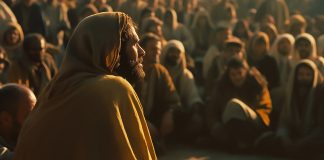
Jesus also loved…
"History shows how surpassingly difficult it is for Christians not to forget Christ," says Professor Chris Green. Forgetting does not mean losing sight of His existence, but rather losing sight of His way of being, His values, and His way of relating to those around Him.

“Do not keep on babbling” | Public prayer and its challenges
The way we pray in public reveals what our secret prayers are truly like. Beyond mere words, it is our attitude and motivation that give meaning and substance to prayer.

The uncertainty of the religious man
Pliny the Elder wrote, in Naturalis Historia, a well-known adage: "Among [mortals] the only certainty there is is that nothing is certain."[1] Few know that Pliny made this statement in a chapter on the gods.

Reasons for reading the Bible
For some, it is an old-fashioned tradition, fanaticism or bizarre practice. For others, a talisman to attract divine favour. Is there anything more to the Bible than an intimidating jumble of genealogies, symbols, and instructions?

The Second Coming Files: A 2000-Year Inquiry | Part V: Nineteenth-Century Millenarianism in the British Isles
After covering the historical evolution of the Christian teaching about the return of Jesus Christ in the first three articles, in the fourth article, which precedes the one that you’re reading now, I made a minimal review of some philosophical, political, religious, and esoteric currents that are important to understand the world in which the millenarian revivals of the 19th century emerged.

From heartache to hopeful
It’s not hard to misinterpret the Bible. I’ve done it, most people I know have done it and if you’ve read it enough, I’d bet you’ve done it too. It isn’t surprising then, that throughout history many have misinterpreted the Bible, especially when it comes to complex ideas like the end of the world and Jesus’ second coming.

Old Testament and New Testament | The unity of Scripture
The Bible has 66 books written by different authors over about 1,500 years. Is there a common theme, a leitmotif? If so, which is it? Is there an Old Testament God and a New Testament God?

Can I trust the Bible?
The Bible is not the product of an event or a circumstance, but of time, study and especially of the journey that humanity took on its way to its development. But could it be that all the time that has passed has also eroded its relevance? How much confidence can we still have in the Bible, in the 21st century?