














Clash of sexual cultures (II)
Jessica was 19 when she had to tell her parents, both practicing Christians, that she was pregnant. That moment generated a real earthquake in the young woman’s family who, together with her boyfriend at the time, had been strongly involved in the purity movement, an ideology that promotes sexual abstinence until marriage, for religious reasons.

Waters of death, waters of life
I still remember it like it was yesterday: the brightness of the sun on my skin, the chill of the water, the crowds of cheering people. We had gathered that Saturday afternoon on the shores of Lake Jindabyne, a half-hour drive from Mount Kosciuszko, Australia’s tallest mountain.
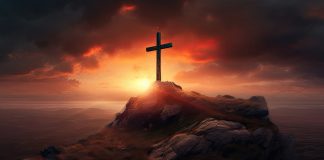
Foreshadows that illuminate | How Christ was known before the incarnation
The Passion and Resurrection of Jesus Christ—or the Christian Easter—stand out distinctly in the crowded landscape of global religious beliefs and ideas. No other religious tradition contains the concept of a divine person offering Himself as the unique and sufficient mediator through whom God draws near to humanity, and humanity draws near to God.

Broken dreams: The lessons we learn through failure
We often say God is good, especially when, after threatening to go dangerously off track, life resumes its regular course. But what is left to say when all that remains of our dearest dreams is a handful of shards that can no longer be glued together?

Jesus’s atypical vocabulary
From the speech of Jesus, who was a perfect speaker, we would expect there to be no fiery insults or harsh terms.

Maimonides and Jesus of Nazareth
In the turbulent times of the first crusades to reclaim Palestine and Jerusalem from the Muslims, a Jew was born in 1135 AD in Cordoba, the capital of Muslim Andalusia. His influence would leave a strong mark not only on Jewish thought but also on Christian and Islamic thought. His name was Moses Maimonides, or Rabbi Moshe ben Maimon.

The marks of (un)belief
I believe that doubt is a part of faith, not its opposite. It took me quite a few years to say this without feeling guilty. I needed to have many experiences before I could accept that questions are legitimate and not a sign of spiritual decay.

One taken and the other left
Some people who have avoided death in a plane crash by missing a flight, whether through being delayed or being denied boarding, say with great conviction: "God was with me." But for those who seek comprehensive explanations for such things, the obvious question is: why was God with them and not with those who perished?

He survived genocide
More than three decades have passed since the horrific genocide in Rwanda. Amid the outburst of murderous rage, there were people—both Africans and foreigners—who stood in the way of the hatred and bloodshed.

Does God listen to my prayers?
If there is a crossroads where both the path of faith and the path of doubt or unbelief begin, it is prayer.

Daniel: on the pedestal of history
On the pedestal of history, holding the flame of freedom—that's how the Book of Daniel has stood since it first appeared, more than 2500 years ago, and how it continues to stand today. It is a divinely inspired introduction to the book of Revelation, and together they represent the extension of the gospel beyond the apostolic generation up until the return of Christ,...

What about hypocrisy?
Jesus’ woes are not uttered primarily in the face of sins such as theft, debauchery, or murder, about which we are so horrifed)—often hypocritically. His woes are directed precisely against hypocrisy[1], a form of soul pollution to which we often relate, unconsciously or not, laughing or smiling knowingly.
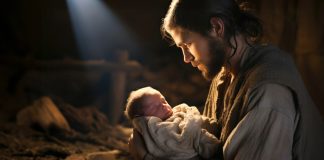
Becoming the father of the Son of God
In the history of salvation, few people have received a more unsettling calling than Joseph of Nazareth. After overcoming his initial hesitation, he made a series of decisions born of obedience. He remains a model of mature faith and authentic manhood.
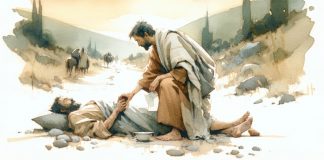
The genuine goodness of that Samaritan
Being a Good Samaritan isn’t just about doing good—it’s about embracing the kind of life Jesus wants for each of us.

How did Jesus view the Scriptures?
Jesus had the highest regard for the Scriptures. The Gospels show that He was familiar with the content of the Scriptures, which He saw as the final authority for establishing truth, rejecting temptation, and choosing the way forward in the present and the future.