









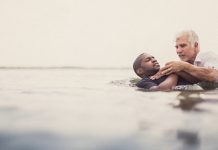




1,000 years later
Christianity is fundamentally built on the belief that the life and mission of Jesus Christ on earth were a continuation and fulfilment of God’s earlier revelation, known as the Old Testament.

Breaking the crisis cycle
In 1991, authors William Strauss and Neil Howe published Generations, theorising that every 80 years (one generation cycle) would consist of four “turnings”. Beginning after a crisis, the first turning would involve a feeling of recovery, or “high”. The second would be a spiritual awakening, while the third would see the dissolution of institutions and the rise of individualism. And finally, a crisis...

COVID-19: A certain God in an uncertain world
“If anything kills over 10 million people in the next few decades, it’s most likely to be a highly infectious virus rather than a war — not missiles but microbes. We are not ready for the next epidemic” – these were the words Bill Gates said at the beginning of his speech at TED Talk conference on April 3, 2015.

Fear of war: how to soothe our hearts
When the fear of war overwhelms our thoughts, let us not forget that we are not alone, that God will end our suffering and give us a new and everlasting life.

The uncertainty of the religious man
Pliny the Elder wrote, in Naturalis Historia, a well-known adage: "Among [mortals] the only certainty there is is that nothing is certain."[1] Few know that Pliny made this statement in a chapter on the gods.

COVID-19: Fake news, now and ever
Elisa Granato, one of the first people to be tested for a Covid-19 vaccine, died. The news rolled in the virtual media 6 times faster than other news.[1] Keep this number in mind. This is important because, as we learn from a study published in Science, fake news spreads on average 6 times faster than genuine news. And not only faster, but also...

The testament of Jesus
We experience a feeling of urgency as a consequence of the fear of failure, or the fear of missing out (on people, opportunities, time, good things). Urgency is, therefore, a corollary of fear. Today’s Christianity, hailed by loud voices as near extinction, can easily fall into the trap of undue urgency to quickly regain what has been lost.
The conditions for courage (I)
Motto: "Fear is a reaction. Courage is a decision." (Winston Churchill)

The most important primary caregiver
According to attachment theory, originally formulated by John Bowlby and later refined by Mary Ainsworth, adults’ relational patterns are formed according to the model of the close relationship they formed in early childhood with their primary caregiver, who is usually the mother.

A fulfilled life in the presence of God: the picture
A fulfilled life is built on the foundation of faith and the desire to imitate the character of God, in a world conceptualised around the truth.

Messages from above
One day, Jesus’s disciples—who followed Him about, observing His every word and action—asked Him to teach them how to pray.

An encounter with kindness
Sartre may have been right when he said Hell is other people. Yet, for some, their first step toward Heaven is meeting the God who shelters in someone else's soul.

How to befriend the future
What is the future? The question may seem trivial. But when you think about it, you understand better what St Augustine confessed: "What then is time? If no one asks me, I know; if I want to explain it to a questioner, I do not know".

The imminence and delay of the eschaton
This article addresses the two often conflicting aspects of the parousia: its imminence and its delay.
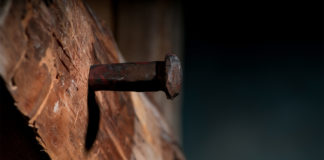
Why did Jesus have to die for us?
Taken as a whole, this question sounds like a painful cry, springing forth from the depths of the human being, in the midst of the darkness of uncertainty and doubt. This question, however, consists of multiple sub-questions. We will address these essential questions that will open our minds to the light of the teachings of Him who holds all knowledge and truth.