














Miracles or superstition? | An a posteriori response to the anti-supernaturalist assumption
Up until the Enlightenment, the idea that the miracles recorded in the pages of the Bible happened as the biblical writers described them was widely accepted. With the rationalism of the seventeenth and eighteenth centuries, an alternative theory emerged: that miracles were not possible in naturalistic metaphysics.

Waters of death, waters of life
I still remember it like it was yesterday: the brightness of the sun on my skin, the chill of the water, the crowds of cheering people. We had gathered that Saturday afternoon on the shores of Lake Jindabyne, a half-hour drive from Mount Kosciuszko, Australia’s tallest mountain.

The last days of Jesus in Bible prophecy
The story of Jesus's first coming to earth is remarkable, not only because it was foretold thousands of years in advance, but also because the prophesied details of His passion and death were exactly fulfilled.

Misunderstanding a “memorable misunderstanding”
The spontaneous generation of life on Earth is as likely as a whirlwind putting a Boeing 747 together using scattered spare parts in a junkyard.

An investigation into the credibility of the Apocalypse
"Between 1800 and 1820 more than 20,000 people emigrated from Württemberg to Russia...hastening to meet the coming Lord and to find on Ararat in the Caucasus the place of refuge at the end of the world. Johann Albrecht Bengel had calculated that Christ would come again and that the Thousand Years' empire would dawn on Sunday, 18 June 1836. The 'brotherly emigration harmonies'...

Rest through faith—a form of countercultural resistance
"Hi, Alina! I hope you had a productive weekend" was the opening line of an email that, to me, encapsulated a whole misguided philosophy of life.

Searching for glow-worms
With packs and tents strapped to our backs, it took our little group of three several hours to reach the hidden valley. The lush, green rainforest was cool and damp and as we gingerly clambered over moss-covered boulders, we attempted to follow an almost non-existent track that wound its way parallel to the mountain stream.

Steps towards a transforming prayer life
Whenever we acknowledge that our prayers have become a boring exercise rather than a real conversation with a real person, it’s time to explore creative, tried and tested methods to rebuild a meaningful, enthusiastic and transforming prayer life.
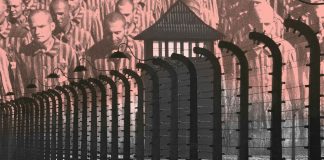
Forgiveness for the Nazi criminals
Most of our beliefs are easy to keep, as long as nothing puts them to the test. Like many others, Henry Gerecke discovered to what extent he truly believed in what he had preached for years when faced with a difficult choice.

The search for meaning
In The Simpsons episode entitled “Homer the Heretic,” Homer Simpson has a conversation with God.

Atheism at war
As the rising sun brought life and light to the east coast of North America, it was greeted by a brisk autumn morning. Hurricane Erin was on the move in the Atlantic, creating heavy rainfall from Newfoundland to Bermuda. A cold front saved most of the eastern seaboard from the hurricane’s destruction and the resulting high-pressure front produced clear skies—perfect conditions for air travel.

Jesus, a better hope
The veneration of saints is a very old tradition in Christianity. Many Christians cannot imagine their religion without appealing to saints for guidance, protection, healing and intercession. Less concerned with theological correctness, people seek the company of saints out of loneliness, hardship, sickness, fear, guilt, or disappointment.

Prayers of thanksgiving and praise
When we think of gratitude and a lack of gratitude, the biblical scene that comes to mind is the healing of the ten lepers, of whom only one, a Samaritan, returned to thank the Saviour, worshiping and praising God in a loud voice (Luke 17:15-16).

The portrait of Jesus (II): Jesus, the Lord and King
The Holy Scriptures call Jesus “the Lord”, that is, the Master. This was a respectful title used by slaves towards their masters in Antiquity. This is how subordinates addressed their superiors: children and their fathers; siblings, and their older siblings—or even a younger sibling who holds a high position.