














What do we do with the lingering sense of guilt?
I baptize you with water for repentance. But after me comes one who is more powerful than I, whose sandals I am not worthy to carry. He will baptize you with the Holy Spirit and fire. – Matthew 3:11

How to befriend the future
What is the future? The question may seem trivial. But when you think about it, you understand better what St Augustine confessed: "What then is time? If no one asks me, I know; if I want to explain it to a questioner, I do not know".

“Why do others love Jesus differently than we do?”
As strange as this question may seem, it is also difficult and has consequences that are not at all negligible. Even if it is not always phrased like this, or perhaps not even spoken out loud, this question arises in every home.

Cringeworthy!
When a visitor walks into your church, what will they see? What will they hear? How will they feel?

When one cries, the other tastes salt
Right at the start of the political thriller, The Post, a scene portrays military analyst Daniel Ellsberg with an empty gaze and a soul burdened by the horrors of the Vietnam war he was forced to document for the United States Department of Defense.

Are you gifted?
There’s something lying on a massive table. It’s a huge picture. You move closer and see that the design is made up of individual pieces, like a jigsaw puzzle. But the pattern is unusual. It isn’t an immediately recognisable image, such as a Swiss mountain or a bouquet of tulips.

God’s providence in times of crisis
Regardless of the form they take, crises give rise to legitimate questions about God's providence: Where is God when we suffer? Has He forgotten us? Is He punishing us? Does He still have things under control?

Old wine vs fake wine: how to distinguish the authentic religious message in today’s media polyphony
One can see today a growing concern among people who seek spirituality for relief, solutions and healing, both individually and collectively. It is an interest that arouses optimism about the role and impact that the Christian message can have on society, but also a concern for an accurate transmission of the biblical message.

Like colours in a cheap fabric
Soviet soldier Bakhretdin Khakimov was declared missing in action during the war in Afghanistan, which claimed the lives of 15,000 USSR soldiers and more than a million Afghans. Thirty-three years later, his family found out he was alive, living as a true Afghan among his former enemies.
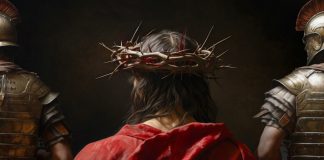
Silence of the Lamb
Slapped, spat in the face, insulted, falsely accused, lashed, ridiculed with a crown of thorns, passed from judge to judge and booed by the crowd, the Son of God chose the most unusual form of defence. Silence.

“God is dead”. Any objections?
The tendency toward the total privatization of religious life is particularly strong today, especially in the new generation.

The essence of Christmas
A magical Christmas, a magical evening, magical touch, magical love – people talk about magic when they experience special emotions that they cannot or would rather not explain. "Bring a little magic into your life". This is a saying that resonates extremely well with the expectations of an entire generation.

The break between the Old and New Testament and the dilemma of the unchanging God
My first Bible was given to me by Pastor Damian Zamfir in the winter of 1972. Pastor Zamfir, the man who led my first steps on the path to Christ, invited me to visit him in the parish house of the Adventist church on Rodnei Street in Targoviste.

Injustice and God: Is He the wrongdoer or the one wronged?
The concept of reward is one that encapsulates a world of joys, satisfactions, pleasant emotions, and accomplishments. It is usually correlated with what we do, what we say, who we are, and so on. We could say that it is an expression of our value in relation to the world. But any reward can be overshadowed by painful feelings when there is a...

How (not) to clip the wings of reformation
In the fourteenth and fifteenth centuries, Europe was hit hard by several disasters, the proportions of which are difficult to imagine today.