














Why did Jesus speak in “riddles”?
In order to communicate effectively, our speech must be clear and unambiguous. That is why believers tend to view the language of the Bible as a report: black and white, exact, without embellishments; just a dry sequence of facts.

The dilemma of unfulfilled Bible prophecies
There are predictions made in the Bible. Have all the predictions of the past been fulfilled? If not, what does the failure of some of them to be fulfilled say about the credibility of the Bible?

I didn’t know that God cries too
In those times when grief accompanies us and we find ourselves alone in the middle of the night, does God shed tears with us?

Friedrich Nietzsche, Christianity, and Jesus of Nazareth
“I condemn Christianity; I bring against the Christian church the most terrible of all the accusations that an accuser has ever had in his mouth... The Christian church has left nothing untouched by its depravity; it has turned every value into worthlessness, and every truth into a lie, and every integrity into baseness of soul... the cross as the distinguishing mark of the...

The rabbi (who never was a rabbi) who will never be forgotten
Given that no one could become a scholar without formal training, it is truly remarkable that Jesus, who was not formally educated, was nevertheless recognized as a “Rabbi” (Mark 12:14 cf. John 3:2).[1]

There are hidden gospels that expose religious manipulation. True or false?
On the basis of ancient, hidden non-canonical gospels, some commercial and half-learned scholars propagate sensational discoveries, which are in fact both old and novel speculations arising from the Bible’s silence on some aspects of Jesus’s life.

Prayer “in the Name of Jesus”
"And I will do whatever you ask in my name, so that the Father may be glorified in the Son. You may ask me for anything in my name, and I will do it" (John 14:13–14).
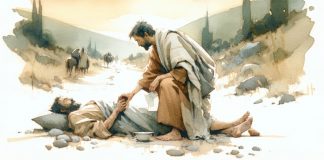
The genuine goodness of that Samaritan
Being a Good Samaritan isn’t just about doing good—it’s about embracing the kind of life Jesus wants for each of us.

Camping at the end of the world
I still remember May 21, 2011, like it was yesterday. Thousands of kilometres away in Boulder, USA, an evangelist named Harold Camping, president of the popular ministry Family Radio, was in the news spotlight. He had predicted that on May 21, more than 200 million Christians all around the world would be raptured away to heaven and that five months later, the world would end.

How can I know God as He is, rather than as I imagine Him to be?
To know God is an aspiration inherent in the rational being who recognises His existence.

The miracle of my resurrection
By the year 2022, I had not lost anyone close to me, but I had the feeling, as never before, that death was approaching with unexpected speed. The war that was taking place to the east of Romania, and the news that we were in second place in the world in terms of the number of deaths per thousand inhabitants, made me think...

Jesus, the God who understands me
Sometimes, I wonder what I would be like if I were more like Jesus. Above all, I wonder how He would act in my situation. I have to admit that these questions sometimes leave me feeling lost.

Faith that endures: A survival guide for troubled times
When all we have left is God and He remains silent, we need a faith that endures, even when our resources are depleted and we feel as though we have been forgotten.
The pursuit of signs and miracles
Back when I was a student, I heard this joke that, despite being funny, made me stop and think. It went something like this: a man starts hearing an "inner voice" telling him to sell his house, move to Bucharest, and use all the money to bet on a black 13 at roulette. The man complies without question because the voice spoke with...
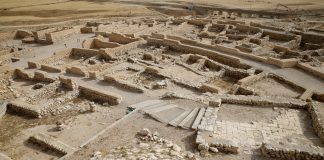
“Eternity In Their Hearts” | Book review
Born in Canada, in 1935, Don Richardson was a missionary who fervently carried on the Renaissance spirit of the great missionaries. Having studied at the Prairie Bible Institute and the (Wycliffe) Summer Institute of Linguistics, together with his wife, he worked as a missionary among the Sawi of Papua New Guinea for 15 years, and translated the Bible into their language. His books,...