










Camping at the end of the world
I still remember May 21, 2011, like it was yesterday. Thousands of kilometres away in Boulder, USA, an evangelist named Harold Camping, president of the popular ministry Family Radio, was in the news spotlight. He had predicted that on May 21, more than 200 million Christians all around the world would be raptured away to heaven and that five months later, the world would end.
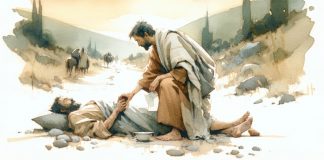
The genuine goodness of that Samaritan
Being a Good Samaritan isn’t just about doing good—it’s about embracing the kind of life Jesus wants for each of us.
The pursuit of signs and miracles
Back when I was a student, I heard this joke that, despite being funny, made me stop and think. It went something like this: a man starts hearing an "inner voice" telling him to sell his house, move to Bucharest, and use all the money to bet on a black 13 at roulette. The man complies without question because the voice spoke with...
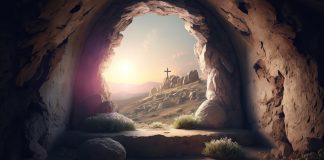
The miracle of my resurrection
By the year 2022, I had not lost anyone close to me, but I had the feeling, as never before, that death was approaching with unexpected speed. The war that was taking place to the east of Romania, and the news that we were in second place in the world in terms of the number of deaths per thousand inhabitants, made me think...
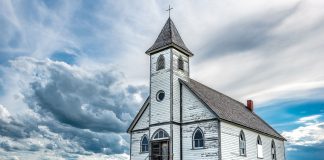
How to revive a dying church
Trying to describe a dying church like the one he was called to serve, Pastor Chris Lewis uses the image of a car "turned over, in a ditch, covered by weeds and beer cans, with a rusted out engine, and a couple of bodies in the trunk."

Waiting for hell
The idea of hell takes up a dark corner in most of our minds, whether we think about it or not.
“The Scandal of Grace” | A God who forgives (even) murderers
Contemplating a God who forgives any sin, no matter how monstrous, can be a stumbling block to those who believe there must be some reasonable limits to forgiveness. But it is also a reason for hope for those who might otherwise feel too sinful to seek Him.

When fear of death does not let you live
Anecdotally, they say that fear of public speaking is the biggest fear of mankind, after fear of death. Everyone smiles at this order of priorities, but no one disputes or discusses the fear at the top of the ranking.
God’s unfinished business
From the temple in Jerusalem to the final pages of Revelation, the Bible points toward a future where God finishes what He started.

Jesus is the argument
Celsus was concerned about the spread of the new sect called Christianity. He felt that Christianity's view of the world and of life was so different from the ancient world order that, if accepted by the majority, it would ruin society.

What Does the Bible Say About Contagious Diseases (like COVID-19)?
Since the outbreak of the corona virus pandemic, many people are asking faith-based questions. Is this a judgment of God on the human race? Is this a sign of the End? Does Bible prophecy speak about it? Even if people don’t believe in God or the Bible, they are wondering what their Christian neighbors are thinking about the matter.

The imminence and delay of the eschaton
This article addresses the two often conflicting aspects of the parousia: its imminence and its delay.
The seasons of (un)belief in Christopher Hitchens
Christopher Hitchens was not merely an atheist but, as he described himself, a militant antitheist. It was in his home, at his invitation, that the group known as “The Four Horsemen of New Atheism” first convened. Born in 1949 in postwar England, Hitchens was shaped by the politics and intellectual currents of the 1960s.