














Life as a couple after the first child
The arrival of a child brings immense joy and fulfilment, but it also introduces a new dynamic within the family, a reality that places the couple in the position of taking on responsibilities and tasks they had not encountered before. Transitioning to life as a family of three is a stage that disrupts the daily routine, demanding the full attention and involvement of...

Brave enough to listen
There’s a saying that if it’s too good to be true then it usually is. But what if it’s too bad to be true? What if something is so shockingly horrendous that it makes you stop thinking about anything else for a while? Does that mean it’s a lie as well? The numbers associated with domestic violence are quite staggering—and when my own sister revealed...

The kind of romance that destroys our relationships
Twenty-first century people are bombarded with fiction about romance.

How to be a better partner
We often forget that a relationship is the sum of two people—he + she = they—and what one does inevitably affects the other. That means each person’s behaviour influences the entire dynamic. Yet, more often than not, we focus on what the other person should or could do for us or for the relationship, and rarely stop to ask: What can I do...

When our marriage is a mirror of divine love
Some forms of love come easily to us. A parent's love, for example, is a natural instinct: you love because it would be impossible not to. But marriage demands a longer commitment. Marital love does not come ready-made; it must be learned, cultivated, and tested.

COVID-19: Forgiveness in isolation
When we are isolated with our family, problems that are sometimes easy to ignore become more acute, and the need to receive and offer forgiveness to those around us becomes increasingly evident.

Shutters down all over Europe: life in the time of the new coronavirus
These days we all need to hear good news—that life will soon return to normal and that we will be able to return to the troubles of yesterday, which now seem small to us. In the meantime, our lifestyle has seen changes that we could not have imagined just a few weeks ago.
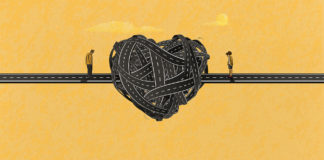
She loves me not | Friendship and the friend zone
When I was a child, I used to take a branch of locust tree and, plucking the leaves one by one, I would say: She loves me… she loves me not… she loves me… she loves me not. I cannot remember who I was thinking of when doing this; too many years have gone by since then. However, the refrain is still very...

Grieving in the Time of COVID-19
11pm and I am worried my patient will not make it till tomorrow morning, says Dr Glenn Wakam. Twelve hours after intubation, the COVID-19 patient's condition deteriorates dramatically, and Wakam knows that an even more difficult intervention follows: to explain to the patient's wife, who begs to be allowed to say goodbye, that the hospital does not allow her this sad privilege.

Love doesn’t give up, regardless of the prognosis
Lace-edged rumours wafted through the student campus in Sagunto, Spain: Devin, one of the American boys who had come to Spain for a year of study, was dating Teresa, a second-year theology student who was hard to miss. Her striking beauty and cheerful nature attracted gazes like a magnet. No one suspected then, not even the protagonists of this relationship, that their love...

Cohabiting before marriage reduces the risk of divorce: true or false?
More and more people are choosing cohabitation over marriage. Many young people believe that cohabiting helps them to make better decisions about marriage by giving the couple a chance to "practise" before making a lifelong commitment. There is also a belief that cohabiting before marriage reduces the likelihood of marital problems or divorce.

The transforming power of one caring adult
Statistically, by now Josh should have been either in jail, living on the street, or dead. The long years in which he was abused and expelled from the families who took him in made him no longer trust anyone. But the love of adults who showed him that they cared was stronger than anything that pushed him toward self-destruction.

The necessity of being wrong
Nobody likes to lose an argument. The feeling of being proven wrong is never a good one. At best, it might provide a slight dent to your ego or sense of self. At worst, it can be a thoroughly humiliating affair, or reveal that one of the foundations of your beliefs is invalid or misplaced. But no matter where it lands on the...

The role of Christian marriage counselling
Isaac and Rebecca, two biblical characters, had problems in their marriage. At first they struggled to fall pregnant. Then, when she eventually got pregnant, it was a difficult pregnancy, which affected them very much—so much so that they didn't know what to do. I suppose they had all sorts of discussions about the situation, but at some point the discomfort just became too...

How to mend a relationship and improve it
There are many reasons why your daily interactions may become tense and even fractured, but if you decide to mend a relationship, you could also take a few extra steps to improve it.