














Build boundaries, protect your marriage
The most important human relationship you'll ever have is with your spouse. Protect it at all costs.


Friendship, rarer than love? | Friendship and honesty
Romantic love is easily hurt and somewhat pretentious, especially when faced with direct honesty. Friendship is more solid.

Christ in them
I notice people, and passionately collect their stories. My favourite stories include those small cracks that allow one to peek inside another soul, those moments when their voice is almost imperceptibly altered, the eyes light up for a reason I do not know, and their gestures are unexpected.
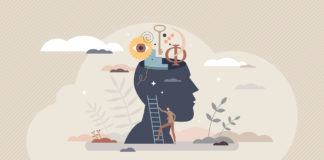
The necessity of being wrong
Nobody likes to lose an argument. The feeling of being proven wrong is never a good one. At best, it might provide a slight dent to your ego or sense of self. At worst, it can be a thoroughly humiliating affair, or reveal that one of the foundations of your beliefs is invalid or misplaced. But no matter where it lands on the...

What do you do when you reach the end of love?
When I'm tired I can't love! Many times I have lived this reality and even assessed it as the exact end of love.

Should our parents have a say in our love choices?
He will never be good enough for daddy’s little girl and she will never take care of mamma’s little boy like she ought to. How many people find themselves in a similar scenario? We all want those who raised us and the person we see ourselves with in the future to get along. However, an inevitable question arises when this is not possible:...

Why should you tell your friends your secrets?
In 2004, Frank Warren, an American businessman, had "a crazy idea," as he himself describes it. He printed 3,000 postcards, wrote his address on them and a series of instructions, then left space on the back for the sender to write secrets they had never shared with anyone before.
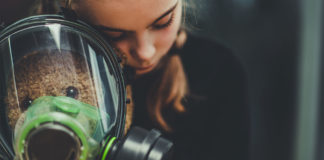
Shutters down all over Europe: life in the time of the new coronavirus
These days we all need to hear good news—that life will soon return to normal and that we will be able to return to the troubles of yesterday, which now seem small to us. In the meantime, our lifestyle has seen changes that we could not have imagined just a few weeks ago.
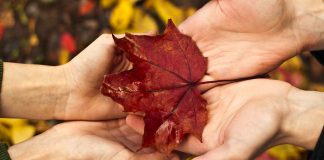
Love doesn’t give up, regardless of the prognosis
Lace-edged rumours wafted through the student campus in Sagunto, Spain: Devin, one of the American boys who had come to Spain for a year of study, was dating Teresa, a second-year theology student who was hard to miss. Her striking beauty and cheerful nature attracted gazes like a magnet. No one suspected then, not even the protagonists of this relationship, that their love...

Looking back on small acts of great kindness
This article contains stories of kindness, courage and generosity. By their simplicity they prove that all it takes to do good is a heart that is open to the needs of others.
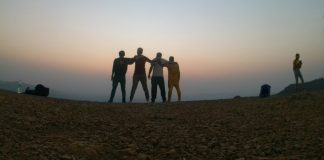
Friends who bring us closer to heaven
Both personal experience and numerous studies confirm that genuine friendships are an essential source of balance and well-being, and that cultivating them contributes significantly to our physical and emotional health.

When love blooms a second time | Couples who find each other after divorce
Many couples only realise after divorce the price they have paid for failing to find common ground, and a few even manage to rediscover the forgotten path to their partner's heart and to rebuild their relationship.

Single (and happy)—an increasingly common status in modern society
The number of single individuals has skyrocketed in the past few decades in nearly 40% of the world’s countries. While some complain about the economic discrimination they face, many who have chosen this lifestyle believe they hold a winning ticket in other areas of their lives.

The family we choose for ourselves
In a world of many predetermined things, friends are the family we choose for ourselves. Often, their presence is what keeps us going. In Vital Friends, Tom Rath says that many of those who end up on the streets, divorced, or addicted to overeating, struggle with inner demons precisely because they are alone. They feel excluded, abandoned, unloved.