












Do you know your child’s love language?
In 1997, Dr Gary Chapman released the book "The 5 Love Languages of Children" as a follow-up to his bestseller, "The Five Love Languages."

Children’s leisure time: then and now
I grew up on an unpaved, quaint side street in Ploiești, Romania. After school or during summer vacations my neighbours, M. and C., and I were an inseparable trio. We were almost always outdoors. If it wasn't too hot or raining, you could find us in one of our backyards.

Can we simulate evolution?
When a process is thought to be too slow or impractical to test experimentally, simulation science is a valuable tool for testing its validity.
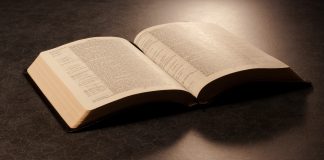
Interpreting Scripture: Bible Questions and Answers | Book Review
Interpreting Scripture is a book published by the Biblical Research Institute in the USA. It is aimed at people who want to understand the Bible better.

The spiritual community of readers
For almost six years, I relentlessly pursued Dr. Bill Knott to interview him for the programme Starting Point. He had been editor-in-chief of the Seventh-day Adventist Church's official publication, Adventist Review, for a decade. Finally, in early 2016, we sat down for an interview in which we discussed how he developed his talent as a writer and the current significance of the Adventist...
Forgiveness heals the one who forgives
Everyone thinks forgiveness is a lovely idea until he has something to forgive. – C.S. Lewis

Self-esteem and religion, a complicated relationship
Some psychologists fear that religion erodes self-esteem. Some believers fear that self-esteem endangers salvation. Who is right?

Preserving dignity: the key to personal freedom
How do we recognise violations of dignity and their impact on daily life?
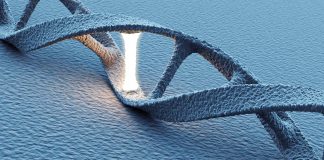
Non-functional DNA: the playground of evolution?
It is commonly assumed that at least 96% of the genome of a multicellular organism has no functional role. A junk-dominated genome is the ideal place for evolution to randomly explore new functions and characteristics of the species. After all, who would ever think that a wise and all-knowing Creator would use 96% informational junk to define a human being or a mollusc?

COVID-19 vaccines efficacy: Is it realistic to expect 100% effectiveness?
Medical science has made extraordinary progress over the last few decades, with achievements that have led to an increase in general life expectancy and quality of life. Today, afflictions such as cancer, severe heart failure, polio, or tuberculosis have modern and effective treatments.

Life as a couple after the first child
The arrival of a child brings immense joy and fulfilment, but it also introduces a new dynamic within the family, a reality that places the couple in the position of taking on responsibilities and tasks they had not encountered before. Transitioning to life as a family of three is a stage that disrupts the daily routine, demanding the full attention and involvement of...

Organic or conventional: a challenging food choice
The controversy surrounding organic foods is far from being resolved. Some argue it’s merely a marketing tool aimed at emptying consumers’ pockets, while others believe they’ve found the path to better health, provided they can afford the luxury.
When sounds proclaim the glory of God
The year 1685 gave the world two of its greatest composers: Johann Sebastian Bach and George Friedrich Handel. The presence of the great biblical subjects in their masterpieces not only filled the hearts of believers with joy, but determined a new direction in the evolution of the musical language, which continues to have an impact to this day.

Chernobyl: The cost of lies
On April 26th 1986, reactor 4 at Chernobyl nuclear power plant in Ukraine exploded. The effects were catastrophic—it was the worst nuclear disaster in history. The explosion let out the equivalent of 500 Hiroshima bombs-worth of radiation, and the area around Chernobyl—including the town of Pripyat—is now uninhabited. It will be unsafe to live there for the next 20,000 years.
The mystery of the seventh day (II)—from Abraham to Paul
In this second article in a series of three, we continue our analysis of three major anti-Sabbatarian arguments. The series will conclude with an assessment of Jesus' practice and teaching on the Sabbath.