













Why we cannot escape the vicious circle of moral failure
Judging by the headlines in the press over the last weeks, the world seems ready to have a discussion about sin.

Manipulation: when disinformers believe in us
When we think we are immune to disinformation, we become easy prey for those who manipulate us.

How to build (and how to dilute) a biblical worldview
According to a Barna Group poll, only 6% of Americans have a "biblical worldview", the percentage rising to just 21% for those who regularly attend evangelical churches. This shows that fewer and fewer Christians are turning to Scripture to answer the questions they face.

Bible echoes through a broken stone
A black basalt stone found in the desert of Jordan has an inscription with the earliest known use of the name of Yahweh (one of the many names for the Old Testament God). It is one of many ancient items which confirm biblical history.

An unexpected return, the premise for missing the meeting with Christ
How important is the second coming of Jesus Christ in traditional Christianity?
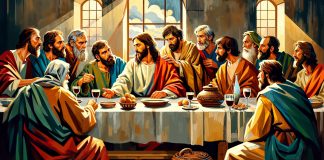
Paul’s savage class critique in 1 Corinthians
If you’ve ever been to a Christian church, there’s a good chance that you’ll have experienced a unique ritual involving bread and grape juice: the Lord’s Supper, or as we’ll refer to it, Communion. Depending on the denomination, your experience may vary wildly. You may be offered a cup that everyone collectively sips out of, accompanied by a piece of bread. Others will...

The inferiority complex and how to combat it
A lack of self confidence is like a stain that doesn't go away by itself. It is like oil dripping out of a machine, its drops collecting in the puddle of an inferiority complex. Such a problem is difficult to mitigate, even with motivational speeches or hopeful injections of fragile optimism.

Joy is the face of Jesus
I still remember the shock I felt when I first watched "The Gospel According to Matthew," starring Bruce Marchiano. It was not the first film about the life of Jesus that I had seen, but it was entirely different from anything I had known before.

Seven surprising facts about chocolate Easter eggs
During medieval times, eating eggs was forbidden during Lent (the 40 days before Easter). Any eggs laid were saved and decorated to celebrate on Easter Sunday. Apparently, everyone enjoyed tucking into their eggs, too.

“In remembrance of me” | A God who does not forget us
"Is it not too sadly true that we can recollect anything but Christ, and forget nothing so easy as Him whom we ought to remember?"—Charles Spurgeon

All juiced up
I have a mentor friend at the gym who I catch up with every now and again between sets. He’s one of those massive dudes who everyone in the gym knows—his walk from the locker to the dumbbell rack consists of greeting and fist-bumping pretty much every guy on the way.

“Pornography solves the couple’s intimacy problems.” True or false?
Some couples use pornography for sexual stimulation or educational purposes, to "spice up" their sex life. But while their intentions may be good, instead of helping, pornography can ruin a marriage.

The Ten Commandments
The book of Exodus is the second book in the Bible. It follows God’s servant Moses leading the Israelites out of slavery and through the desert towards the hoped-for Promised Land. Along the way, they stop at Mt Sinai. Moses goes up the mountain and receives from God ten commandments carved on a stone tablet. This is one of the most famous sections...

The paradox of independence: freedom at the cost of connection
The controversial story of Baruch Spinoza takes on a fascinating dimension with the explosive excommunication from the Jewish community decreed by the leaders of the Portuguese Sephardic community in Amsterdam—a decision accompanied by one of the most severe anathemas. This document made Spinoza one of the most reviled philosophers by both Jews and Christians, but attitudes towards him began to change after the...

Is disciplining children the responsibility of grandparents too?
“When grandparents enter the door, discipline flies out the window,” poet Ogden Nash once said, encapsulating one of the most common sources of intergenerational conflict—the role grandparents play in the upbringing of their grandchildren.