













An essential duo
Focusing on healthy eating while overlooking physical activity is not so much a myth as an uncomfortable truth that many of us prefer to ignore. Yet the rapid rise in sedentary lifestyles and metabolic diseases, with their harmful consequences for both individuals and society, is difficult to ignore.

Chrislam: The syncretism between faith and fake news
A significant number of Christians of various denominations, both traditional and Protestant, are concerned by the online materials announcing the establishment of a one-world religion: Chrislam. The news is that this is just the first step, which will be followed by a one-world currency, and a one-world government that is up to no good.

Are we smarter than previous generations, or do we simply think differently?
Researcher James Flynn of the University of Otago identified a surprising phenomenon: “We get far more questions right on I.Q. tests than each succeeding generation. (...) Indeed, if you score the people a century ago against modern norms, they would have an average I.Q. of 70. If you score us against their norms, we would have an average I.Q. of 130. Now this...

Sweet killer
In 1980, the World Health Organization estimated that there were 108 million people with diabetes. By 2021, the International Diabetes Federation database reported 537 million people with diabetes between the ages of 20 and 70, with projections of 643 million by 2030 and 783 million by 2045 (IDF Diabetes Atlas).

Faith, not illusions | An interview with Rusty Williams
American pastor Rusty Williams has an amazing life story to tell, as well as a story about developing his faith. The occasion was his long-term effort to build a church—a vision that took 14 years to accomplish! While preparing the written version of this interview, I attended the first worship service in the completed church, just as HopeTV was broadcasting the programme.

Food allergies
Millions of people live with food allergies. Chances are, you are either one of them or know someone who is. According to the Centers for Disease Control and Prevention, food allergies affect 4–6% of children and about 4% of adults (Cosme-Blanco, Arroyo-Flores, and Ale, 2020).

The spirit of the age: Trends that are reshaping our lives
The spirit of our age is revealed in the actions that have become so commonplace that we no longer notice them, even though they have become trends.

The boy who harnessed the wind
From a certain point of view, our life can be divided into moments when we have let circumstances determine our future, and moments when we have gone where we wanted to go, despite the circumstances.

The mark of the beast | A controversial apocalyptic motif
In addition to its social and economic consequences, the COVID-19 pandemic also raised a religious question that has been raised every time there has been a major change in society: did the wearing of the mask, the anti-COVID vaccine or the green certificate have anything to do with the mark of the beast or the number 666 in the last book of the...

The love that fills the moments | A day at work with God
There is a subtlety in the way God’s love changes our lives, especially on those days that seem ordinary. Amid the bustle of the modern world, it offers an inner peace that redefines the meaning of every gesture—from the way we work to the way we choose to stop.

Mothers-in-law and daughters-in-law: a recipe for positive interaction
A common source of jokes and stories with subtext, the relationship between mothers-in-law and daughters-in-law appears to be characterised by particular sensitivities.

Divine inspiration | God’s breath upon the prophets
What is “divine inspiration?” How does it happen?

Deal with the devil
Among the many perplexing phenomena the internet offers, recent public statements by certain American artists stand out. These individuals, popular in various circles, openly admit to having made a deal with the devil—selling their souls and becoming his servants in exchange for career success, wealth, and fame.

Don’t believe everything you think
Your brain produces thousands of thoughts every day. Not all of them deserve your trust.
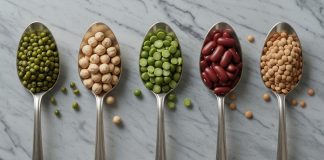
What the body does with plant proteins
In reality, the human body, like that of many powerful animals—from horses to elephants—is perfectly capable of extracting and using protein from plant sources....