










Menstruation, a taboo still difficult to break even in 2021
Lack of access to menstrual hygiene is the fifth leading cause of death worldwide among women. In the world, 1 in 3 girls faces the impossibility of ensuring adequate hygiene during menstruation, and many others face sometimes fatal arbitrary limitations imposed by culture.

The Second Coming Files: A 2000-Year Inquiry | Part V: Nineteenth-Century Millenarianism in the British Isles
After covering the historical evolution of the Christian teaching about the return of Jesus Christ in the first three articles, in the fourth article, which precedes the one that you’re reading now, I made a minimal review of some philosophical, political, religious, and esoteric currents that are important to understand the world in which the millenarian revivals of the 19th century emerged.

The problem of happiness
Would you rather “achieve great things or be happy?” That question was asked in a YouGov survey (United States): 81 per cent said they would rather be happy; 13 per cent wanted to achieve great things; 6 per cent were uncertain.

Edson White | Education between teaching and betrayal
In 1867, when Edson White was 18 years old and working at the Adventist type-room in Battle Creek, Michigan, he had a transformative conversation with Mr Bell.

Humble faith
The Church of the Nativity in Bethlehem is the oldest continuously-used church building in the world. It dates from the fourth century, when Roman Emperor Constantine’s mother visited the Holy Lands to identify locations from the life of Jesus for pilgrimage destinations and church sites. From a distance, the point of entry to the church is not obvious, particularly when the area is...
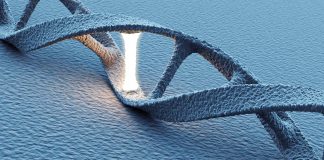
Non-functional DNA: the playground of evolution?
It is commonly assumed that at least 96% of the genome of a multicellular organism has no functional role. A junk-dominated genome is the ideal place for evolution to randomly explore new functions and characteristics of the species. After all, who would ever think that a wise and all-knowing Creator would use 96% informational junk to define a human being or a mollusc?

Memory training: The allies we have in the fight against forgetfulness
Memory training is often the only difference between people with impressive memorization skills and those with average memory, researchers suggest. However, the long-term results intersect with a healthy life and learning style.

How you can get your sense of smell back after a cold
A recent study showed how we can fully restore our olfactory sense after a cold, during which nasal constriction prevents us from smelling even the most intense smells.
Realistic expectations, the secret of lasting relationships
Aside from fuelling jokes about how women impose unrealistic standards on men, or how men are just grown-up children who want their wives to be their mothers, the expectations couples place on their relationship define how they relate to each other, and influence marital satisfaction.

I wish I had known that there was a divine plan for me
At the age of 20, I graduated from the Orthodox Theological Seminary. I thought I was talented, I was confident, and I had a very clear idea of the path I wanted to take in life. I had all the answers. Or perhaps I hadn't asked myself enough questions.
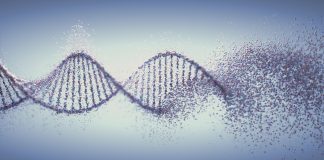
Genetic inheritance cannot be altered. True or false?
Grandpa’s eyes, mother’s wide hips, aunt’s serene gaze, father’s ambition, great-grandmother’s rheumatism—all the little traits that define us seem to come from ancestral parents who, together, should have all the genes that anyone can have today, all the possible ingredients for the recipe from which we were made.
The Second Coming: Escape or Energiser?
"Lianne struggled with the idea of God," Don DeLillo’s narrator says of one of the characters in his novel, Falling Man. "She was taught to believe that religion makes people compliant. This is the purpose of religion, to return people to a childlike state… . We want to transcend, to pass beyond the limits of safe understanding— and what better way to do...

Good reasons to read the whole Bible
As intimidating as the Bible may sometimes be, especially because of its size and its sometimes difficult passages, many who have read it from cover to cover say that it has changed their lives for the better—the spiritual resources the whole Bible can provide are not found elsewhere.

What should we eat? | A comparison between three types of diets
In Romania, they say that everyone is an expert in football and politics. But I believe it is more appropriate to say that everyone is an expert in food—or so they think. Except for a small minority, most of us have quite strong opinions about what we eat.

Learn to fight smart in your relationship
Couples do not break up because they fight, but because they do not know how to argue, relationship therapists say, underlining the functional components of the differences between partners.