












Leaving Neverland: How not to be an idol’s prey
The documentary Leaving Neverland (HBO) tells the story of two of the men who accused superstar Michael Jackson of ongoing sexual abuse.

Why we think things are worse than they are
In the age of the internet and the “global village,” an irrational fear taking hold in a small American town can easily go viral, reaching and affecting us all. Once online, news—whether true or false—can have a corrosive effect, leading us to feel cynical about the future and to hold low expectations for our leaders.
I used to fear God
I have read the Parable of the Talents many times, and have understood it in different ways at different times in my life. During my last read, I came across a commentary concerning the man who was given only one talent, which he chose to bury. Author Ellen White writes: The Lord desires His people to reach the highest round of the ladder...

How many Bibles does one person need?
“We need a Bible like this,” said Reverend Richard Cizik, Vice President of the National Association of Evangelicals in America, at the launch of the first Green Bible in 2010. Current environmental issues demand an ecological Bible, where passages about the quality of divine creation and care for nature entrusted to us by God are highlighted in green, Cizik says.

Being in harmony with the person in the mirror
We cannot sustain our motivation if we don't connect daily to its source and what generates it, or if we don't constantly strive to remind ourselves why we are moving in a certain direction and how to get there, willingly and unforced, exercising free will, despite the inevitable limitations.
My child, a perfectionist
Responsible, achievement-oriented and highly principled – this is what a brief portrait of a perfectionist child looks like, explaining why, up to a certain point, this is the kind of child most parents dream of.

The road to heaven passes by your neighbour
“A man was going down from Jerusalem to Jericho, when he was attacked by robbers. They stripped him of his clothes, beat him and went away, leaving him half dead. A priest happened to be going down the same road, and when he saw the man, he passed by on the other side. So too, a Levite, when he came to the place...

How to love hard-to-love parents
How much do we know about love? Enough to understand that love is not an obligation—we cannot love by force, nor be loved in this way.
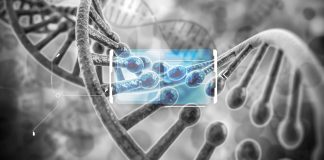
The sprouts of genomics
Although the results do not seem spectacular yet, at least to the majority of the population, probably the most remarkable advances in the field of healthcare in the last 30 years relate to the mapping of the human genome (completed in 2003), the genome of other animal and plant species, and the development of bioinformatics.

Be the master of your money
Money is essential in our Western world. It allows us to purchase the necessities of life—food and shelter, for instance. It pays the bills for heating and cooling. There may even be enough for some luxuries.
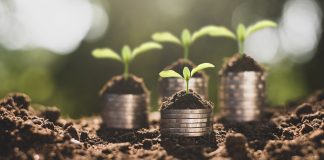
From the realm of utopias: A world without credit
We live in an economic system whose main fuel is loans. For this reason, the phrase “a world without credit” sounds far-fetched, to say the least.

The Christmas invasion
They’re singing carols. Putting up fairy lights and mistletoe and fake snowflakes. The stores are full of Crosby, tinsel and Bublé. Yes, Santa’s on his way and, somehow, the list of what’s in his enormous red sack of gifts has appeared on my credit card statement. I know: I’ve checked it—twice!

Growing Young
Justin Yang is the Senior Pastor of Atlanta Korean Seventh-day Adventist Church in Duluth, Georgia, United States. He was born in South Korea, but his family moved to America when he was a child, so that his father, who is also a pastor, could continue his education. Pastor Yang went to school in the US but returned to South Korea for his undergraduate...

Injustice and God: Is He the wrongdoer or the one wronged?
The concept of reward is one that encapsulates a world of joys, satisfactions, pleasant emotions, and accomplishments. It is usually correlated with what we do, what we say, who we are, and so on. We could say that it is an expression of our value in relation to the world. But any reward can be overshadowed by painful feelings when there is a...

COVID-19: Inequality and the pandemic
When confronted with the pandemic, we are anything but equals.