












Appealing to authority: an expensive logical mistake
In everyday life, whether we like it or not, we rely on the information provided by experts or specialists. However, no authority deserves blind trust. When we take someone's word for granted simply because that person is an authority, we make the logical mistake called "appeal to authority."

What diet can and cannot do for depression
Anyone who suffers from depression is likely to be fed up with advice from otherwise well-meaning friends who send them all sorts of online articles promising yet another secret to curing depression.

The allure of uncertainty
On June 23, 1863, in France, a book was published that would become the literary sensation of the century. Few could have foreseen the impact it would make. This was not a romance novel, thriller, or self-help guide; it was Vie de Jésus (The Life of Jesus) by Ernest Renan. In less than four months, over 60,000 copies were circulating—a record-breaking success in...
A year of waiting
For me, 2022 was the year of waiting—a word that managed to define our lives, thoughts and actions to an unexpected degree.
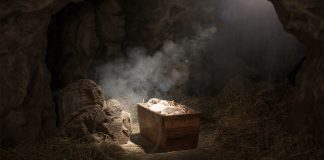
The manger, the sign of humility that elevates (us)
"This will be a sign to you: You will find a baby wrapped in cloths and lying in a manger" (Luke 2:12).

What happens in your body after you quit smoking
Our bodies reap the first benefits of giving up smoking almost immediately after we have ceased the habit. The scientifically proven changes that are visible within the next hours, days, months and even years after we quit smoking reinforce the fact that putting out that last cigarette is one of the best decisions you will ever make for the benefit of personal health.

COVID-19 after vaccination: How much does vaccination protect us?
Why can vaccinated people still get COVID-19 or even die from the disease?

Dealing with negative emotions in times of crisis
Many years have passed since I last lived with my brother. Recently, I decided to go and stay with him for a while. One day we both decided to visit a place in nature that neither of us had been to before. When we got there, it started to rain—while not very heavy, rain was not what either of us had wanted. But...

“Having a child solves all a couple’s problems.” True or false?
"Once upon a time, there was a princess as beautiful and kind as a fairy. She was an only child and her parents loved her dearly and did everything for her. When she grew up, they gave her a magnificent wedding to the brave man she had chosen, a handsome and virtuous fellow. After a while, misfortune struck: not a day would pass...

For the love of singing
Since she stepped onto the stage in the 1987 Australia Day concert with Ricky May at Melbourne’s Palais Theatre as a 15-year-old, Silvie Paladino has established herself as one of Australia’s most versatile and talented entertainers.
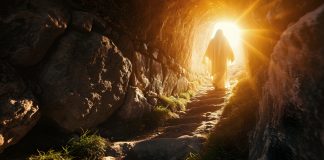
Christ has ascended!
On the evening of His passion, Jesus promised His disciples, ""Do not let your hearts be troubled. You believe in God; believe also in me. My Father’s house has many rooms; if that were not so, would I have told you that I am going there to prepare a place for you? And if I go and prepare a place for you, I...

More than love: an x-ray of a happy marriage
There is a saying that describes one’s life partner as being most appreciated during two life stages: before marriage and after the funeral. Unfortunately, proverbs and sayings hint at a reality which is also faithfully rendered by statistics showing that love wears off pretty soon in many marriages. But maybe this is part of the problem—the fact that we overburden love, treating it...

The saving emotional intelligence
“Many people feel out of touch with their feelings. Counselor offices and publishing houses have proliferated thanks to the need to help people to improve their communication skills, to restore their self-confidence and to help them relate to other people.” – Sir Ken Robinson, Out of Our Minds: Learning to be Creative

COVID-19: Should we care about the environment in the midst of an economic crisis?
Our planet may be fittingly compared to the 1994 film, Speed: A bomb is planted on a bus and rigged to explode when the bus slows to less than 80 kilometres per hour. The bus barrels through Los Angeles, hitting obstacles and endangering the lives of passengers and pedestrians until a solution is found.