











Dare to eat plants like Daniel
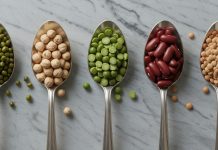
In late 2019, an explosive new documentary, Game Changers, was dominating fitness industry headlines. Boasting the approval of Arnold Schwarzenegger, Novak Djokovic and Lewis Hamilton, the documentary claimed that peak athleticism could be attained on a plant-based diet—combatting longstanding assumptions about eating meat for muscle growth.

The price is right: “For who makes you different from anyone else?” (part 1)
These days, we are free to believe anything and to be anything, at least in theory. However, if we gave history a closer look, we would realise that it is not beneficial for us to believe or be just anything. We agree with the biblical exhortation, often distorted by popular lore: "...test them all; hold on to what is good" (1 Thessalonians 5:21).
Eating your way to a better world
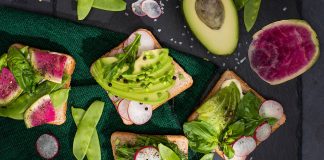
“Eat your veggies.” It’s been the catchcry of mums and dads across the years. These three words have been seared into our collective memories since childhood. Along with this parental guidance, numerous top-selling books, including top selling author Dr Alan Desmond’s The Plant-Based Diet Revolution, have been released to both popular, and scientific acclaim.

Evolution and creation: closer to the core of the controversy
I got acquainted with Ariel Roth as a writer, but I also got to meet him as a human being. I discovered neither fanaticism nor nervousness, neither doubt nor ideological speech in Roth, an octogenarian who still looks in detail at each new subject appearing on the agenda of the debate between evolution and creation. He maintains an unflagging desire for honesty and...

The angry Christian: How can we free ourselves from destructive anger?
A man is about as big as the things that make him angry – Winston Churchill

The end of death
It was nearing the twentieth anniversary of my friend’s death and it had been quite a few years since I’d visited his grave. I parked my car and as I ducked through a gap in the hedge, I noticed preparations being made for a burial later in the day. But the grave I was looking for was near the fence that fronted the...

Religion is harmful. True or false?
The idea that religion is harmful to the process of human development has no scientific support, but religious conviction has been associated with a number of tragic experiences within families.

Incognito faith and the failures of political correctness
John the Baptist's call—"Repent, for the kingdom of heaven has come near"—succeeded in bringing Jews "from Jerusalem and all Judea and the whole region of the Jordan" to the desert where the prophet preached, to confess their sins and be baptised. Two thousand years later, the exhortation to "repent" is buried under a mountain of pejorative associations.

“Nobody’s totally evil and deserves not to be forgiven”
It is often said that the choices we make repeatedly determine our destiny. Other people’s choices that touch our lives in an unfortunate way are seldom discussed. The changes that defy them both are among the most impressive, and Jesse Thistle’s story confirms this.

Confession: in search of the ultimate goal
It is important to have a purpose in life, yet this is not enough. It really matters what your purpose is.

What happens in your body after you quit smoking
Our bodies reap the first benefits of giving up smoking almost immediately after we have ceased the habit. The scientifically proven changes that are visible within the next hours, days, months and even years after we quit smoking reinforce the fact that putting out that last cigarette is one of the best decisions you will ever make for the benefit of personal health.
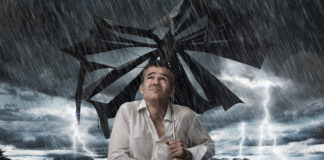
Broken dreams: The lessons we learn through failure
We often say God is good, especially when, after threatening to go dangerously off track, life resumes its regular course. But what is left to say when all that remains of our dearest dreams is a handful of shards that can no longer be glued together?

Do you have a Vitamin D deficiency?
Studies have increasingly shown that vitamin D, also known as the sun vitamin, plays a vital role in protecting the body from a number of chronic illnesses. It is important to know both the symptoms of a deficiency in vitamin D, and the valuable sources that can provide us with a daily healthy dose.

The empathy recession
"Life is hard," my three-year-old niece says with conviction, while munching on a biscuit. "But it's beautiful," her mother quickly corrects her. "No, no, life is hard," the little girl insists. For parents, this is of course a funny scene to share with friends on Facebook. However, ironically, right under the posted video is a clip of a televised debate between an anti-vaccine...

The allure of uncertainty
On June 23, 1863, in France, a book was published that would become the literary sensation of the century. Few could have foreseen the impact it would make. This was not a romance novel, thriller, or self-help guide; it was Vie de Jésus (The Life of Jesus) by Ernest Renan. In less than four months, over 60,000 copies were circulating—a record-breaking success in...