











Have a healthy, happy Christmas
It’s the time of the year when, for many of us, excesses don’t seem to matter too much—fruit mince pies, chcolate truffles and more cake than the number of baubles on your Christmas tree!

I didn’t know that God cries too
In those times when grief accompanies us and we find ourselves alone in the middle of the night, does God shed tears with us?

Can too much salt (really) affect your health?
Could it be true? Are we eating too much salt? Is too much salt dangerous or beneficial?

The war in Iran and the victory that could destroy peace
The attacks by the United States and Israel on Iran have been presented as an inevitable strategic move. However, the last 20 years have shown that, while wars can be won quickly, achieving subsequent political stability is much more challenging. The situation in Iraq in 2003 remains the clearest example of this. Will Iran repeat this pattern?

Appeal to hypocrisy: the trick of pointing the finger
When one wants to justify the harm one has done by saying that others have done the same or that this evil was only a reaction to the harm done by someone else, they commit the logical error of appealing to hypocrisy.
“When doctors don’t know what to do, it’s time for alternative medicine.” True or false?
When it comes to cases where "doctors don't know what to do," the first thought that comes to mind is usually cancer. Conventional treatment, which can prolong life for a few years and sometimes just a few months, comes at a high price in the quality of life, and patients come to prefer the "natural" way: alternative medicine.

Parenting school
If, biologically, a person becomes a parent when their child is born—or, civilly, when they adopt a child—from a practical and even moral point of view, a person only becomes a parent when they master a series of crucial skills.
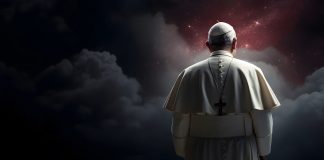
What happens if the pope dies?
Images of Pope Francis have recently been released by the Vatican for the first time after he was admitted to hospital in a critical condition for pneumonia following a complex lung infection. Given his advanced age and frailty, many have wondered whether the pope is close to death.

The effect of our consumption on the planet is irreversible
We have introduced so much carbon dioxide into nature's operating system that we no longer know "what is an act of God and what is an act of man" when it comes to natural disasters striking with increasing frequency and overwhelming power, says Nathan Lewis, a chemistry and energy specialist at the California Institute of Technology.

The slumber of the proud
One of the best-known stories told by ambitious entrepreneurs today is that if you work hard, you will have a lot.

Tangible happiness
It's intuitively inappropriate to talk about happiness when the subject is depression. But it is even more inappropriate to talk about abnormality, inadequacy or maladjustment in the same context.

Escaping from the deadly family
Letting go of the environment and education you received at home is difficult as it is, but can there be liberation if you grew up in a family of mobsters?
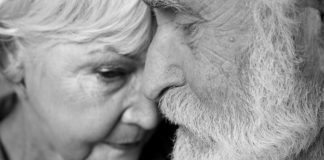
When parents die
I never cease to marvel at those who help, in an organized manner, troubled children, abandoned elderly or victims of violence. However, the general need for such heroic saviours reveals the failure of the social group that is apt to address these situations: the family.
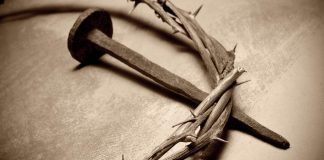
1,000 years later
Christianity is fundamentally built on the belief that the life and mission of Jesus Christ on earth were a continuation and fulfilment of God’s earlier revelation, known as the Old Testament.

The unlikely story behind a blockbuster
In one sense, it was hardly an unusual story: a big-budget Hollywood war movie with a big-name director and famous actors, featuring long and ultra-violent action sequences, with heroes and enemies.