














Lies: the anatomy of a social pathology
"You? Fat? No way!" "With all due respect, officer, that wasn't a red light!" Every day, billions of lies leave the mouths of billions of people. Lying is a moral pollution that we declare harmful, but seem to believe is indispensable in life.
The price of change
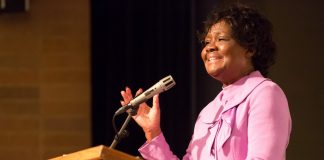
Living in times of great social transformation is both a privilege and a challenge. In this interview, Dr Ella Simmons reveals what her childhood and youth were like during the American civil rights movement. In that turmoil, she also discovered the church she came to love and serve with dignity and courage.

I believe in God even when He is silent…
I have always liked to participate in public worship and to practice some of the spiritual disciplines. I did not experience a stormy conversion. God revealed himself to me, instead, like “a gentle whisper” (1 Kings 19:12).

The casino inside your phone
In the February 2023 issue of Signs of the Times, I wrote an article titled Gambling’s Dark Underbelly. Here in Australia, gambling is a multi-billion-dollar industry with a few very rich winners and millions of losers. In the article I concluded that “Gambling in any form is designed to bleed you for as long as you’re willing to bleed, with no regard for...

The miracle of my resurrection
By the year 2022, I had not lost anyone close to me, but I had the feeling, as never before, that death was approaching with unexpected speed. The war that was taking place to the east of Romania, and the news that we were in second place in the world in terms of the number of deaths per thousand inhabitants, made me think...

How harmful is corporal punishment for children?
In an ideal world, everything would be simple: you, as the father or mother, tell your child, the apple of your eye, to do something and, being perfectly obedient and submissive, they do as they’re told. However, we don’t know if such a world would really be ideal. Nevertheless, for many parents, this resembles a paradise to which they would love to escape...
On the side of God and logic: An interview with Dr Ben Carson
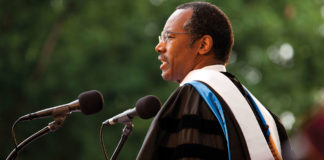
Benjamin Solomon Carson is the famous American neurosurgeon who, in 1987, became the first to successfully separate twins conjoined at the head.

How to enjoy closeness in your relationship with God
Could we have a quality Christian ministry without an authentic relationship with God? Anyone can pretend in the short term, but to truly succeed in the long term you need a devotional life full of passion and a continual closeness to Jesus Christ.

The applications and pitfalls of critical thinking
Critical thinking is not a cure-all, but it proves very useful in dealing with, clarifying, and solving some decision-making problems, as well as the thought and belief disputes which occupy our minds.

The mystery of the incarnation
The birth of Jesus Christ is one of the most significant events in human history. Celebrated at Christmas, by some with emotion, by others with indifference, most of the time the holiday loses sight of the main Character. Religious meanings remain in the shadows, while commercial dimensions are pursued at all costs.

Hope from the pit
Fire falling from the sky. A massive tsunami. An abandoned city. Let’s be real—it’s probably Los Angeles or New York (although sometimes Sydney or Hong Kong makes a cameo). These are the images we most often associate with the end of the world. Whatever comes to mind for you, no doubt it has been shaped in large part by literature, art and, of...

COVID-19: White money for black days: using savings when you #stayhome
One of the most powerful pieces of literature illustrating the proper preparation for a financial crisis comes from antiquity. More precisely, from the Bible.

The end of the world, according to Jesus’ teaching
Much has been written about the end of the world, but, if this end coincides with Christ’s second coming, then we should enquire from Jesus Himself what he teaches about His return. We will do this by using the material of the Christian Gospels.

How children are affected by the loss of a parent
It is difficult to say whether there is a preferable age for facing the death of a parent, but having it happen during childhood and adolescence can have devastating effects on physical and mental wellbeing, which can extend even into adulthood.

Is the end of something better than its beginning?
The question, "Is the end of something better than its beginning?" nuances the statement of Solomon, who is considered in the Bible the wisest man who ever lived.