












Brave enough to listen
There’s a saying that if it’s too good to be true then it usually is. But what if it’s too bad to be true? What if something is so shockingly horrendous that it makes you stop thinking about anything else for a while? Does that mean it’s a lie as well? The numbers associated with domestic violence are quite staggering—and when my own sister revealed...

Returning to the blessing of the small things
Rediscovering the blessing that resides in the little things of life has been one of the challenges of every season I've lived through. This is the conclusion I always come to when I take a moment to reflect.

The “Siret Customs” Paradise
On February 27, 2022, I exchanged my pastor’s suit and tie for an ADRA volunteer vest at the Siret Customs point on the Romanian border.

“My children are geniuses” (and other exaggerations of the modern parent)
Every generation of parents loves their children and searches for the best ways to support them and prepare them for a successful start in life. Modern parents, however, often take this effort to extremes, complicating their children’s lives (and their own, just as much) in an attempt to clear a perfectly smooth path for their still-uncertain steps.

The game where nobody wins
I was only 13 when I first experienced it. My three best girlfriends handed me a letter. It said they no longer wanted to be my friends. The only reason given was, “The guys pay you too much attention.” After delivering the letter, they simply shunned me.

Regaining lost free time | A parent’s route to leisure time
Sometimes, parents end up not having any free time during the day. Why is relaxation not easy for parents?
The immortal Bible
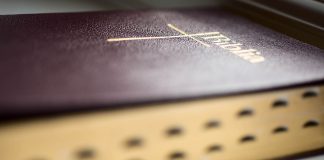
"Scripture" is a Latin word that means "writings", while "Bible" is a neutral Greek plural meaning "books" (from biblíon = book, document, scroll). Today, however, in all languages, the word "Bible" is understood as a feminine singular, meaning Holy Scripture.

An impossible inventory of the most widespread fake news about COVID-19
The epidemic of false information in this worldwide pandemic is even more infectious than the virus itself. Fortunately, there is a vaccine for this epidemic of fake news: quality information and information filters. However, not everyone has been vaccinated. Here is an immunization effort.

“Love yourself” | How biblical is the concept of self-care?
Widely discussed in recent years, the term self-care generally refers to focusing on the needs and goals that contribute to our well-being. “Love yourself!” has become the motto of this “ultimate form of self-care,” which some Christians see as a stepping stone toward loving and caring for others. But just how biblical are the ideas of self-love and self-prioritization—concepts so deeply woven into...

Four women. One bike. 4000km for life.
If you had to guess, how many Australians would you say die from suicide every day? A handful, maybe three or four? Try nine. On average, seven Australian men and two women pass away every single day through suicide. That’s 63 each week, or 252 each month. In 2022 alone, 3,249 Australians died by suicide. In New Zealand during the same year, 538...

The final days of history
Virtually every civilization has been characterised by religious beliefs about the end of all things, not least about the timing and the conditions that precede the end, and signs of its imminence. There are many differences between these beliefs across civilisations, but many similarities too.
The church: from museum to hospital
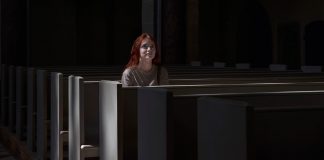
The metaphor of the church as a hospital is so popular in the neo-Protestant milieu that it seems to highlight the hypocrisy of those attending church services even more. That’s what I used to believe until one day when I witnessed the opposite with my very own eyes.

COVID-19: White money for black days: using savings when you #stayhome
One of the most powerful pieces of literature illustrating the proper preparation for a financial crisis comes from antiquity. More precisely, from the Bible.

The questionable cause fallacy: Correlation does not equal causation
The questionable cause fallacy, described by the Latin phrase cum hoc ergo propter hoc, is an error of thought which leads us to believe that one event causes another event simply because the two events occur simultaneously. This error can easily be reinforced if the simultaneity of the two events is often repeated.

No one deserves to have that much money
In a dilapidated shack in Nairobi, a young woman makes her confession to the BBC reporter eager to hear her story: “I don’t know why God allows some people to be poor while others are rich.”