














The need for control, between illusion and responsibility
As a child, I suffered because of the decisions the adults would make. At least, that's what I believed for a long time. It seemed unfair to me to not have veto power in the key moments that defined us as a family, and I was looking forward to the day when I would detach myself from the will of my elders.
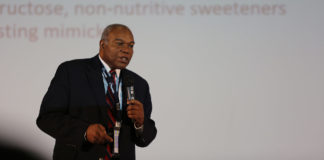
“Don’t you have a lifestyle pill?” An interview with Dr Zeno L. Charles-Marcel
Dr Zeno L. Charles-Marcel is an associate director in the Department of Health for the General Conference of the Seventh-day Adventist Church.

The sacred library in a secular age
In centuries long buried in the mists of time, the Bible was a book for which people were willing to die—whether burned at the stake or thrown into prison. There was a time when Bibles were chained to monastery walls. Today, they are printed and distributed by the millions. Yet it seems fewer people are actually reading them.

Reacting to the worst news
In a conversation with Dr. Shelly-Ann Bowen, we discussed her research on what determines whether someone will be active or passive in the face of catastrophic events—fires, floods, or a cancer diagnosis. Social injustice, a lack of self-awareness, and even an immature understanding of faith paralyse action. But there are ways to make positive changes.

Sweet and good—but only in moderation
Honey has a highly complex chemical composition that varies depending on the botanical source from which bees collect nectar. Throughout history, it has been valued both as a food and as a medicine.

The perfect Christmas present
Doing things the way you've always done them is the most convenient choice. I realized this on the eve of my birthday, when it became clear to me that snowballing into the same pattern of celebrations begins to gradually, but surely, lose its flavour.

Incurable faith
If we take an honest look around us and within ourselves, we discover that the gulf between the mentality of those who choose prayer over medical treatment and the essence of the Christian mindset is not as deep as it seems. But it remains a gulf nonetheless.
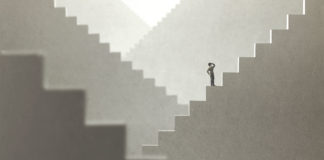
What is critical thinking and how can one encourage the disposition to use it?
As Christians we are interested in a perpetual spiritual, moral, general human perfecting. But can we really succeed without perfecting our way of thinking, our capacity to understand, and thus without increasing our intellectual capital?
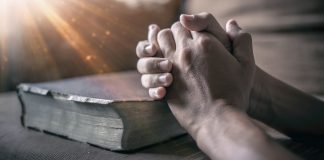
The Second Coming: Escape or Energiser?
"Lianne struggled with the idea of God," Don DeLillo’s narrator says of one of the characters in his novel, Falling Man. "She was taught to believe that religion makes people compliant. This is the purpose of religion, to return people to a childlike state… . We want to transcend, to pass beyond the limits of safe understanding— and what better way to do...

Do your best
“Finally, brothers and sisters, whatever is true, whatever is noble, whatever is right, whatever is pure, whatever is lovely, whatever is admirable—if anything is excellent or praiseworthy—think about such things. (…) I can do all this through him who gives me strength” (Philippians 4:8, 13).

Facebook is not your friend
Big tech companies are slowly gaining more control over our lives, leading some to call them “Digital Lords”. But how do they stack up against the actual Lord?
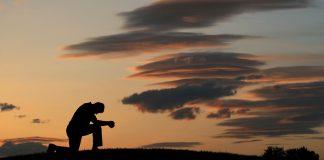

The Bible as a political weapon: When “Thus says the Lord” means “This is what I want”
It is estimated that over 100 million Bibles are printed annually, which means over 11 000 per hour, or about 3 every second. These numbers show the huge impact the Bible has on people’s lives.

COVID-19: When time no longer means money
As a teenager, I remember pasting a quote from Blaise Pascal on the wall of my room. It was a thought I resonated with, not without some arrogance: "All of humanity's problems stem from man's inability to sit quietly in a room alone."
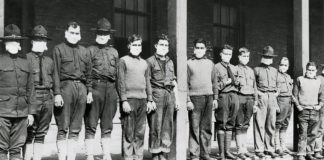
Spanish flu to COVID-19: Lessons from a forgotten pandemic
The Spanish flu filled graves in almost every cemetery in the world. However, surprisingly, this tragedy had largely been forgotten until recently. A century later, the issue returned to the centre of attention, with specialists wondering if they can identify a pattern in the evolution of the COVID-19 health crisis based on the pandemic from a century ago.