











Artemis II: The wonder and the destination hidden in plain sight
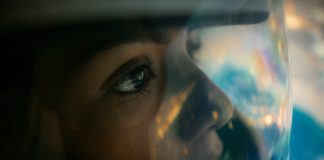
A few hours after launching from the Kennedy Space Center, somewhere above the equator, astronauts Reid Wiseman, Victor Glover, Christina Koch, and Canadian Jeremy Hansen saw something that few human eyes have ever beheld directly: the entire Earth, small and luminous, suspended in the absolute darkness of outer space.

Daddy issues in the White House
Recently, I became a dad for the first time (that is, if you don’t count my miniature schnauzer, Banjo). Ever since my daughter was born, I’ve had a single thought going through my head: how do I ensure I don’t screw up my child?
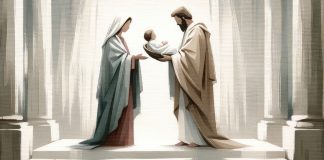
Simeon and Anna: From waiting to fulfilment
Some expectations dissolve into routine or turn into despair, while others invigorate life. The former are measured in deeds and desires, while the latter are measured in faithfulness and beliefs.

COVID-19: What do we do after the relaxation of restrictions?
After the authorities in different countries announced a relaxation of the restrictions, people started to impatiently waiting for that, maybe even with plans to recover last bits of a confiscated spring.
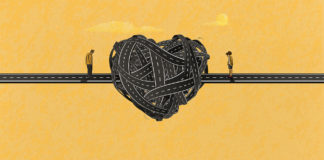
She loves me not | Friendship and the friend zone
When I was a child, I used to take a branch of locust tree and, plucking the leaves one by one, I would say: She loves me… she loves me not… she loves me… she loves me not. I cannot remember who I was thinking of when doing this; too many years have gone by since then. However, the refrain is still very...
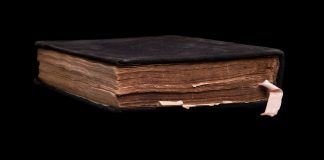
The forgotten book
Almost 500 years have passed since the 1524 publication of the work that one prominent leader of the 16th-century Protestant Reformation, Andreas Karlstadt, wrote in defence of the Sabbath doctrine.[1] It was the first work on this subject written by a leader of the Reformation.

How harmful is corporal punishment for children?
In an ideal world, everything would be simple: you, as the father or mother, tell your child, the apple of your eye, to do something and, being perfectly obedient and submissive, they do as they’re told. However, we don’t know if such a world would really be ideal. Nevertheless, for many parents, this resembles a paradise to which they would love to escape...
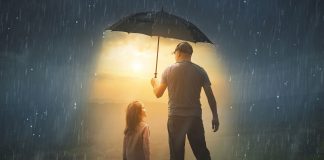
“The insecure adults of the future” | Parent-child dependency
Dependence tends to have negative connotations—we may be addicted to sugar, the internet or gambling. Other times we are dependent on people or relationships, in which case the line between positive and negative is no longer easy to draw.

Tangible happiness
It's intuitively inappropriate to talk about happiness when the subject is depression. But it is even more inappropriate to talk about abnormality, inadequacy or maladjustment in the same context.

A healthy old age is built decades before
An old saying states: "If youth knew; if age could". This truth is reflected by countless studies showing that lifestyle adjustments made in middle age (or even earlier) favour a transition to a healthier old age.

The Unitarian Movement | How an unorthodox minority contributed to the development of the Reformation
The Unitarian Movement was defined as a significant minority movement under the influence of Humanism. The name “Unitarians” comes from the belief in one divine Person, a belief also common to Judaism and Islam, as opposed to the doctrine of the Trinity.

How we’re becoming cogs in the Machine
Amid the carnage of World War II, a film was released that The New York Times called “perhaps the most significant film ever produced”.
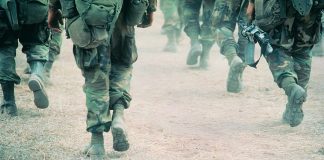
The war in Ukraine as a struggle between interpretations
It has been said before that the wars of the 21st century are hybrid wars, in the sense that, in addition to the environments in which the hostilities have taken place until now–land, water and air–a fourth environment has appeared: the virtual one.

The rabbi (who never was a rabbi) who will never be forgotten
Given that no one could become a scholar without formal training, it is truly remarkable that Jesus, who was not formally educated, was nevertheless recognized as a “Rabbi” (Mark 12:14 cf. John 3:2).[1]