














Gluten under the microscope
Only people with specific gluten-related conditions—such as celiac disease, wheat allergy, or non-celiac gluten sensitivity—experience adverse reactions to gluten consumption.

“Can science explain everything?” | Book review
John C. Lennox, Professor Emeritus of Mathematics at Oxford University, is an internationally renowned author and speaker, addressing topics at the intersection of science, religion, and philosophy. Beyond contributions in the field of science, Lennox participated in debates with representatives of New Atheism (R. Dawkins, C. Hitchens, and P. Singer) and wrote several books, including God’s Undertaker, Seven Days That Divide the World,...

Remembering the Earth landing
In 2019 we celebrated the 50th anniversary of the “great leap for mankind” Moon landing. It was an exciting, significant time in the history of our planet.

The end of the world: on the list of convictions that frighten us
A good survey of people's thoughts on the end times would not seek to find out whether people believe the world will end or not. Rather, it would seek to know what their thoughts are on when and how the end will come. Regardless of the source of their belief—religious or secular—most people have come to see the idea of the end of...

How to speak to be heard
“The problem with communication is the illusion that it has been accomplished.” (George Bernard Shaw)

Searching for glow-worms
With packs and tents strapped to our backs, it took our little group of three several hours to reach the hidden valley. The lush, green rainforest was cool and damp and as we gingerly clambered over moss-covered boulders, we attempted to follow an almost non-existent track that wound its way parallel to the mountain stream.

The truth about Halloween
Pumpkin heads, skeletons and excessive sweet treats: let’s face it, whether you love or loathe Halloween, it’s a supremely weird holiday. I’ll admit to personally being annoyed at the increasing number of kids dressed in superhero and Disney outfits knocking at my door in recent years—but I’ll also likewise admit to giving in to their cute faces and outstretched buckets. It turns out...
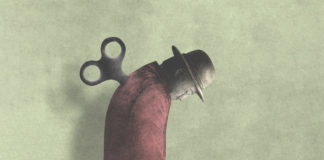
Forgiveness heals the one who forgives
Everyone thinks forgiveness is a lovely idea until he has something to forgive. – C.S. Lewis

The Flight from God | Book review
The Flight from God describes the experience of distancing oneself from God. When we are under the impression that we are running away and that we reach a space where God is absent, we discover that God is already there, inviting us to believe.

The trouble with alcohol
Elspeth Muir’s brother, Alexander, died from drowning. It was 2009, and he had just turned 21. He died from drowning, but his death “was not foreshadowed by his love of water except that it explains why he was near a river, alone, with a blood-alcohol content of almost 0.25. My brother died because he was drunk, and because the drink made him stupid.”

The spiritual community of readers
For almost six years, I relentlessly pursued Dr. Bill Knott to interview him for the programme Starting Point. He had been editor-in-chief of the Seventh-day Adventist Church's official publication, Adventist Review, for a decade. Finally, in early 2016, we sat down for an interview in which we discussed how he developed his talent as a writer and the current significance of the Adventist...

“I write with a smile on my face”
It's probably been 15 years, but ever since I first read Nathan Brown's articles I've been struck by the conciseness and frankness of his writing, the courage with which he tackles the prejudices and superficialities of religion, and the naturalness with which he invites his readers to live a spiritual life worthy of God's generous offer.

The rabbi (who never was a rabbi) who will never be forgotten
Given that no one could become a scholar without formal training, it is truly remarkable that Jesus, who was not formally educated, was nevertheless recognized as a “Rabbi” (Mark 12:14 cf. John 3:2).[1]

Believe and do not investigate?
The phrase “Believe and do not investigate” has over the centuries become a sharp weapon deliberately wielded by critics of Christianity to wound and discredit the supporters of this religion, accusing them of narrow-mindedness and bigotry.

Looking back on small acts of great kindness
This article contains stories of kindness, courage and generosity. By their simplicity they prove that all it takes to do good is a heart that is open to the needs of others.