







Happiness is under the shadow of closeness
The first few seconds are confusing, voices and blurred figures buzzing nearby, and it seems to me that some clumsy hands are trying to pull me out of this zigzag between sleep and wakefulness. I clearly hear a woman's voice announcing that I'm waking up and, before I'm completely out of this state of drowsiness, I realise I'm in intensive care.
The Holocaust and the maths of an absurd history
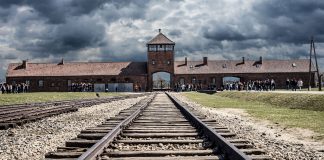
This year, Yom Hashoah,[1] or Holocaust Remembrance Day, begins on the evening of April 27th, and ends on April 28th, at sunset. In Israel, entertainment venues are closed from sunset to sunset, sirens sound long, and the six traditional torches are lit, a symbol of the nearly 6 million people who perished in the atrocities of World War II.
The little giant
“Born in a home where the scant necessities of life were luxuries, when he left the world for heavenly scenes of labour, he bequeathed it his possessions–two silver spoons, a silver teapot, a well-worn frock coat the Methodist Church”[1] Basil Miller
A night in the ocean
For Australians, the islands in the South Pacific Ocean (Solomon, Vanuatu, Fiji, Papua New Guinea), although spread across thousands of kilometres, are a kind of backyard. And many Christians see these islands as their mission ground.
The social media trap
Two recent stories in Australian media shocked me to my core. Two 12-year-olds in different states took their own lives after being bullied at school.
How many Bibles does one person need?
“We need a Bible like this,” said Reverend Richard Cizik, Vice President of the National Association of Evangelicals in America, at the launch of the first Green Bible in 2010. Current environmental issues demand an ecological Bible, where passages about the quality of divine creation and care for nature entrusted to us by God are highlighted in green, Cizik says.

The one way road cancelled
I was there, I saw him. He was coming towards me mechanically, impassively, coldly. He suddenly stopped in front of me and waited for me to speak. For a moment, I froze. He was tall, thin, his face oval and his eyes blue, slightly sunken under his eyelids. I had met such people before, but there was something special about him.
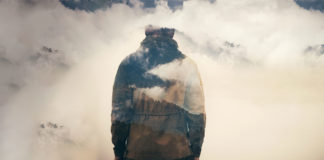
Finding myself. How do I find out who my true self is?
The movie Nomadland, which was awarded Best Motion Picture (Drama) at the 78th edition of the Golden Globes, is a poem; a poem following a rhythm ever more strange to the lives that we—those who have climbed onto the carousel of adult life and have discovered that we are no longer free to get off—are so used to.
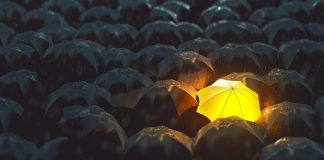
How to cope with manipulation
Many of us probably know at least one manipulative person — or perhaps we’ve even caught ourselves falling into that category. But do we really know when this tendency to control or influence others becomes harmful? And more importantly, how can we deal with manipulative people?

Love is in the little things
A famous saying asserts that the devil is in the details—in the small things we often deem unimportant. But life revolves around the little things. They take up most of our time, betray our vices and virtues, reveal our limits and courage, and divulge our preferences and dislikes. It is in the trivial moments that we are the most authentic: when we eagerly...
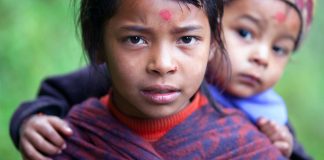
How to change the world
There are days, maybe even years, that go by without us seriously questioning the meaning of our lives or whether anything we have left behind has made anybody's life better. We are afraid of an answer because it might require us to change. For John Wood, the answer came out of nowhere, in a school in the wilds of Nepal.
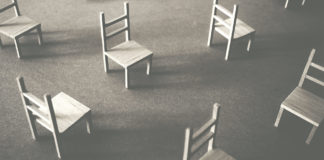
The biased sample: why science should not be practised on friends
The biased sample is a kind of unrepresentative sample, either for quantitative reasons (as is the case with the too-small sample), or for qualitative ones, when its structure does not represent the structure of the real population that is the object of the research.
Don’t let suffering define you
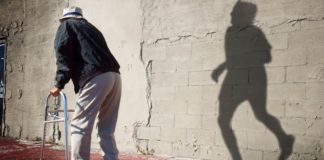
It’s strange how popular the saying What doesn’t kill you, makes you stronger is, when it’s obvious that it is not what hits you that makes you stronger, but the way you take the hit.
Proximity to death
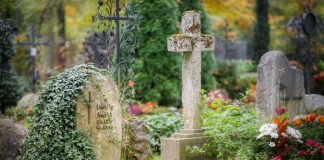
"Brothers and sisters, we do not want you to be uninformed about those who sleep in death, so that you do not grieve like the rest of mankind, who have no hope" (1 Thessalonians 4:13).
Atheism at war
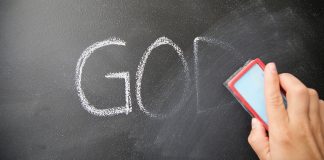
As the rising sun brought life and light to the east coast of North America, it was greeted by a brisk autumn morning. Hurricane Erin was on the move in the Atlantic, creating heavy rainfall from Newfoundland to Bermuda. A cold front saved most of the eastern seaboard from the hurricane’s destruction and the resulting high-pressure front produced clear skies—perfect conditions for air travel.