





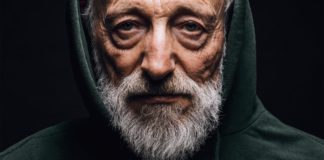
COVID-19: A sad opportunity for the homeless
The prevailing message in the context of the pandemic was clear, but also disturbing: "Don't go out! Stay home! Work from home!" But what about those who do not have a home?

Looking for a loving father
Fathers are an important part of their children’s lives. Good dads can provide stability, protection and love in a child’s life.
The change we are left with
What if change is given to us to use only as long as we continue to work for it?

Facing the two doors: which one will you choose?
No other court in the world can judge a person as effectively as their own conscience. Before and immediately after a wrong has been committed, the "merciless" trial begins.
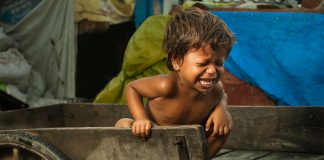
Who stole the happy endings?
"If I cut off your arm, will your husband take you again?" "My husband loves me very much." So he started cutting. "There was no alternative."

The Second Coming Files: a 2000-Year Inquiry | Part II: Millenarianism as a forgotten orthodoxy
Right from the first centuries, the scenario of the second coming of Jesus was interpreted spiritually-allegorically by some, and politically-ecclesiastically by others. As we have learned from the previous article of this series, even the main millenarian movement in antiquity (Montanism) led to an anti-apocalyptic reaction on the part of moderate Christianity. Is this rejection of apocalyptic millenarianism justified? What does Revelation actually...

“Steps to Christ” | Book review
Ellen G. White (1827-1915) is considered the most translated American author, with books bearing her name being translated into more than 160 languages. Ellen was a woman of outstanding spiritual gifts, tireless in her mission to put into writing what she understood from God. Amazingly, her most translated book is one of the most succinct—Steps to Christ.

“Love yourself” | How biblical is the concept of self-care?
Widely discussed in recent years, the term self-care generally refers to focusing on the needs and goals that contribute to our well-being. “Love yourself!” has become the motto of this “ultimate form of self-care,” which some Christians see as a stepping stone toward loving and caring for others. But just how biblical are the ideas of self-love and self-prioritization—concepts so deeply woven into...

Two steps back, but three steps forward
On the morning of the 15 November 2016, I awoke in a hospital bed, with no memory of how I got there. My favourite pyjamas had been torn from my body, and I lay in a hospital gown, a piercing pain in my head, impaling my brain. I was barely able to think and incapable of speech. I was scared, though this was...

What does the Bible say about climate change?
During the COVID-19 lockdown last year, I lived with some messy people. I’d moved into a house that I shared with a wonderful couple of brothers. They were almost everything you could ask for in a set of housemates. Friendly, funny, respectful of your privacy . . . genuinely great people in almost every respect.
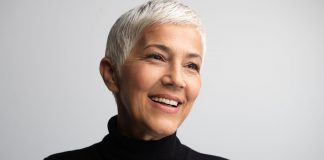
A healthy old age is built decades before
An old saying states: "If youth knew; if age could". This truth is reflected by countless studies showing that lifestyle adjustments made in middle age (or even earlier) favour a transition to a healthier old age.
The applications and pitfalls of critical thinking
Critical thinking is not a cure-all, but it proves very useful in dealing with, clarifying, and solving some decision-making problems, as well as the thought and belief disputes which occupy our minds.
Depression, a disease of civilisation
Five decades ago, when the World Organization for Social Psychiatry was established, many thought it was a joke. Others, being more analytical, tried to prove that mental illness can only be an individual experience; that the problem always exists only in an individual and never in a group.
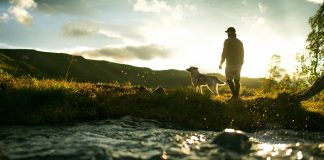
Anxiety vs abundance: cultivating a better mindset
Before setting off to walk Papua New Guinea’s Kokoda Track, I was worried about a few things: blisters, staying hydrated, getting gastro (I’ve contracted it before in PNG—not a pleasant experience), being physically up to the challenge, having the right equipment . . . the list could probably go on. One thing I was not worried about was having a panic attack. Little...