











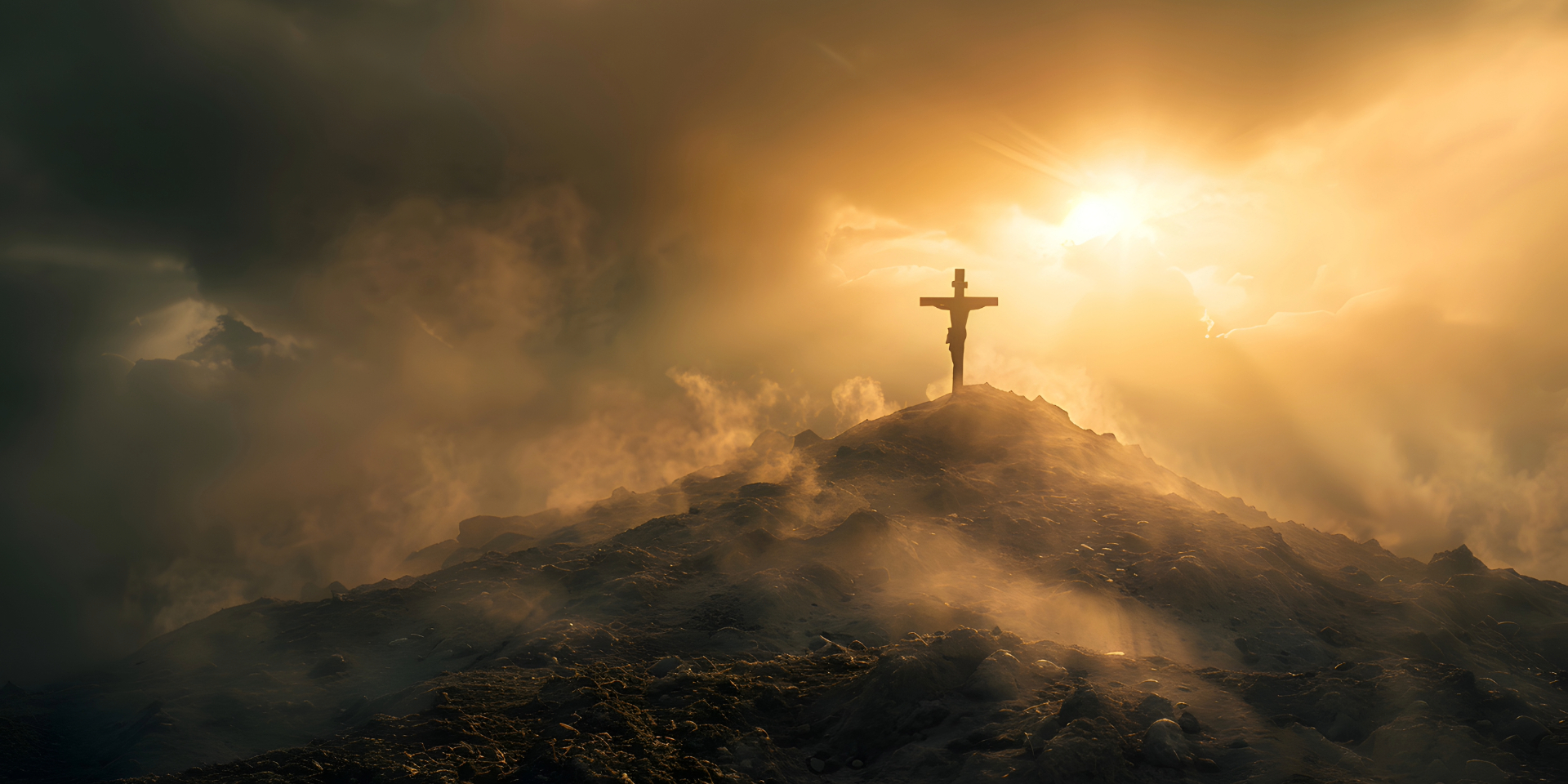
Some moments in life fade quickly, like ephemeral portraits in the memory’s archive. Others, though we have never witnessed them, haunt us and force us to reconsider our perception of life, time, and our shadow self.
Some faces cannot be forgotten, not because of their aesthetic qualities, but because they become impossible to remove from the depths of our consciousness. These are presences that, once encountered, alter our inner selves, even when we would prefer to remain unchanged. The face of Jesus is the first of these. Looking at Him changes our vision forever; we can no longer see the world, time, or ourelves in the same way. Everything we think from that moment on will bear the marks of our encounter with Him.
The face that we cannot forget
Looking at this face, we discover something deeply disturbing: a force that undermines the usual logic of thought and a vision that continually amazes us with its paradox. The almighty God exercises His sovereignty through renunciation, humility, and service. In the person of Jesus, the rational architecture that separates power from weakness collapses. He affirms weakness as a form of power and lives it fully, transfiguring it into a reality that confronts any sincere thinker with an unavoidable perplexity.
He emptied Himself
What makes Jesus an unforgettable presence is not only what He affirms, but also what He chooses not to affirm or impose. Christ refuses to impose Himself by force, suspending the exercise of His absolute prerogatives and becoming a humble presence that leaves room for human freedom. He becomes silence, not in the sense of absence, but of delicacy, so that humans can speak, choose, and become. Only through free affirmation can a person become who they long to be. God’s self-emptying in Christ is a deliberate withdrawal into the limits of humanity, which does not diminish Him, but makes Him accessible: a model, a calling, and a support. Kenosis (Philippians 2:7) is thus the expression of an omnipotence that does not dominate, but loves and invites.
He does not flaunt His divinity ostentatiously before people. He does not demand prostration or respect, nor does He overwhelm by force; rather, He amazes precisely by the lack of its manifestation. “[Do] you show contempt for the riches of His kindness, forbearance and patience, not realising that God’s kindness is intended to lead you to repentance?” (Romans 2:4), and “with you there is forgiveness, so that we can, with reverence, serve you” (Psalm 130:4). In these words, we find the mystery of a presence that does not impose itself but transforms. This deliberate absence of visible glory shines more brightly than any worldly splendour. Without claiming the right to be recognised as God in outward appearance, Christ reveals His divinity by stripping Himself of any sign of its power.
In a context where power is expressed through extravagant symbols, Jesus does the opposite. He washes the feet of His disciples like a slave, serves at meals, associates with tax collectors and prostitutes, touches lepers, the blind, and those stigmatised by society. He does all this not to shock, but because this is precisely His divinity. God is humility.
His exhortations to humility and discretion were not only the content of His sermons, but also defined His very nature: “[W]hen you give to the needy, do not let your left hand know what your right hand is doing… And when you pray, do not be like the hypocrites, for they love to pray standing in the synagogues and on the street corners to be seen by others” (Matthew 6:3-5).
Humility, the adornment of the powerful
Jesus’s humility is not a lack of power, but fullness. A weak person feels the need to demonstrate their power because they understand that the world associates humility with weakness. This is why many people want to be seen, to impress, to lead, and to indulge in extravagance. The truly powerful person does not need to prove anything to others because they know who they are, where they come from, and where they are going (John 13:3). This is how Jesus is.
For Jesus, humility was not a matter of image or a religious strategy, but a direct expression of His being. It was a humility that sprang from greatness, not weakness. Moreover, authentic humility can only be an attribute of the powerful. The weak cannot be truly humble because their lack of power causes them to confuse humility with resignation. In contrast, the impostor can mimic humility and take the place of the knowledgeable and capable individual—precisely because, in his mind, power must be expressed through pride and weakness must be concealed behind a mask of humility.
Humility is not an exercise in abdication; it does not arise from lack, but from fullness. It does not arise from the need to hide, but from the certainty of having nothing to prove. The powerless cannot be humble because they have nothing to give up. They are incapable and remain small without struggle or paradox. True humility only emerges when greatness relinquishes its power, when force softens its impact, and when someone with the ability to act chooses not to.
Being humble does not mean denying your own worth; it means living as if that worth does not belong to you. It is not self-forgetfulness, but discretion in displaying true power. A truly valuable person can relinquish what is rightfully theirs without losing any of their greatness, whereas the petty person has nothing to relinquish—they are already lowly. Authentic humility is not the humility of the defeated; it is the greatness of someone who, although they are worthy of all honours, chooses not to claim them.
Humility as a sign of sovereignty
Humility is an act of sovereignty which manifests the freedom of someone who has nothing to prove. It is not an extrinsic ethical imperative, but a state of mind that transcends the instinct of self-assertion. Lowering oneself without feeling degraded and renouncing rights without compromising dignity are indicators of true humility. Those who lack greatness and power can do nothing but remain within the limits of their own condition. While they cannot truly be said to be humble, the danger of pride does not bypass them. Those who, despite being endowed with power and talent, choose to forgo appreciation truly embody humility.
Jesus demonstrated His sovereignty by allowing Himself to be crucified, choosing to forgive rather than punish, and to lose rather than win. This is true power: the ability to act, but choosing not to. When the Roman soldiers mocked Him, Jesus could have called upon legions of angels to destroy them but He did not do so. While He was hanging on the cross, He could have revealed His divinity and come down but He did not. When Peter drew his sword, Jesus could have conquered Jerusalem but He did not.
The face that transforms
Looking at the face of Jesus, we are not merely witnesses to a portrait; we are introduced to a process of inner metamorphosis. It is not a face that impresses with external grandeur, but one that compels you to re-evaluate your personal identity. Through kenosis, Jesus irrevocably changes the paradigm of power: true strength lies not in what you can take, but in what you choose to give. True greatness is not measured by glory but by the ability to renounce it. If you have the courage to look at Him as He is, your gaze will never be the same again.
Stefaniţa-Marian Poenariu analyses facets of Jesus’s greatness, expressed through His choice to empty Himself and take on human form, to explore the implications of this humility in shaping our character.