











Was the Pax Romana really a time of peace?
On September 23, 63 BC, in the Italian city of Velitrae, a single bolt of lightning struck the city walls. Bewildered by this and wondering what it portended, the people turned to a local oracle for answers. The historian Suetonius tells us the oracle interpreted it as a good omen: that one day, a citizen of Velitrae would rule the world. As fate would have it, on the very same day, a baby boy was born to a minor noble family at their estate outside the city. This family was relatively unimportant, with its only claim being distantly related to Julius Caesar. The couple gave the child his father’s name: Gaius Octavius (or “Octavian”). For the next three decades he would go by this name until, at the age of 35, a new name would be bestowed upon him—a name that the world would remember him by forever: Augustus.
What was the Pax?
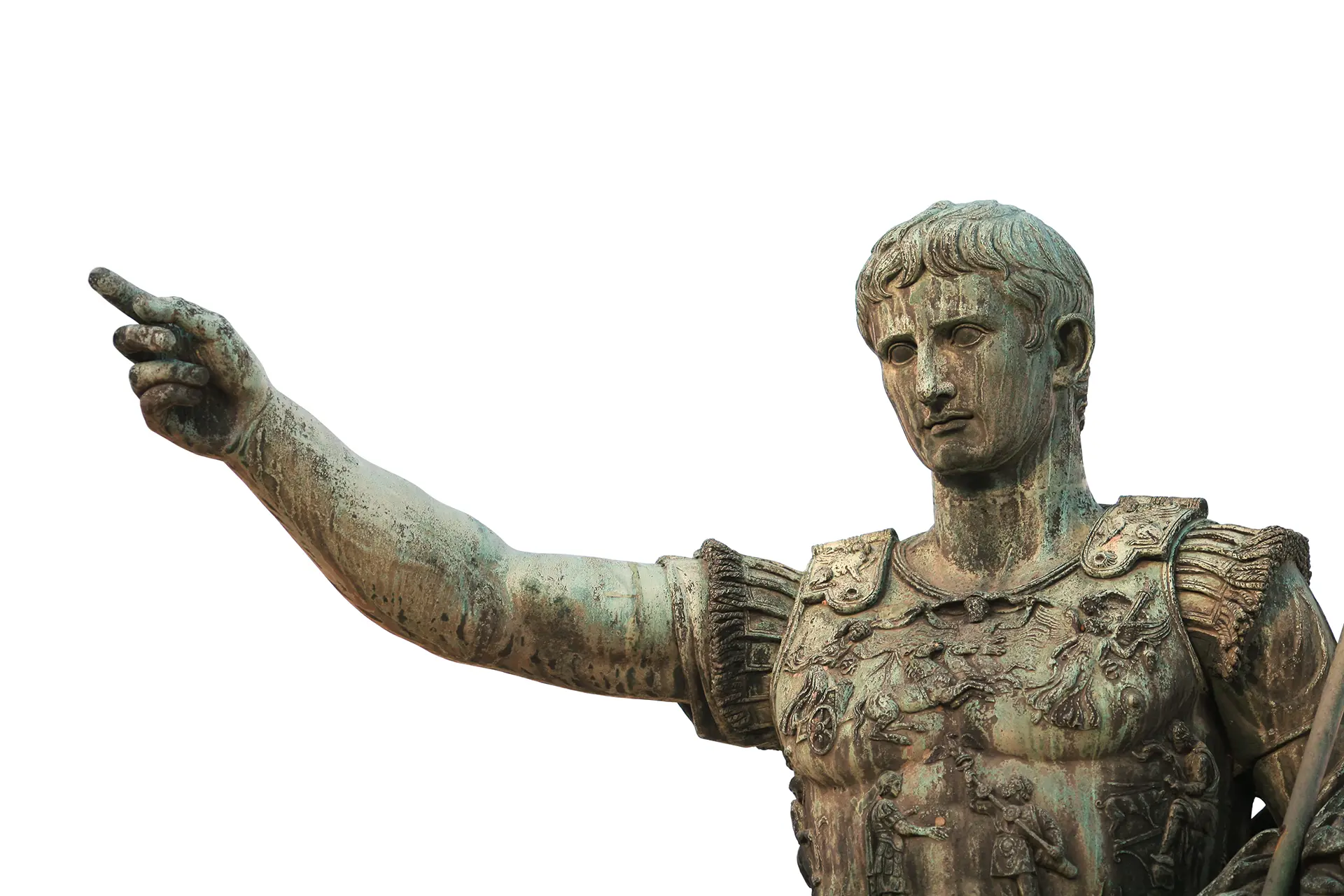
The Pax Romana (“Roman Peace”) is often framed as a 200-year period of relative peace and prosperity in the Roman Empire. Originally just a distant relation, the fate of Octavian changed when Caesar formally adopted him and named him his heir, catapulting the young man into a civil war between several factions. Perhaps tellingly, the Pax is thought to have begun when Octavius defeated Mark Antony and Cleopatra at the Battle of Actium in 31 BC—becoming Rome’s first emperor. It might seem strange to mark the beginning of a period of peace with a battle, but such was the way of Rome.
“Peace came from victory and strength, and prestige so overwhelming that in future no aggressor would dare risk going to war. This was how Augustus had ended civil war, and this is how he and the Romans would eventually achieve peace in the wider world.”[1]
When Octavian was appointed Princeps (“first citizen”) of Rome, it marked a rapid change within Roman politics. Quickly the Senate gave him the title “Augustus”, roughly translated to “Revered One”. Augustus would go on to become Rome’s longest-serving leader, transforming it completely and establishing a dynasty that would dominate the empire for centuries.
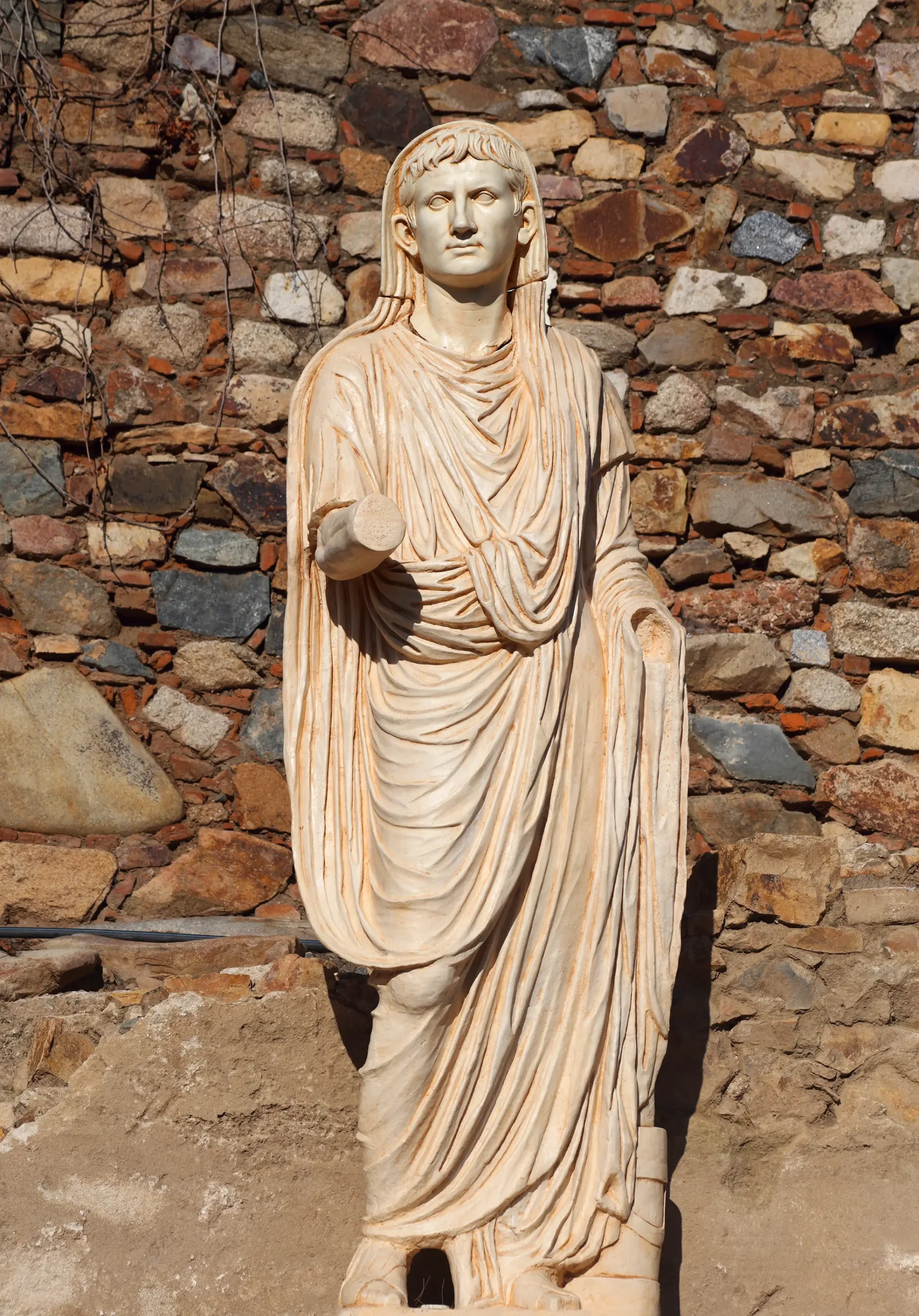
Throughout his reign, Augustus acquired as many titles as he did territories. As the centre of Roman religion, he was Pontifex Maximus (“Chief Priest”). He referred to himself as Divi Filius (“Son of the Divine”) after the Senate posthumously made Caesar a god. In the eastern provinces, he was known as Soter (“Saviour”) and Kyrios (“Lord”). But perhaps most surprisingly to those familiar with his life is the inscription discovered in modern-day Turkey that called him Princeps Pacis (“Prince of Peace”).
Scholar Mary Beard has written extensively on this contradiction. When Octavian entered the Roman political world, it wasn’t as Caesar’s aggrieved heir—it was as a thug. She notes how the use of Octavian’s own private army to pressure the Senate to accept his rule (a common tactic and one most effectively employed by Caesar himself) would read today more like a military coup. Once, he dressed as the god Apollo at a lavish banquet and fancy-dress party—while the common people starved on account of the war he himself was fighting. In one particularly gruesome account, Octavian was reputed to have personally ripped the eyeballs out of a bureaucrat he suspected was plotting against him.[2]
The measure of the man
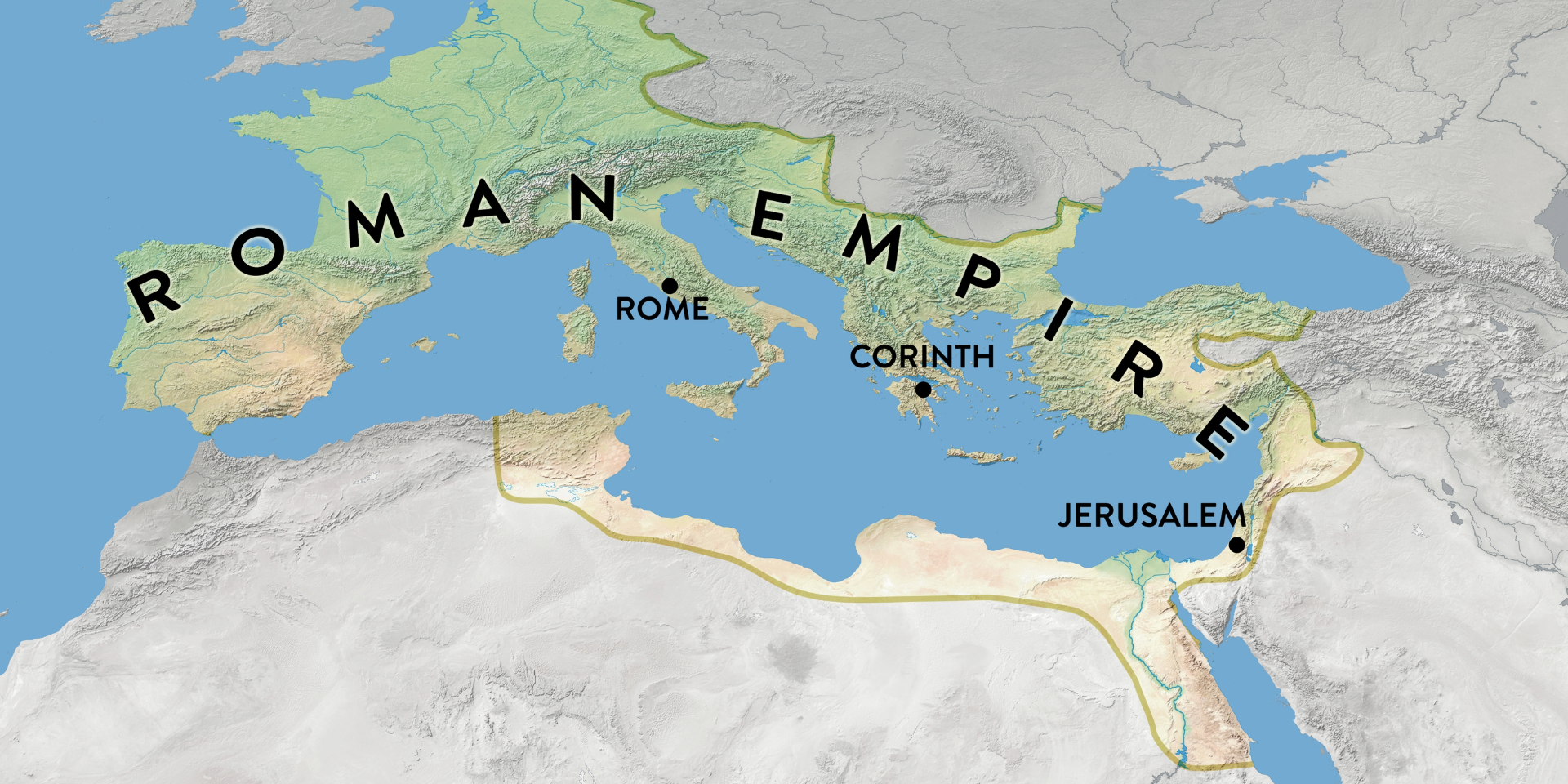
Augustus’s reign and subsequent Pax were just as much marked by violence as the conflicts that preceded him. Military campaigns undertaken during his rule stretched from Spain in the west to Armenia in the east, and from modern-day Egypt in the south to Germany in the north. This entire time, the traditional Roman practice of war remained in full force: grace and taxation exerted over submissive polities with slaughter and slavery doled out to resisters. This begs the question: is the Pax Romana a myth? After all, even primary school-aged children learn stories like the assassination of Caligula, the great fire of Rome (which Nero supposedly observed while playing his lyre) and the bloody siege of Jerusalem.
In some ways, the Pax is indeed a farce. However, some reframing might help us better understand it. The Pax was not the absence of war—it was rather the suppression of war through domination. To the Romans, as Beard points out, the Pax was the “peace of victory”, achieved through violent enforcement. As Virgil (who was on Augustus’s payroll) writes into the mouth of Jupiter in the Aeneid: “Imperium sine fine”—“I have given them empire without end.”
The other end of the empire
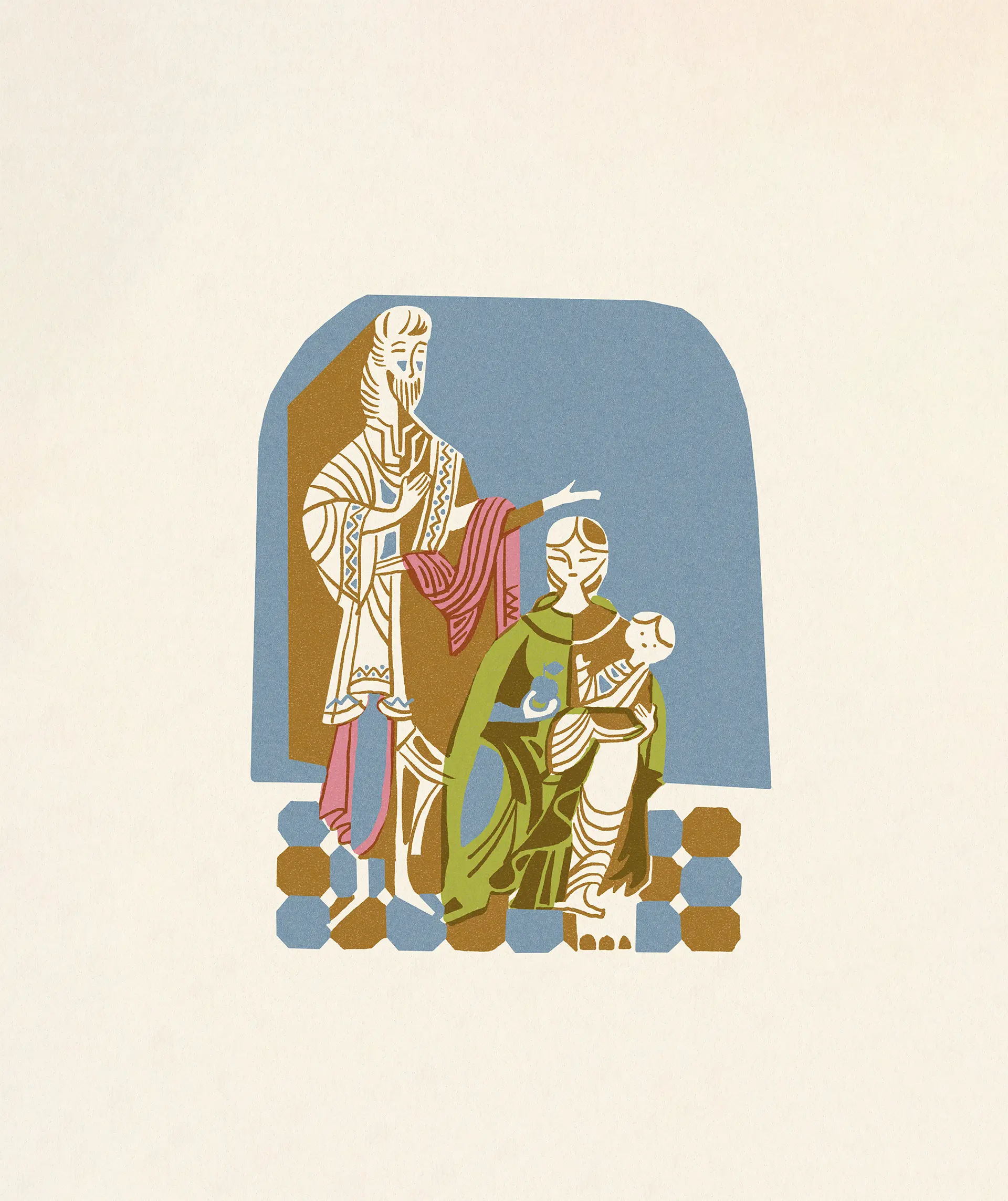
It’s into this world that a baby was born in the province of Judea. Unlike Augustus, this child wasn’t born in an estate. Unlike Augustus, this child’s birth wasn’t announced by a bolt of lightning. And unlike Augustus, this child would not grow up to become an emperor. However, this child would go on to share something in common with Augustus: his title, Princeps Pacis, the “Prince of Peace.”
Centuries earlier, the Hebrew Isaiah had prophesied: “For to us a child is born, to us a son is given, and the government will be on his shoulders. And he will be called Wonderful Counsellor, Mighty God, Everlasting Father, Prince of Peace” (Isaiah 9:6). This prediction contributed to a larger tradition that had begun in the Garden of Eden when God Himself promised, following the expulsion of Adam and Eve, that one day a zaraka (descendant) would permanently break the power of evil and death—but at great cost. Luke tells us, “In those days Caesar Augustus issued a decree that a census should be taken of the entire Roman world” (Luke 2:1). Because Joseph, Jesus’ father, was from Bethlehem, he was obliged to undertake the journey back to his birthplace with his heavily pregnant wife, Mary. As there was no public accommodation available, they were forced to stay in a squalid animal shed. And yet, on the night of Jesus’ birth, an angel appeared to herald His arrival—not to some local oracle, but to a group of shepherds camping out in the fields nearby. “Today in the town of David a Saviour has been born to you; he is the Messiah, the Lord. This will be a sign to you: You will find a baby wrapped in cloths and lying in a manger.” Suddenly, a “great company of the heavenly host” appeared, saying, “Glory to God in the highest heaven, and on earth peace to those on whom His favour rests” (Luke 2:11–14).
The peace that passes understanding
Even though Jesus did not personally claim the title “Prince of Peace” for Himself, His message nevertheless provided a challenge to the kind of peace Augustus was bringing to the world. Jesus was explicit about this when He said, “My peace I give you. I do not give to you as the world gives” (John 14:27). When reflecting on Jesus’ breaking down of barriers between Jews and Gentiles, the apostle Paul said, “For He Himself is our peace… His purpose was to create in Himself one new humanity out of the two, thus making peace” (Ephesians 2:14–15, italics added). Jesus preached about a kingdom that had already “come near” (Mark 1:15). He spoke of an ekklesia[3] that even the power of Hades[4] would not be able to overcome (Matthew 16:18). And when His followers began to refer to Jesus as the “Son of God”, Soter (“Saviour”) and Kyrios (“Lord”), it would have sounded like sedition against the emperor—the only one worthy of such appellations.
In many ways, the time in which we live is a similar kind of Pax. Most of us (particularly in the West) live in relative peace and comfort and yet, we are beset by turmoil at all sides. Wars rage in distant lands—and we are constantly made aware of them through the news and social media. Huge corporations hoard enormous amounts of wealth while ordinary people struggle to put food on the table. Random acts of violence are committed seemingly without rhyme or reason. This creates an unsettling paradox: that we are safer than we’ve ever been in human history but, thanks to the interconnected world we all share, we’re more vulnerable in different ways than our ancestors ever were. Though the risk of being brutalised by a roving band of brigands on a Sunday afternoon outing is far less than for those living in ancient Rome, by the same token, those ancients never had to deal with drones, deepfakes or data breaches. In some ways, the Pax we all rely on for safety and security today is as farcical as the one inaugurated under Augustus. Our Pax is just as tied up with dirty politics, corporate greed and the threat of violence as the Pax of 2000 years ago.
As historian (and not the Spider-Man actor) Tom Holland put it, “Universal though the Pax Romana reigned, no one ever doubted what it was founded upon. Peace was the fruit of victory—eternal victory. It was a soldier in the wilds beyond Palestine, scratching on a rock face, who put it best, perhaps: ‘The Romans always win’.”[5] And yet, here lies the contradiction, for as time has proven, even “empires without end” can, in fact, end. Rome, for all its strength, splendour and talent for slaughter and subjugation, eventually fell apart. Perhaps to us, its decline appears inevitable but to its inhabitants—certainly its emperors—such a thing must have seemed impossible.
Despots and dictators
There are those today who would take on the mantle of Rome—who would echo its memory, its might, its dominance. Such people are strongmen, bullies, wannabe-emperors. And yet, the tools of Rome—violence, suppression, the need for ultimate control, among others—carry within them the seed of its own destruction. We can look back to Rome and see its fall as inevitable because we in the West have been so radically transformed, not by Augustus, who claimed to be the Prince of Peace, but by Jesus, who is the true Prince of Peace.
While the peace of Augustus was achieved through military conquest, the peace of Jesus was achieved through self-giving, other-centred love.
While the tools of Augustus were violence, fear and suppression, the tools of Jesus were forgiveness, reconciliation and self-sacrifice.
While the Pax Romana extended only to the citizens of Rome, the Pax Deus (Peace of God) of Jesus was for all humanity—past, present, future.
While Augustus’s “empire without end” lasted only a few hundred years, Jesus’ kingdom will last for eternity.
While Augustus’s symbol was the sword, Christ’s symbol was the cross—a Roman torture device whose meaning Jesus subverted.
And while the ethos of Rome was Pax per virtutem, “Peace through power”, the ethos of Jesus was Pax per caritatem, “Peace through love.”
I don’t know about you, but I know which empire I’d rather pledge my allegiance to.