











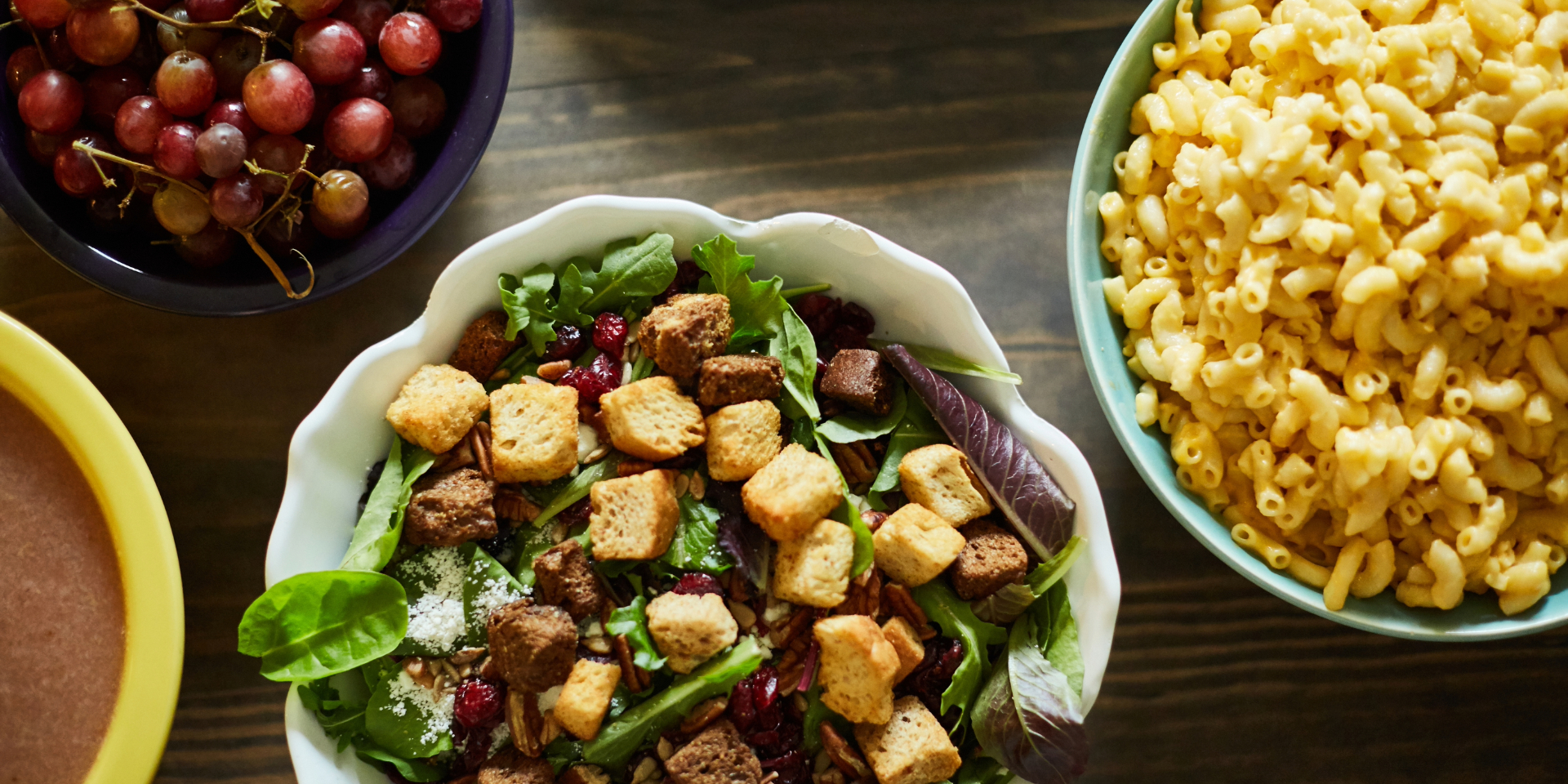
Despite often being labelled as the main culprits for weight gain, carbohydrates are actually vital macronutrients, alongside proteins and fats. They provide the body with energy.
Myth: carbohydrates make you fat.
Carbohydrates are our body’s main source of fuel, but they are also much more than that. They regulate blood sugar metabolism and how the body responds to insulin, an essential hormone for processing sugar. Carbohydrates also play a role in fat metabolism or fermentation. When we eat, our digestive system converts the carbohydrates in food into glucose, which is the “fuel” for our cells. If we produce more glucose than can be used immediately, our body stores it in the liver and muscles for later use when we need an energy boost.
The term “carbohydrates” encompasses sugars, starches, and fibre, which are found in fruits, vegetables, and grains. However, not all carbohydrates are created equal, hence the discussion about “good” and “bad” carbohydrates. For example, peaches have more sugar and a small amount of fibre in their skin; potatoes have a lot of starch and little fibre in their skin; and broccoli is predominantly fibre and contains only a little starch. Fibre, found in most plants, is often associated with “good” carbohydrates. Ultra-processed foods, such as sweets, are sources of carbohydrates but are usually high in sugars and starch and low in fibre, so they lack its benefits. Consequently, they are often classified as “bad” carbohydrates.
Good vs harmful carbohydrates
Starch is metabolised in the body and broken down into glucose. For example, if we hold a slice of bread in our mouth, the starch in wheat grains breaks down into glucose under the action of alpha-amylase. There is nothing wrong with that. The problem arises when excess glucose is stored in the liver and muscles and subsequently converted into abdominal fat once these stores become oversaturated.
Fruit is naturally metabolised mainly into fructose, but it can also contain glucose. Many refined, ultra-processed products, however, contain high-fructose syrups. While glucose can be used directly by the body for energy, fructose is processed in the liver. In large amounts, fructose can contribute to abdominal fat storage. Bear in mind that white or brown sugar is actually sucrose, i.e. one molecule of glucose and one of fructose.
The good news is that fibre is not converted into glucose; it travels through our intestines unchanged, playing an important role in stimulating digestion, maintaining healthy intestinal transit, and keeping the intestinal microbiome within normal parameters.
Simple and harmful vs complex and beneficial
Carbohydrates are divided into simple and complex. Simple carbohydrates cause a sudden increase in blood sugar, leading to insulin secretion and subsequently a drop in blood sugar. This can lead to the need to eat something sweet again to remedy the perceived discomfort. Thus, refined sugars (found in sweets, pastries, baked goods, carbonated drinks, fruit juices, honey, white or brown sugar, ice cream, and chocolate) are digested more quickly than complex carbohydrates and are implicated in weight gain and the development of metabolic diseases.
By contrast, complex carbohydrates are found in many healthy foods. These are digested more slowly by our bodies and keep us feeling full for longer. They also help to maintain a healthy balance of bacteria in the gut due to their prebiotic properties. Sources of complex carbohydrates include fruit with the skin on, vegetables, salads, whole grains, and brown rice.
A healthy adult diet should include 45–65% carbohydrates daily, equivalent to 200–300 g, of which approximately 30 g should be fibre to reduce the risk of coronary heart disease, stroke, and digestive problems.
In conclusion, complex carbohydrates are our allies for optimal health: they help us feel full for longer, thereby avoiding the need for unhealthy snacks and preventing blood sugar swings. Conversely, simple carbohydrates, which are found in white bread, juices, pastries, and other ultra-processed foods, should be avoided in large quantities as they are less nutritious and increase the risk of obesity. This increases our risk of developing serious conditions such as heart disease and diabetes. Therefore, it is important to focus on a balanced diet with a predominance of complex carbohydrates to keep both excess weight and obesity-related diseases at bay.
Bibliography
- Julie E. Holesh, Sanah Aslam, and Andrew Martin, (2023), “Physiology, Carbohydrates”, StatPearls, Treasure Island.
- Leanne Edermaniger, (2023), “Carbs vs sugar: What’s the difference?”, Atlas Biomed Blog (online), 30 August, available at https://atlasbiomed.com/blog/carbs-vs-sugar-what-is-the-difference [accessed 17 October 2023].
- Jessie Inchauspé, (2022), Glucose Revolution: The Life-Changing Power of Balancing Your Blood Sugar, Simon & Schuster: New York.