










Christ’s soldiers on the world’s front lines
“Prayer at the centre of our mission and mission at the centre of our prayer.”– Salvation Army catch-phrase
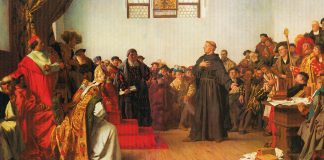
Luther’s protest is not over
In January 2014, in what catholic.org called a historic gesture, Pope Francis sent a message of unity, recorded on a mobile phone, to charismatic and Pentecostal leaders attending a conference organised by Kenneth Copeland Ministries.
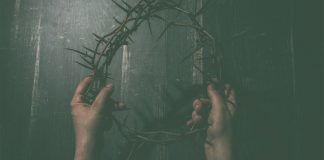
Christian persecution, at the highest level in the last three decades
One in seven Christians is a victim of persecution worldwide and one in sixteen Christians dies every day for their faith, according to a report published by the Open Doors organization, revealing that Christian persecution has reached the highest level in the last three decades.

Louis Braille | The blind man who opened their eyes
Louis Braille said: "God was pleased to hold before my eyes the dazzling splendours of eternal hope. After that, doesn't it seem that nothing could keep me bound to the earth?"
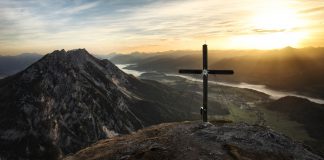
Life under the cross and death at the stake
For the chained man, there were now only two options: unreserved submission to the council or condemnation; recantation or death. Outside, the stake was already prepared.

The secularization of Christmas
Although the holiday of Christmas does not have a biblical origin and did not exist in the days of the early church, most Christians around the world keep it as a reminder of the miracle of Jesus Christ’s birth. However, the religious significance of the holiday is waning in the Western world, as the number of church members decreases and Bible illiteracy increases.
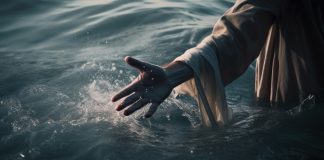
Baptism by fire
Probably no group in Christian history has been so unfairly judged as the Anabaptists.

The Baptist Church
The Baptist Church has made significant contributions to religious life by embracing the principle of separation of church and state and the principle of religious freedom.

The Protestant Reformation: The river that runs through the whole earth
The Protestant Reformation was a tumultuous river, the flow of which began to become visible in 1517. A significant contribution to this eruption was made by its tributaries, the (pre-) Reformation movements: the Waldenses, Albigensians, Lollards, Hussites, etc.—true springs of the main Protestant current, which took over their force in its flow through history.

A mother, her disabled child, and God
Dr Denise Dunzweiller, of Walla Walla University in the north-west of the United States, has emerged as a passionate advocate of inclusive education, a technical term for education systems in which children with disabilities are educated alongside other children in mainstream schools, rather than in special classes.
Gold medal for fourth place
The Parable of the Sower appears to be the key to understanding all the other parables told by Jesus. It is neither mysterious nor cryptic; it simply provides a starting point. The apostles and all those who read the parable today are asked by Jesus Christ: "Don't you understand this parable? How then will you understand any parable?" (Mark 4:13). The logical conclusion...

How to change the world
There are days, maybe even years, that go by without us seriously questioning the meaning of our lives or whether anything we have left behind has made anybody's life better. We are afraid of an answer because it might require us to change. For John Wood, the answer came out of nowhere, in a school in the wilds of Nepal.
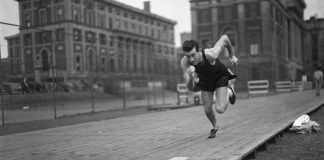
The emancipation of a free man
Louis Zamperini experienced the bizarre smell of death so many times that he came to the verge of losing his mind. However, he survived, and by choosing to forgive the unforgivable, he was able to breathe life into an entire world.

How to build (and how to dilute) a biblical worldview
According to a Barna Group poll, only 6% of Americans have a "biblical worldview", the percentage rising to just 21% for those who regularly attend evangelical churches. This shows that fewer and fewer Christians are turning to Scripture to answer the questions they face.

John Andrews, the big-hearted genius
John Andrews and his family decided to cross the ocean against the current of that time. Therefore, many forgotten truths were brought to light, many hopes were reborn, and many dreams came true.