










At a crossroads: the Christian and their choices
“And taking your life as a whole, with all your innumerable choices, you are slowly turning this control thing either into a heavenly creature or into a hellish one,” wrote C.S. Lewis—simply through the decisions you make. If the choices we face truly carry such eternal weight, how can a Christian ensure they are making the right ones?
Gold medal for fourth place
The Parable of the Sower appears to be the key to understanding all the other parables told by Jesus. It is neither mysterious nor cryptic; it simply provides a starting point. The apostles and all those who read the parable today are asked by Jesus Christ: "Don't you understand this parable? How then will you understand any parable?" (Mark 4:13). The logical conclusion...

The Christian pursuit of happiness
Humanity has not only reimagined God but has also redefined its expectations. Among Christians, many believe happiness is a promise made by God Himself. But what if this pursuit is nothing more than a chase after illusions?
A king’s dream: Martin Luther King, Jr. and the gospel of liberation
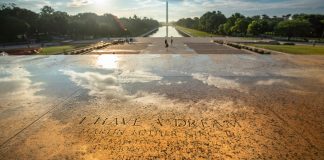
At the age of 34, he moved the American people with a speech about his biggest dream. At 35, he was awarded the Nobel Peace Prize. At the age of 39, his life ended suddenly, with Martin leaving his dream as a legacy to the next generations.
Martin Luther
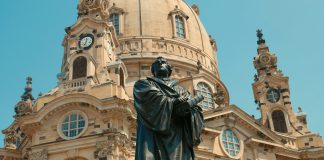
Martin Luther is one of the most famous figures in history. Of those born in Germany, only Einstein, Bach, and Beethoven are more famous. He is better known than the father of Communism, Karl Marx, the literary genius, Johann Wolfgang von Goethe, the artist, Albrecht Dürer, and the inventor of the printing press, Johannes Gutenberg. [1]

Hudson Taylor | When the mountains move aside
Hudson Taylor undertook eleven journeys between Europe and China, and his mission prospered. He had one of the most complex and successful visions for evangelism.
Living Biblically?
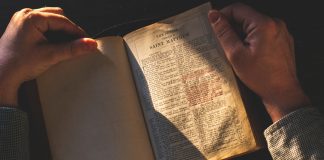
Many Christians say they take the Bible literally. They regularly spend time reading this Book they believe to be inspired by God and seek to understand how to apply it to their lives.
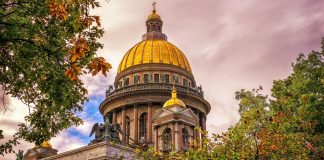
The Christian Sun King of the Russes
Two strangers walk hurriedly through the busy streets of Constantinople. The great bells are quietly ringing out the call to mass, while the semantrons are hastening the footsteps of the faithful towards the place of worship. St Sophia's Cathedral stands majestically, its gates wide open, awaiting pilgrims seeking salvation.
Doctor during communism
Courage is easily recognised in a world where cowardice and obedience are the norm—where another person's word, reinforced by intimidation, is accepted without question. At such a time, someone who opposes the status quo, who sees things differently and who has the courage to stand up and speak out becomes visible, like a lighthouse in the darkness.
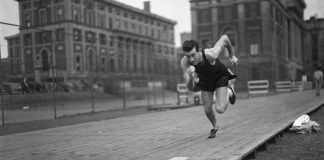
The emancipation of a free man
Louis Zamperini experienced the bizarre smell of death so many times that he came to the verge of losing his mind. However, he survived, and by choosing to forgive the unforgivable, he was able to breathe life into an entire world.
Christian persecution, at the highest level in the last three decades
One in seven Christians is a victim of persecution worldwide and one in sixteen Christians dies every day for their faith, according to a report published by the Open Doors organization, revealing that Christian persecution has reached the highest level in the last three decades.

For the love of singing
Since she stepped onto the stage in the 1987 Australia Day concert with Ricky May at Melbourne’s Palais Theatre as a 15-year-old, Silvie Paladino has established herself as one of Australia’s most versatile and talented entertainers.

Christ’s soldiers on the world’s front lines
“Prayer at the centre of our mission and mission at the centre of our prayer.”– Salvation Army catch-phrase

A meaningful Christmas
Christmas involves a financial and, at the same time, an emotional expense. Even in times of crisis, the spending season lasts longer than the holiday itself.

Kate Lindsay: When the dream is bigger than the challenges
It was the year 1870. Kate Lindsay was sitting the most important exam of her life in front of her Greek teacher.