









Complete surrender: A life summed up in two words
Of all the decisions we've ever had to make, it's easy to identify those that have changed our lives and tested our character. For Eric Liddell, one such decision was to give up an Olympic race for his faith.
The Church of England | Anglicanism between Rome and Geneva
The term "Anglicanism" denotes the system of doctrine and practice of those Christians who are in communion with the archbishop of Canterbury. The beginnings of the Church of England are linked to the reign of Henry VIII and Edward VI, while the initial formulation of Anglican principles is linked to the reign of Elizabeth I, during whose reign a middle ground was politically...
Growing Young
Justin Yang is the Senior Pastor of Atlanta Korean Seventh-day Adventist Church in Duluth, Georgia, United States. He was born in South Korea, but his family moved to America when he was a child, so that his father, who is also a pastor, could continue his education. Pastor Yang went to school in the US but returned to South Korea for his undergraduate...
Brethren Assemblies | The history of the Brethren
The history of Brethren Assemblies begins in the 19th century, when groups of British believers began to be dissatisfied with the Anglican Church, which they saw as enslaved to the state and which they considered to be abandoning the fundamental principles of Christianity.

The Christian pursuit of happiness
Humanity has not only reimagined God but has also redefined its expectations. Among Christians, many believe happiness is a promise made by God Himself. But what if this pursuit is nothing more than a chase after illusions?
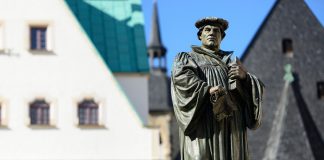
The Protestant Reformation: The river that runs through the whole earth
The Protestant Reformation was a tumultuous river, the flow of which began to become visible in 1517. A significant contribution to this eruption was made by its tributaries, the (pre-) Reformation movements: the Waldenses, Albigensians, Lollards, Hussites, etc.—true springs of the main Protestant current, which took over their force in its flow through history.
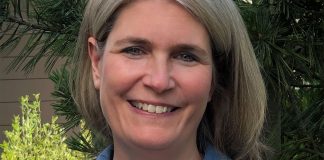
A look into the life of a lobbyist
Kellie Nunley began her career as an intern in the US Congress, and worked in several organizations where she had the opportunity to interact with important people and promote noble causes.

Cynicism as helplessness
The events of July 2016 deepen the social gaps that have become a mark of the 21st century. In an increasingly absurd dialogue of violence, the fighters are radicalizing. Some become religious fanatics, others nationalists. Some become terrorists, others xenophobes. What is constant is the spiral of resentments. On the other hand, the disarming spectacle of political imposture continues. Trump and, more recently...
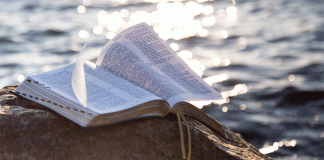
How to build (and how to dilute) a biblical worldview
According to a Barna Group poll, only 6% of Americans have a "biblical worldview", the percentage rising to just 21% for those who regularly attend evangelical churches. This shows that fewer and fewer Christians are turning to Scripture to answer the questions they face.
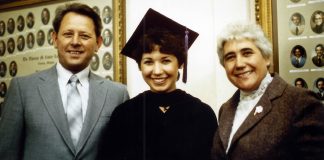
The mountain within
Dr Herta von Stiegel draws fascinating parallels: between Nadeș and New York, London, and Nairobi; between the hills of Transylvania and Kilimanjaro; between life lessons learned in childhood and a remarkable career in leading banking institutions; and between the planet's potential for development and the divine plan for character building.

On the banks of a river where no one had ever been
Jim Elliot was 25 years old when he headed to Ecuador as a result of the answer he sought from God regarding his future.

Henry’s domino effect
In his desire to secure an heir to the throne, Henry VIII set off a domino effect that would ultimately change the face of America and the world.
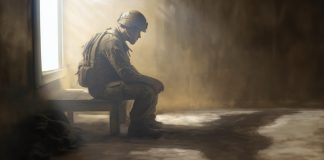
Is the hero better than his God?
Its nomination for six Academy Awards and winning in two categories [1] confirmed the feeling of the public that they were dealing with a very good movie, in every way.

Franz Hasel | The guardian angel’s weapon
In the most difficult moments of his life, Franz Hasel prayed: “Lord, if I am attacked, I will have no way to defend myself. I must trust in You to be my protector. My life is in Your hands.”

The Mayflower odyssey
From the ship’s hold, 102 passengers poured eagerly onto the deck, pale after 65 days of confinement, longing to see the sky and dry land again. Their arrival in the New World might have gone entirely unnoticed had these immigrants not marked history with a first act that would come to define modern democracy.