









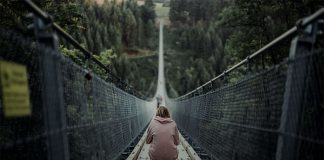
Created with a need for rest
Work has been part of God's plan for mankind since creation, but so has rest. Setting wise boundaries between work and rest is not only a successful strategy for maintaining our productivity, it also reflects on the health of our relationship with God and our fellow people.
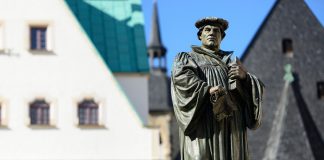
The Protestant Reformation: The river that runs through the whole earth
The Protestant Reformation was a tumultuous river, the flow of which began to become visible in 1517. A significant contribution to this eruption was made by its tributaries, the (pre-) Reformation movements: the Waldenses, Albigensians, Lollards, Hussites, etc.—true springs of the main Protestant current, which took over their force in its flow through history.
Costly choices
One reason, if not the reason why the story of humanity's first wrong choice, the original failure, is vehemently denounced is the brutality with which this event—a seemingly trivial "dietary" decision that turned out to be the most costly ever made by a human being—reminds us more powerfully than any other story how painful the consequences of our mistakes can be. We do...

The journey from the classroom to the real world
Given that my guest, John Satelmajer, holds a respected position at one of the world's largest financial companies, PricewaterhouseCoopers, I expected him to say that he attended the best schools. In a way, he did. Which ones? What shaped his success in life? That is the subject of our discussion.
Baptism by fire
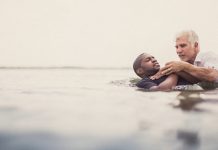
Probably no group in Christian history has been so unfairly judged as the Anabaptists.

Franz Hasel | The guardian angel’s weapon
In the most difficult moments of his life, Franz Hasel prayed: “Lord, if I am attacked, I will have no way to defend myself. I must trust in You to be my protector. My life is in Your hands.”
Young people’s interest in worship | Attachment or rules?
Studies reveal that only a small percentage of those who believe—or identify themselves as religious—actually participate in worship. How can we increase children’s and young people’s interest in worship? Have we truly understood their needs? Is the competition from the secular world and technology simply too strong? With such a large proportion of young people expressing an interest in faith, how can we...
Is the hero better than his God?
Its nomination for six Academy Awards and winning in two categories [1] confirmed the feeling of the public that they were dealing with a very good movie, in every way.

The Christian pursuit of happiness
Humanity has not only reimagined God but has also redefined its expectations. Among Christians, many believe happiness is a promise made by God Himself. But what if this pursuit is nothing more than a chase after illusions?

Immaculate preconception | Who really knows what about Christians?
Some statistics circulated by the international press have created an increasingly negative image of Christians and Christianity. How well-founded is this image, and how should those targeted by it deal with it?
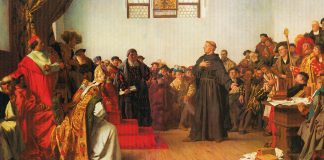
Luther’s protest is not over
In January 2014, in what catholic.org called a historic gesture, Pope Francis sent a message of unity, recorded on a mobile phone, to charismatic and Pentecostal leaders attending a conference organised by Kenneth Copeland Ministries.
Life under the cross and death at the stake
For the chained man, there were now only two options: unreserved submission to the council or condemnation; recantation or death. Outside, the stake was already prepared.
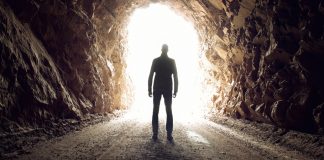
“I remember when I died” | Interview with Ruth Frikart-Moor
"On the 5th of March 1986, life left me! I was in the process of moving and that evening I felt terribly tired and cold..." (Ruth Frikart-Moor)
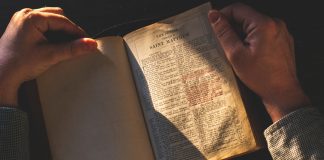
Living Biblically?
Many Christians say they take the Bible literally. They regularly spend time reading this Book they believe to be inspired by God and seek to understand how to apply it to their lives.
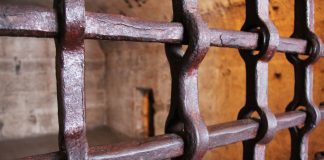
The sleep of reason and Goya’s monsters
"If I were tortured, I would confess to anything. I would confess to being the Sultan of Turkey," says Goya in a film by Milos Forman. "No, you wouldn't!" Father Lorenzo contradicts him, but Goya insists: "I would confess anything to avoid torment."