













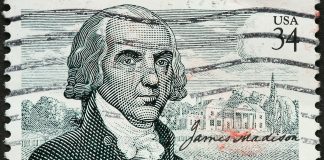
James Madison: The father of modern religious freedom
Influenced by the Calvinist Presbyterian John Witherspoon, James Madison, an Anglican, collaborated with Virginia's persecuted Baptists to establish the concept of religious freedom and freedom of conscience that changed America and the world forever.
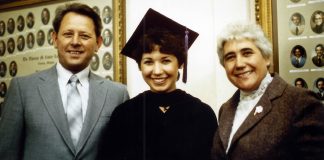
The mountain within
Dr Herta von Stiegel draws fascinating parallels: between Nadeș and New York, London, and Nairobi; between the hills of Transylvania and Kilimanjaro; between life lessons learned in childhood and a remarkable career in leading banking institutions; and between the planet's potential for development and the divine plan for character building.

The Church in mourning: Serving the bereaved in practical ways
When it comes to dealing with grief, psychotherapist Francis Weller points out that "it takes outrageous courage to face an outrageous loss". By supporting those who are bereaved, the Church shows that it possesses the qualities needed to balance concern for current suffering with faith in the ultimate victory over death.

Franz Hasel | The guardian angel’s weapon
In the most difficult moments of his life, Franz Hasel prayed: “Lord, if I am attacked, I will have no way to defend myself. I must trust in You to be my protector. My life is in Your hands.”

Louis Braille | The blind man who opened their eyes
Louis Braille said: "God was pleased to hold before my eyes the dazzling splendours of eternal hope. After that, doesn't it seem that nothing could keep me bound to the earth?"

The little giant
“Born in a home where the scant necessities of life were luxuries, when he left the world for heavenly scenes of labour, he bequeathed it his possessions–two silver spoons, a silver teapot, a well-worn frock coat the Methodist Church”[1] Basil Miller

A look into the life of a lobbyist
Kellie Nunley began her career as an intern in the US Congress, and worked in several organizations where she had the opportunity to interact with important people and promote noble causes.

Seventh-day Adventists | Adventism
Seventh-day Adventists have the deep conviction that Jesus Christ will soon return, and the desire to keep His commandments as they were originally written in the Decalogue.
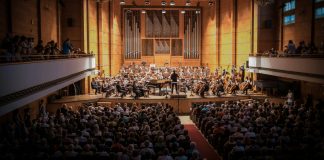
Happiness is a gift
Herbert Thorson Blomstedt has performed in over three thousand concerts with the world's most renowned philharmonic orchestras. He has held several long-term positions as music director of legendary orchestras in Dresden, Leipzig, and San Francisco, and recorded hundreds of works, including the complete symphonies of Beethoven, Bruckner, and Nielsen. He has won two Grammy Awards and received state distinctions in Sweden and Germany....

Does divorce make us happier than continuing in an unhappy marriage?
At the age of 27, for the first time in my life, I worried that time was passing too fast. For the next few years, the speed with which most of my friends were getting married was the next source of concern.

The Mayflower odyssey
From the ship’s hold, 102 passengers poured eagerly onto the deck, pale after 65 days of confinement, longing to see the sky and dry land again. Their arrival in the New World might have gone entirely unnoticed had these immigrants not marked history with a first act that would come to define modern democracy.

The Waldenses | The poor of Christ
The “poor of Christ”, the “poor of Lyon” or, simply, the “brothers” never called themselves “Waldenses” until they joined the Reformation. The derisive appellative was given to them by their persecutors, after the name of the man who consolidated the doctrine of the community.

At a crossroads: the Christian and their choices
“And taking your life as a whole, with all your innumerable choices, you are slowly turning this control thing either into a heavenly creature or into a hellish one,” wrote C.S. Lewis—simply through the decisions you make. If the choices we face truly carry such eternal weight, how can a Christian ensure they are making the right ones?

A king’s dream: Martin Luther King, Jr. and the gospel of liberation
At the age of 34, he moved the American people with a speech about his biggest dream. At 35, he was awarded the Nobel Peace Prize. At the age of 39, his life ended suddenly, with Martin leaving his dream as a legacy to the next generations.

The allure of uncertainty
On June 23, 1863, in France, a book was published that would become the literary sensation of the century. Few could have foreseen the impact it would make. This was not a romance novel, thriller, or self-help guide; it was Vie de Jésus (The Life of Jesus) by Ernest Renan. In less than four months, over 60,000 copies were circulating—a record-breaking success in...