










The Christian Sun King of the Russes
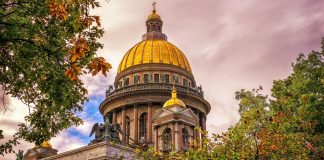
Two strangers walk hurriedly through the busy streets of Constantinople. The great bells are quietly ringing out the call to mass, while the semantrons are hastening the footsteps of the faithful towards the place of worship. St Sophia's Cathedral stands majestically, its gates wide open, awaiting pilgrims seeking salvation.
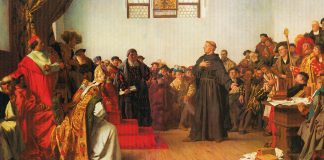
Luther’s protest is not over
In January 2014, in what catholic.org called a historic gesture, Pope Francis sent a message of unity, recorded on a mobile phone, to charismatic and Pentecostal leaders attending a conference organised by Kenneth Copeland Ministries.

Gold medal for fourth place
The Parable of the Sower appears to be the key to understanding all the other parables told by Jesus. It is neither mysterious nor cryptic; it simply provides a starting point. The apostles and all those who read the parable today are asked by Jesus Christ: "Don't you understand this parable? How then will you understand any parable?" (Mark 4:13). The logical conclusion...
The sleep of reason and Goya’s monsters
"If I were tortured, I would confess to anything. I would confess to being the Sultan of Turkey," says Goya in a film by Milos Forman. "No, you wouldn't!" Father Lorenzo contradicts him, but Goya insists: "I would confess anything to avoid torment."
Things we forget about Martin Luther King Jr
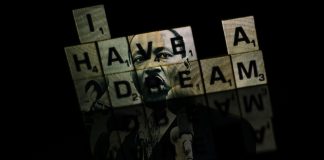
Measuring more than nine metres tall, the pale granite carving of Dr King that is the centrepiece of the Martin Luther King Jr Memorial, just to the east of the National Mall in downtown Washington DC, makes it easy to forget that he was a relatively short man. His iconic likeness towers over visitors as his words carved into the stone walls around...

Burma to Brisbane: Esther Moo’s story
Let me paint you a picture of Esther Moo’s life, one of approximately 1959 Karen refugees who migrated to Australia between 2009 and 2010.

The theology of the cross and the “theology” of the coming of age
When we try to understand our fellow human beings, to grasp their thinking, the reasons behind their decisions, and the purpose of their actions, a familiar adage from popular wisdom comes to mind: “Put yourself in their shoes.”
King, emperor, reformer
The Carolingian Renaissance must be understood as a "reform and reconfiguration of all peoples under the reign of Charles, with a view to creating a Christian territory in its institutional structures, moral conduct, and personal convictions."

A mother, her disabled child, and God
Dr Denise Dunzweiller, of Walla Walla University in the north-west of the United States, has emerged as a passionate advocate of inclusive education, a technical term for education systems in which children with disabilities are educated alongside other children in mainstream schools, rather than in special classes.

Excellence and modesty | An interview with Dr Bert B. Beach
His name is Bert B. Beach. Until his retirement in July 1995, he was director of the Public Affairs and Religious Liberty Department (PARL) of the General Conference of the Seventh-day Adventist Church.

Henry’s domino effect
In his desire to secure an heir to the throne, Henry VIII set off a domino effect that would ultimately change the face of America and the world.
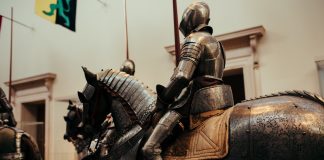
They took up the cross and killed
The first eight days of the Council of Clermont were difficult. Although the participants were apparently discussing the reform of the clergy, or the excommunication of King Philip for adultery, the real focus of attention was the announced speech of "general interest" by Pope Urban II. Little did the prelates and important Frankish nobles present know that they were about to witness one...
Let’s read Genesis with “new eyes”
In the spring of 2022, I interviewed the venerable professor of Hebrew exegesis, Jacques Doukhan, for the second time. Ten years before, in our first interview, we discussed his life: his beginnings in a Jewish family in Constantine, Algeria, his studies in France, Switzerland and the United States, his work as a teacher and author. This time we talked about the study that...

Christians who don’t fear old age
“Even to your old age and gray hairs I am he, I am he who will sustain you” (Isaiah 46:4).
The Methodist Church | Methodism in search of holiness
The Methodist Church emphasised practical sanctification and mission, these aspects being necessary in contemporary Christianity as well.