













The miracle of common healing
Religious people believe in the positive results of their faith in God. There is a common expectation that faithful people will lead good, healthy lives, while bad people will experience trouble, illness and punishments. The reality, however, is much more complex and often contradicts such expectations. How useful is religious faith when it comes to health, or the healing of the sick?

When one cries, the other tastes salt
Right at the start of the political thriller, The Post, a scene portrays military analyst Daniel Ellsberg with an empty gaze and a soul burdened by the horrors of the Vietnam war he was forced to document for the United States Department of Defense.
What do Jesus’ miracles mean?
It’s hard to read the description of Jesus’ life in the Gospels and not wonder what the many supernatural healings and other miracles performed by Him mean for us today.

Stubborn faith
On a number of occasions during his writing life, Nobel Prize winner and author Elie Wiesel tried to re-tell the story of a profound experience he’d had as a young boy in the Nazi death camp at Auschwitz. He wrote a play, a novel, and even a cantata to try to re-create his memory of this event, each of which remained unpublished. Finally,...
Prayer and the presence behind the silence
The words God is not listening! He is not answering! are the essence of one of our most troubling complaints. Is there an answer to it powerful enough to pull us from doubt’s darkness?

God, armed violence and genocide
One of today's dilemmas disputes, dialectically, the complex reality of the Bible and the secular way of looking at the "terror of history": Is God a source of morality superior to humanism, or not?

The Protestant Reformation: The river that runs through the whole earth
The Protestant Reformation was a tumultuous river, the flow of which began to become visible in 1517. A significant contribution to this eruption was made by its tributaries, the (pre-) Reformation movements: the Waldenses, Albigensians, Lollards, Hussites, etc.—true springs of the main Protestant current, which took over their force in its flow through history.

Did Jesus really rise from the dead?
No serious historian doubts that Jesus lived in first century Palestine and died by crucifixion. However, controversies arise when the resurrection is discussed.
The Second Coming Files: A 2000-Year Inquiry | Part III: Modern Millenarianism
While the historic churches remained at least disinterested in millenarianism, the Apocalypse, and the Parousia—that is to say, when they were not hostile to them—Protestant pluralism allowed for both reluctance[1] and increasingly significant preoccupations with the research and publication of the themes regarding the end of the world.

When God described Himself, He called Himself “the Word”
Whether you're a practising believer, a casual believer or, conversely, an atheist, you cannot help but be taken aback by the fact that one of the earliest images of God we have in Scripture is an unexpected one for those times: the image of God writing (Exodus 31:18).
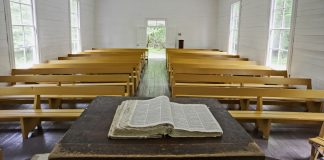
An unusual preacher
Mass evangelism “campaigns” have become a common phenomenon in contemporary religious culture. However, few people ask how it all started and what are its long-term effects.

Complete surrender: A life summed up in two words
Of all the decisions we've ever had to make, it's easy to identify those that have changed our lives and tested our character. For Eric Liddell, one such decision was to give up an Olympic race for his faith.

Final Judgement: The day the critics will be silent
Claiming justice is history’s refrain, and it has a significant echo in the Bible. We all dream of a happy ending and a fair judgement as soon as possible. Heaven itself is surprised that God has delayed His holy justice. While some wait for it, others quash even the very thought that it might come.
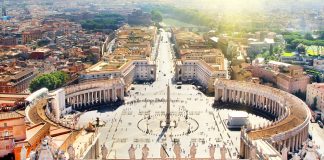
The disgrace of (anti-)Catholicism
This topic seems to be a matter of picking through the rubbish in order to survive. Who cares about Protestant protest today? Anti-Catholicism, like anti-Protestantism, represents natural and culturally legitimate attitudes that can be judged by their motivation, spirit and content—aspects that are apparently obscure but, when examined, become very transparent.

What do we do with the “boring” Bible passages?
Christian author Beth Moore once called the book of Leviticus the graveyard of good intentions for those trying to read the Bible from start to finish. Surely, there are Christians who can point to many monotonous, bland passages and biblical chapters, confessing that they bypass them or read them out of obligation. What should we do with the “boring” Bible passages?