











What to tell your children about Santa Claus
I’m not sure if there was ever a time when I thought Santa Claus really existed. I never came across him directly during my childhood. However, I remember wondering, while looking at the pictures from my brothers’ Christmas parties, whether any of the children, smiling at the photographer from Santa’s lap, ever wondered how real his story was, with so many incongruous and...

Bible echoes through a broken stone
A black basalt stone found in the desert of Jordan has an inscription with the earliest known use of the name of Yahweh (one of the many names for the Old Testament God). It is one of many ancient items which confirm biblical history.
The Waldenses | The poor of Christ
The “poor of Christ”, the “poor of Lyon” or, simply, the “brothers” never called themselves “Waldenses” until they joined the Reformation. The derisive appellative was given to them by their persecutors, after the name of the man who consolidated the doctrine of the community.
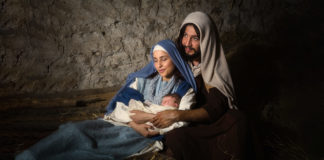
Joseph of Nazareth: The virgin’s husband and the Son’s father
He married a pregnant woman and accepted the responsibility of raising and educating a Son who was, because of His divine power, his Father. This was a mission full of risks and challenges for a humble carpenter from Nazareth, who has come to attract the attention and respect of generations.

What could console our terrible fear of death?
Along with the rising death toll due to coronavirus complications, a usually latent aspect of our fear becomes harder to ignore. Despite the fact that it is the only certainty we all share, realising that our own end is a reality we might need to confront sooner than we had thought leaves many of us fervently searching for consolation.

COVID-19: Forgiveness in isolation
When we are isolated with our family, problems that are sometimes easy to ignore become more acute, and the need to receive and offer forgiveness to those around us becomes increasingly evident.
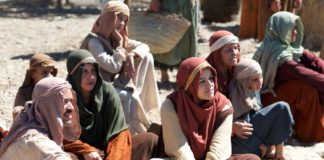
The stylistics of Jesus’s speech
Today's increasingly politically correct and very denotative way of transmitting messages of public interest tends to distort the reception of speeches that have rhetorical and expressive nuances. In this context, how do we evaluate the cryptic nature of Jesus's words?

A mind at war in peacetime
When you discover that the only thing you have left is faith in God, you fervently wish that your faith doesn't end up poisoning your soul.

Hudson Taylor | When the mountains move aside
Hudson Taylor undertook eleven journeys between Europe and China, and his mission prospered. He had one of the most complex and successful visions for evangelism.
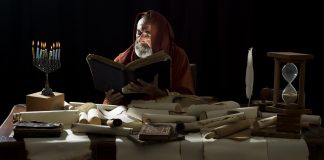
Summa Theologica | Theology’s sway with logic
Classmates nicknamed him “the dumb ox” because of his massive physique and quiet nature. But his brilliant mind and passion for study impressed the famous professor Albert the Great, who defended him: “When this Ox roars, the whole world will hear it.” He was talking about Thomas Aquinas.

The origins of the doctrine of incarnation
Jesus of Nazareth feels, thinks, desires, and acts identically with the eternal Logos, but under the conditions, with the possibilities, and within the limitations of the earthly life that He has fully assumed, with all humility and responsibility.

Love in the Time of COVID-19
As we know all too well, life can be hard. Even in the best of times, life can be hard. But now this, a pandemic? How are we to cope?
The Ecumenism Files IV: Ecumenism in recent times
To what extent is ecumenism included in God's concerns? Does God's agenda include this objective?

Deal with the devil
Among the many perplexing phenomena the internet offers, recent public statements by certain American artists stand out. These individuals, popular in various circles, openly admit to having made a deal with the devil—selling their souls and becoming his servants in exchange for career success, wealth, and fame.
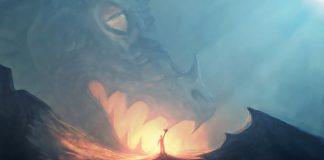
The mark of the beast | A controversial apocalyptic motif
In addition to its social and economic consequences, the COVID-19 pandemic also raised a religious question that has been raised every time there has been a major change in society: did the wearing of the mask, the anti-COVID vaccine or the green certificate have anything to do with the mark of the beast or the number 666 in the last book of the...