














Mary’s journey: from inner turmoil to unshakeable trust
Mary was an ordinary person, just like us. The Gospel does not suggest that she had any particular merit, yet her obedience played a pivotal role in a story that would change the world.

How does the calming prayer help us manage volcanic emotions?
“I live in a high and holy place, but also with the one who is contrite and lowly in spirit, to revive the spirit of the lowly and to revive the heart of the contrite" (Isaiah 57:15).

Is the Bible history?
The Bible is the best-selling book of all time. But while people are aware that the Bible exists, these days relatively few know much about it or have taken the time to actually read it.

Change and stability in religion
Professor Bailey V. Gillespie, from La Sierra University's Department of Theology and Christian Character in California, impressed me with both the diversity of his interests and his prestigious achievements, particularly in the field of young people's religious experience.
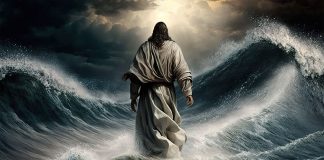
Through the storm with God by your side
"Even to your old age and gray hairs I am He, I am He who will sustain you. I have made you and I will carry you; I will sustain you and I will rescue you" (Isaiah 46:4).

Hope from the pit
Fire falling from the sky. A massive tsunami. An abandoned city. Let’s be real—it’s probably Los Angeles or New York (although sometimes Sydney or Hong Kong makes a cameo). These are the images we most often associate with the end of the world. Whatever comes to mind for you, no doubt it has been shaped in large part by literature, art and, of...
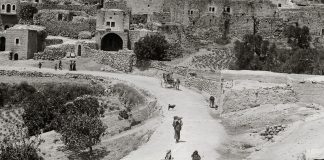
The stories that restore our future
Among the words of Jesus, I was first fascinated by His surprising and enigmatic counter-questions, which generated real clashes among his tempters. In the face of the questions that were supposed to leave Him speechless, He always had a more comprehensive vision, from the perspective of which the traps were reduced to ridiculous, absurd obstacles.

What Creation tells us about us
It seems that one of the requirements for any sustainable worldview, philosophy or faith is that it should have some account of origins. Perhaps we could think about it simply as a necessary element of a good story. It is certainly one of the recurring tropes of superhero sequels or sci-fi epics that at some point we will come to better understand a...

The faith in our hearts
When I read “The Pitesti Phenomenon”, in my teens, I was bewildered by how cruel human nature can be. It was also then that I realized that being forced to renounce yourself, to bury your values and defining beliefs to become the reflection of a rotten system, to become inhuman is worse than being physically tortured.

God’s sacrifice and our own
For those who accept the biblical account of Jesus's life as true, the most important thing is deciding how to respond to the Savior’s act of offering His life. What does it mean to accept Jesus's sacrifice? How does it apply to us? How does it become part of our lives?

The forgotten sign
On May 19th, 1780, a strange phenomenon turned a sunny morning into an unexpected night. The event, known as the Dark Day, was seen as a sign of divine judgment by contemporaries and as a means of ridiculing apocalyptic expectations by sceptics.

Christian persecution, at the highest level in the last three decades
One in seven Christians is a victim of persecution worldwide and one in sixteen Christians dies every day for their faith, according to a report published by the Open Doors organization, revealing that Christian persecution has reached the highest level in the last three decades.

“The woman with the book” | The weakness that unleashes the power of God
God uses the traits we dislike as well as our weaknesses to create something great, beyond our abilities and imagination. This is the message that pervades the pages of "The Woman with the Book", the biography of the missionary Gladys Aylward.

Forgiveness for the Nazi criminals
Most of our beliefs are easy to keep, as long as nothing puts them to the test. Like many others, Henry Gerecke discovered to what extent he truly believed in what he had preached for years when faced with a difficult choice.

What about hypocrisy?
Jesus’ woes are not uttered primarily in the face of sins such as theft, debauchery, or murder, about which we are so horrifed)—often hypocritically. His woes are directed precisely against hypocrisy[1], a form of soul pollution to which we often relate, unconsciously or not, laughing or smiling knowingly.