












The hope of God’s judgement
To be able to see our world and life through the experiences of someone of a different culture and background is rare. It is a gift—but it can also be a jolt to our sensibilities and assumptions. The world we thought we knew can look very different through someone else’s eyes. This is one reason storytelling can be such a powerful form of...

Decoding the EU’s place in Bible prophecy
Europe is more divided than ever. What does that mean for our reading of biblical prophecy?

Today’s world and the unholy holy wars
"I'm driven with a mission from God." God would tell me, 'George, go and fight those terrorists in Afghanistan.' And I did, and then God would tell me, 'George, go and end the tyranny in Iraq.' And I did..."

The search for meaning
In The Simpsons episode entitled “Homer the Heretic,” Homer Simpson has a conversation with God.
The One Who emptied Himself
Some moments in life fade quickly, like ephemeral portraits in the memory's archive. Others, though we have never witnessed them, haunt us and force us to reconsider our perception of life, time, and our shadow self.

God, armed violence and genocide
One of today's dilemmas disputes, dialectically, the complex reality of the Bible and the secular way of looking at the "terror of history": Is God a source of morality superior to humanism, or not?

When sounds proclaim the glory of God
The year 1685 gave the world two of its greatest composers: Johann Sebastian Bach and George Friedrich Handel. The presence of the great biblical subjects in their masterpieces not only filled the hearts of believers with joy, but determined a new direction in the evolution of the musical language, which continues to have an impact to this day.

How does God answer prayers?
“I will stand at my watch and station myself on the ramparts; I will look to see what he will say to me” (Habakkuk 2:1).

“Believe and do not inquire”: the motto of a convenient faith
Many who are familiar with leafing through the pages of the Bible might claim that it’s enough to simply read it, without delving into deeper study. On the other hand, there are Christians who actively engage in a thorough examination of the sacred text, though often without a structured approach. Others choose not to read it at all, despite their connection to religious...
The final days of history
Virtually every civilization has been characterised by religious beliefs about the end of all things, not least about the timing and the conditions that precede the end, and signs of its imminence. There are many differences between these beliefs across civilisations, but many similarities too.
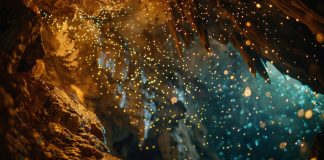
Searching for glow-worms
With packs and tents strapped to our backs, it took our little group of three several hours to reach the hidden valley. The lush, green rainforest was cool and damp and as we gingerly clambered over moss-covered boulders, we attempted to follow an almost non-existent track that wound its way parallel to the mountain stream.

The courage of freedom
“It was as if I were living in a fairy tale. And the most wonderful part was that I knew—hard as it may be to believe—that the story was true. None of the hardships of imprisonment touched me. The fear of the unknown no longer unsettled me, nor did the fact that, three days after my arrest, no one had yet called me...

The face that transforms me
Every time I look through the lens of a microscope, I am struck by the realisation that beyond what the naked eye can see lies a universe far deeper and richer.
The portrait of religion, in scientific colours
More than a century ago, when the social sciences were just beginning to study the relationship between religion and health, elite scholars such as sociologist Émile Durkheim, Sigmund Freud, the father of psychoanalysis, and philosopher Friedrich Nietzsche repudiated religion consonantly, claiming that it had a toxic effect on individuals.

Chernobyl: The cost of lies
On April 26th 1986, reactor 4 at Chernobyl nuclear power plant in Ukraine exploded. The effects were catastrophic—it was the worst nuclear disaster in history. The explosion let out the equivalent of 500 Hiroshima bombs-worth of radiation, and the area around Chernobyl—including the town of Pripyat—is now uninhabited. It will be unsafe to live there for the next 20,000 years.