









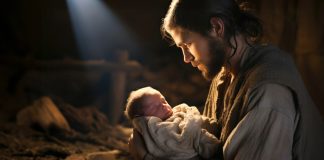
Becoming the father of the Son of God
In the history of salvation, few people have received a more unsettling calling than Joseph of Nazareth. After overcoming his initial hesitation, he made a series of decisions born of obedience. He remains a model of mature faith and authentic manhood.

The final days of history
Virtually every civilization has been characterised by religious beliefs about the end of all things, not least about the timing and the conditions that precede the end, and signs of its imminence. There are many differences between these beliefs across civilisations, but many similarities too.

Are you gifted?
There’s something lying on a massive table. It’s a huge picture. You move closer and see that the design is made up of individual pieces, like a jigsaw puzzle. But the pattern is unusual. It isn’t an immediately recognisable image, such as a Swiss mountain or a bouquet of tulips.
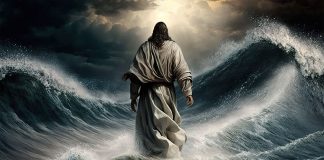
Through the storm with God by your side
"Even to your old age and gray hairs I am He, I am He who will sustain you. I have made you and I will carry you; I will sustain you and I will rescue you" (Isaiah 46:4).

The face that transforms me
Every time I look through the lens of a microscope, I am struck by the realisation that beyond what the naked eye can see lies a universe far deeper and richer.

Myth busters: Christmas
Putting Christmas on the myth-busting agenda is both an uncomfortable and challenging task—gratuitous sacrilege and pure paganism for those who believe that questioning Christmas is a sign of atheistic or conspiratorial leanings; honest, necessary Christian analysis for those interested in eliminating forgeries and freeing themselves from prejudice.

Christian education for children: How to teach your child to pray
For Christian parents, there is no greater concern than to provide their children with a Christian education. The first public demonstration of this concern is the blessing of children at young ages, in various ways: the baptism of children in traditional churches, or a simple prayer of blessing in Protestant churches. Dedicating their children to God, one way or another, gives parents a...

Does apologetics still have a place in today’s debate on Christianity?
Apologetics, the branch of theology that seeks to defend the faith by offering logical evidence in its favour, is often considered an ineffective tool for missionary work. How can it be employed in a non-coercive manner to avoid the forced rationalisation of all aspects of faith?

The allure of uncertainty
On June 23, 1863, in France, a book was published that would become the literary sensation of the century. Few could have foreseen the impact it would make. This was not a romance novel, thriller, or self-help guide; it was Vie de Jésus (The Life of Jesus) by Ernest Renan. In less than four months, over 60,000 copies were circulating—a record-breaking success in...

The meaning of life: between the sandbox and the constellations
Life is a stage that we enter without a script, although we are constantly influenced by forces of varying visibility: social, educational, religious, economic, and political.

Atheism at war
As the rising sun brought life and light to the east coast of North America, it was greeted by a brisk autumn morning. Hurricane Erin was on the move in the Atlantic, creating heavy rainfall from Newfoundland to Bermuda. A cold front saved most of the eastern seaboard from the hurricane’s destruction and the resulting high-pressure front produced clear skies—perfect conditions for air travel.

Picturing heaven
What do you imagine heaven will be like? American science-fiction writer Isaac Asimov famously said, “For whatever the tortures of hell, I think the boredom of heaven would be even worse.” Although I love Jesus, I think I am a bit afraid of getting bored there too. There’s a prevailing picture of heaven as being some sort of suspended animation, which may play into this.
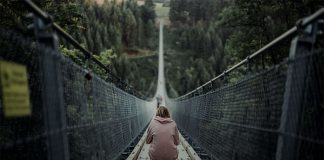
Created with a need for rest
Work has been part of God's plan for mankind since creation, but so has rest. Setting wise boundaries between work and rest is not only a successful strategy for maintaining our productivity, it also reflects on the health of our relationship with God and our fellow people.
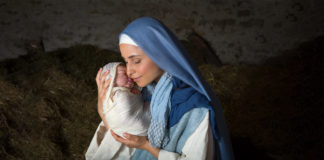
Born of a virgin
When Larry King was asked who he would most like to interview among all the famous characters of history, his answer was clear: "Jesus Christ". The talk show host wanted to know if Christ had indeed been born of a virgin. "The answer to that question would define history for me,"[1] King said.

Looking for a loving father
Fathers are an important part of their children’s lives. Good dads can provide stability, protection and love in a child’s life.