












The birth certificate of morality
Humans are moral beings, while animals possess a rudimentary form of morality. Both the most conservative theologians and evolutionary biologists agree with these statements. Still, since the former speak of God and the latter of nature, the eternal dispute between the two parties is based on the authorship of the sense of ethics, the germination bed for the birth of morality. So, if...
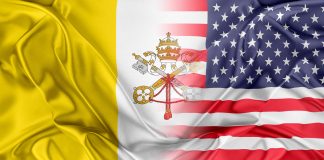
Pope Leo XIV: the relationship between the first American pope and US politics
Pope Leo XIV, who was born Robert Francis Prevost, was elected the 267th Supreme Pontiff. Born in the south of Chicago in 1955, he is the first North American pope. Despite this, his relationship with US politics is more complex than his biography might suggest.
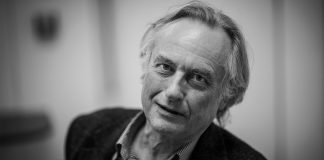
Thank God for atheists?
Richard Dawkins is arguably the world’s best-known atheist. His 2006 book The God Delusion was a runaway success and widely influential. That’s why theologian Alister McGrath was surprised when a young man told him he became a Christian after reading The God Delusion.

God is love and that makes us eligible, as imperfect as we may be
We have trouble understanding and accepting the image of a loving God, as we have grown too familiar with the type of love that offers itself only when it finds in a person the qualities that make them easy to love.

How to befriend the future
What is the future? The question may seem trivial. But when you think about it, you understand better what St Augustine confessed: "What then is time? If no one asks me, I know; if I want to explain it to a questioner, I do not know".
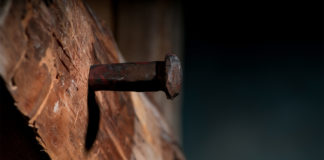
Why did Jesus have to die for us?
Taken as a whole, this question sounds like a painful cry, springing forth from the depths of the human being, in the midst of the darkness of uncertainty and doubt. This question, however, consists of multiple sub-questions. We will address these essential questions that will open our minds to the light of the teachings of Him who holds all knowledge and truth.
The future and prophecy
Much of the Bible was written by prophets, so it is full of prophetic revelation. Most of these revelations are about mysteries of the past and present that we would not otherwise have access to.
I didn’t know that God cries too
In those times when grief accompanies us and we find ourselves alone in the middle of the night, does God shed tears with us?

Clash of sexual cultures (II)
Jessica was 19 when she had to tell her parents, both practicing Christians, that she was pregnant. That moment generated a real earthquake in the young woman’s family who, together with her boyfriend at the time, had been strongly involved in the purity movement, an ideology that promotes sexual abstinence until marriage, for religious reasons.

Instant regrets, memory wipes & free will
Have you ever done something you immediately regret? Perhaps you’ve let your emotions get the better of you, lost control and said something particularly harsh to a friend in the heat of a moment—you wish you could take the words back the moment they left your lips.
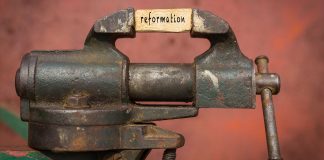
How (not) to clip the wings of reformation
In the fourteenth and fifteenth centuries, Europe was hit hard by several disasters, the proportions of which are difficult to imagine today.

We write the future ourselves: an overview of Biblical prophecy
The Bible, a prophetic book par excellence, is often misinterpreted. Its prophecies can seem fatalistic, or fear-mongering. But, when understood correctly, Biblical prophecy more than unravels the future—it also provides us with a clearer perspective on the present.

What does the Bible say about climate change?
During the COVID-19 lockdown last year, I lived with some messy people. I’d moved into a house that I shared with a wonderful couple of brothers. They were almost everything you could ask for in a set of housemates. Friendly, funny, respectful of your privacy . . . genuinely great people in almost every respect.

The search for meaning
In The Simpsons episode entitled “Homer the Heretic,” Homer Simpson has a conversation with God.
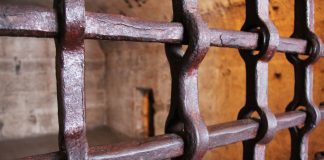
The sleep of reason and Goya’s monsters
"If I were tortured, I would confess to anything. I would confess to being the Sultan of Turkey," says Goya in a film by Milos Forman. "No, you wouldn't!" Father Lorenzo contradicts him, but Goya insists: "I would confess anything to avoid torment."