














Misunderstanding a “memorable misunderstanding”
The spontaneous generation of life on Earth is as likely as a whirlwind putting a Boeing 747 together using scattered spare parts in a junkyard.

A blood-red sunrise: martyrs and the instinct of persecution
Even though we have been in a much better place for 700 years now, we know that the passing of time has not eliminated the instinct of persecution from human nature.

Vaccine against death
What would you do if someone denigrated you in public? You could deny the information, but there is no guarantee that you will be able to rehabilitate your image. If you leave things as they are, there is a risk that silence will be interpreted as guilt. If you go to court, the process might take a long time and it may not...

The stylistics of Jesus’s speech
Today's increasingly politically correct and very denotative way of transmitting messages of public interest tends to distort the reception of speeches that have rhetorical and expressive nuances. In this context, how do we evaluate the cryptic nature of Jesus's words?

The fatherly Sovereign
In a society with a pragmatic mindset, any kind of belief is subject only to practical judgments. Effectiveness, usefulness, and utility are the basic criteria by which actions, deeds or beliefs are valued.

COVID-19 and the dilemma of evil
It is right for you to look for what you are looking for, but it is not where you are looking for. In the land of death, you seek a happy life: it is not there. How can life be happy somewhere where there is no life? (St. Augustine, Confessions)
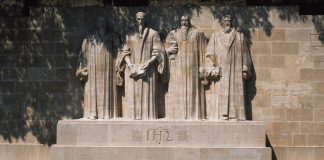
John Calvin
In The Legacy of John Calvin, David W. Hall divides leaders into two categories. Some predict the future, and others change it. Calvin, Hall said, is in the second category.

The theological masterpiece of the Reformation
Written in Latin by a 26-year-old Frenchman in less than a year, it is a book of 516 pages. Published in Switzerland and dedicated to the French king from whom he was fleeing, it is the most important theological work of the Reformation.

The truth in the 20th century, or the certainty of uncertainty
In 1961, London witnessed the premiere of John Osborne’s play Luther. Osborne (1929–1994) did not aim to present an accurate historical portrayal of Martin Luther’s life. Instead, the play served as a platform to express the ideas that consumed the restless mind of Osborne.

A friend of God
Even if there were a thousand people in a room with Pastor Jim Ayer, you wouldn't be able to miss him. He towered over most people by at least a head and always wore a black hat with a wide brim. I recognised him as the friendly host of a programme on Adventist World Radio, for which he travelled to the most unusual...

The outside world and the bubbles in our heads
Plato may have been one of the first to think this way, but in modern sociology it was Walter Lippmann who made history with the idea that people do not have access to reality in all its complexity, but operate on images of that reality that they construct for themselves.
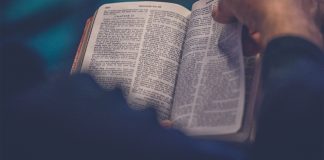
How (and why) to read through the Bible every year
More than a collection of information, beyond its role as a guide, the Bible is where we have a redemptive encounter with the One who holds the keys to eternal life.
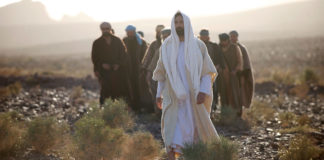
Jesus: The Word and His words
Jesus' principles can still shape a sincere discourse even though many centuries have passed since the moment they were displayed in His life.

The courage to believe
Who was Jesus really? While His historical existence is no longer questioned, many people believe that He was at best an exceptional personality of His time, a reformer whom His disciples later transformed into a deity. Why is neo-atheism concerned with promoting such a Jesus, and why is He nothing more than a new form of doubt?

The Jesus that defies definition
You have heard that it was said, ‘Eye for eye, and tooth for tooth.’ But I tell you, do not resist an evil person. If anyone slaps you on the right cheek, turn to them the other cheek also” (Matthew 5:38,39).