













How does the calming prayer help us manage volcanic emotions?
“I live in a high and holy place, but also with the one who is contrite and lowly in spirit, to revive the spirit of the lowly and to revive the heart of the contrite" (Isaiah 57:15).

All or nothing
By the middle of the 17th century, German Protestantism had long ceased to be a burning torch. Accepted by the nobility and the populace, it had become an ecclesiastical, secular, and politicised institution like all the others. In the night of alienation, God brought from the ashes the light of a new dawn.

Incurable faith
If we take an honest look around us and within ourselves, we discover that the gulf between the mentality of those who choose prayer over medical treatment and the essence of the Christian mindset is not as deep as it seems. But it remains a gulf nonetheless.
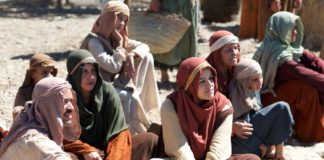
The stylistics of Jesus’s speech
Today's increasingly politically correct and very denotative way of transmitting messages of public interest tends to distort the reception of speeches that have rhetorical and expressive nuances. In this context, how do we evaluate the cryptic nature of Jesus's words?

The most important primary caregiver
According to attachment theory, originally formulated by John Bowlby and later refined by Mary Ainsworth, adults’ relational patterns are formed according to the model of the close relationship they formed in early childhood with their primary caregiver, who is usually the mother.

COVID-19 and the dilemma of evil
It is right for you to look for what you are looking for, but it is not where you are looking for. In the land of death, you seek a happy life: it is not there. How can life be happy somewhere where there is no life? (St. Augustine, Confessions)

The last days of Jesus in Bible prophecy
The story of Jesus's first coming to earth is remarkable, not only because it was foretold thousands of years in advance, but also because the prophesied details of His passion and death were exactly fulfilled.

Traveling with God: How we learn and grow on the journey
Have you ever travelled with someone you thought you really liked, only to see a different side of them as the trip progressed? People say travelling is a good way to determine whether someone is “the one” or not. How do they respond when things don’t go according to plan? In their sleep deprivation, will they become aggressive toward the flight attendants? How...

Living Biblically?
Many Christians say they take the Bible literally. They regularly spend time reading this Book they believe to be inspired by God and seek to understand how to apply it to their lives.

From heartache to hopeful
It’s not hard to misinterpret the Bible. I’ve done it, most people I know have done it and if you’ve read it enough, I’d bet you’ve done it too. It isn’t surprising then, that throughout history many have misinterpreted the Bible, especially when it comes to complex ideas like the end of the world and Jesus’ second coming.


The forgotten book
Almost 500 years have passed since the 1524 publication of the work that one prominent leader of the 16th-century Protestant Reformation, Andreas Karlstadt, wrote in defence of the Sabbath doctrine.[1] It was the first work on this subject written by a leader of the Reformation.

The greatest love
The word sacrifice is not really a pleasant word. When you hear it, you may think of weird archaic rituals involving blood and animals. You may think of giving up something you love or like to save money or to save your waistline. Sacrifice is not a word we use often, and it’s often used with negative associations. But in a strange twist, the action...
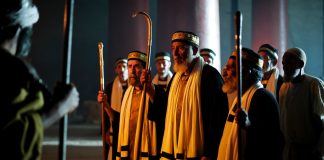
Jesus, the commandments, and legalism
Over the centuries, strong but artificial tensions have been created between the Gospel of Paul (proclaimed especially by Augustine and many Protestants) and the "legalism" of the biblical writers James, Peter, Jude, and so on, which Catholic and Orthodox theologians have usually defended. What is at stake in these tensions is the authority of God's commandments and thus the duty or obligation to...
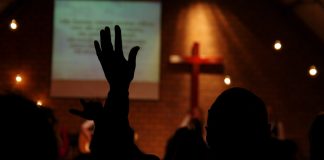
The rush for speaking in tongues
“The newest religious sect has started in Los Angeles. Meetings are held in a tumble-down shack on Azusa Street...and the devotees of the weird doctrine... work themselves into a state of mad excitement...They claim to have the ‘gift of tongues’ and to be able to understand the babel”.