







Growing Young
Justin Yang is the Senior Pastor of Atlanta Korean Seventh-day Adventist Church in Duluth, Georgia, United States. He was born in South Korea, but his family moved to America when he was a child, so that his father, who is also a pastor, could continue his education. Pastor Yang went to school in the US but returned to South Korea for his undergraduate...

Injustice and God: Is He the wrongdoer or the one wronged?
The concept of reward is one that encapsulates a world of joys, satisfactions, pleasant emotions, and accomplishments. It is usually correlated with what we do, what we say, who we are, and so on. We could say that it is an expression of our value in relation to the world. But any reward can be overshadowed by painful feelings when there is a...
I used to fear God
I have read the Parable of the Talents many times, and have understood it in different ways at different times in my life. During my last read, I came across a commentary concerning the man who was given only one talent, which he chose to bury. Author Ellen White writes: The Lord desires His people to reach the highest round of the ladder...

Christ in them
I notice people, and passionately collect their stories. My favourite stories include those small cracks that allow one to peek inside another soul, those moments when their voice is almost imperceptibly altered, the eyes light up for a reason I do not know, and their gestures are unexpected.
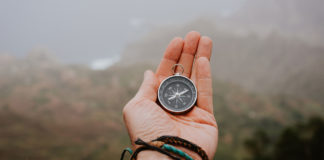
How authentic is my life?
When one pays attention to the finer details, any life story can be interesting. When you go into detail, any common or mediocre story that could have been summed up in only a few words, becomes a confession. I realise that my own story is no exception, although it has often seemed to me that I live a banal and predictable life.

How God heals a marriage that is lost
Kent Hansen kindly agreed to talk to us about the most painful episode of his life, the loss of his wife. Beyond the sadness, it is a discussion rich in emotion and lessons for us all.
COVID-19: Crisis prayer and the crisis of our prayers
I was descending from Omu Peak, in the Bucegi Mountains, with a few dozen young people. It had not been an ideal hike, and we were behind schedule. The forest made the darkness even thicker as it began to cover the mountain, and slowly, our minds as well.

COVID-19: Rehearsal for the big surprise
There has been a lot of speculation in the online environment about COVID-19 and the end of the world, but the connection between the two is more subtle than it first appears. It has been suggested that the pandemic is only the tip of the iceberg, that it is one of the seven last plagues of Revelation, or that it is the fourth...

Heaven won’t be boring. Here’s why.
Forget floating on clouds—discover the thrilling, purposeful eternity God has planned for you.
Happiness is under the shadow of closeness
The first few seconds are confusing, voices and blurred figures buzzing nearby, and it seems to me that some clumsy hands are trying to pull me out of this zigzag between sleep and wakefulness. I clearly hear a woman's voice announcing that I'm waking up and, before I'm completely out of this state of drowsiness, I realise I'm in intensive care.

Finding comfort in discomfort
It's been a few weeks since we moved house. After just two years in which we had managed to adapt, once again everything has changed: the environment that is closer to nature, the temperature, the housing, the placement of things in the house, the daily schedule, the children's school, the type of people we come into contact with, the type of activities, the...

Community, connection, church
Recently, my wife and I got hooked on a TV show. We’d wait in anticipation for the latest episode each week. The show was Old people’s home for 4-year-olds. The basic premise? Take a class of cheeky, energetic, curious four-year-olds (some of who lacked a filter) and have them spend a significant amount of time with the elderly residents of an aged-care facility.
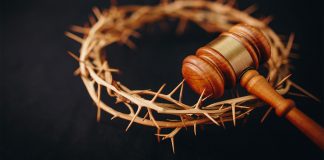
Vaccine against death
What would you do if someone denigrated you in public? You could deny the information, but there is no guarantee that you will be able to rehabilitate your image. If you leave things as they are, there is a risk that silence will be interpreted as guilt. If you go to court, the process might take a long time and it may not...
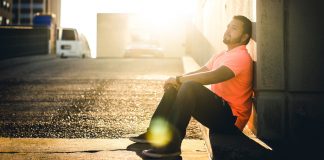
A year of waiting
For me, 2022 was the year of waiting—a word that managed to define our lives, thoughts and actions to an unexpected degree.

Are science and religion compatible?
In recent weeks, the results of a Fermilab scientific experiment have caused quite a stir in the scientific community. The experiment, which dealt with some of the fundamental particles of the universe, has the potential to change humanity’s understanding of modern science. As a result, it is also raising questions about what science is, and if it can be wrong.