



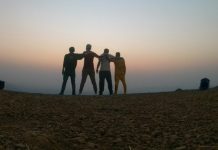









The young man who brought us the mirror
In the case of the well-known tension between the church and the younger generation, only one conclusion is possible. It’s not hard to figure out what we’re missing, it’s just hard to accept—on both sides.

Christ’s soldiers on the world’s front lines
“Prayer at the centre of our mission and mission at the centre of our prayer.”– Salvation Army catch-phrase

Antonyms will not exist forever
God is never the one to leave. He is the one who is abandoned. Even when Scripture describes Him as turning His face away, we understand that this is in fact the reluctant and painful recognition of man's decision to go beyond the point of no return in his relationship with God.

The tree that overshadowed the earth
"[Jesus] told them another parable: 'The kingdom of heaven is like a mustard seed, which a man took and planted in his field. Though it is the smallest of all seeds, yet when it grows, it is the largest of garden plants and becomes a tree, so that the birds come and perch in its branches.' He told them still another parable: 'The...

We are more than we can easily explain
Suppose I leave the window open then leave home. A stack of banknotes can be seen on the table through the open window. An individual walking down the street notices the opportunity, thinks for a while, but decides to move on. Why would a man who has the opportunity to steal decide not to?
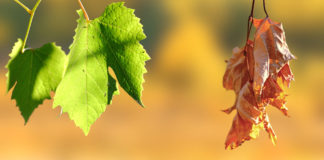
Life in the vicinity of death
One night while checking on his patients in a palliative care centre, the therapist risked asking a confusing question to a person whose universe had shrunk to the size of his sickbed: “What brought you joy today?” The answer was immediate: “Being alive.”

How can I know God as He is, rather than as I imagine Him to be?
To know God is an aspiration inherent in the rational being who recognises His existence.

How I came to believe
I was a pagan as a child. Not by choice, but as a consequence of lacking any access to the Word of God. In the 1980s Romania, catechizing an Orthodox child (whose parents were members of the Communist Party) was a highly unlikely event Pavlik Morozov’s myth, the hero-child that denounced his own father, generated caution.
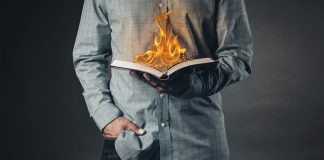
The Bible as a sign of offence
“‘The days are coming,’ declares the Sovereign Lord, ‘when I will send a famine through the land—not a famine of food or a thirst for water, but a famine of hearing the words of the Lord. People will stagger from sea to sea and wander from north to east, searching for the word of the Lord, but they will not find it’” (Amos...

COVID-19: The third signal
I thought to myself: Is there an alarm or is it an end of day signal?

The imperatives of absence
Contrary to one's initial impression, vigilance is not the main theme of Jesus' parables of "absence and expectation." Absence is central to these stories, because it is absence which enriches them, rather than impoverishing them. Absence is not a shortage, a gap, or a sign of non-existence—it is a catalyst.

The only stranger in Jerusalem
On the days of the death and resurrection of Jesus Christ, there were at least ten other events that would have disrupted and animated any editorial meeting. Within a very short space of time, unique events with historical implications took place, in different dimensions and in different areas.

COVID-19: What if we received bad news in a void?
What if there was no good news to give us confidence that we could get through the troubles facing us now? What if there was no good news to assure us that we are cherished, loved and supported, that we are not alone?
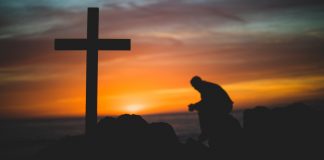
The miracle of the ordinary | Rediscovering transcendence in simplicity
In our desperate search for miraculous answers or confirmations, we often forget that the most profound miracles are hidden in the seemingly mundane details of our lives.