











“God is dead”. Any objections?
The tendency toward the total privatization of religious life is particularly strong today, especially in the new generation.

How authentic is my life?
When one pays attention to the finer details, any life story can be interesting. When you go into detail, any common or mediocre story that could have been summed up in only a few words, becomes a confession. I realise that my own story is no exception, although it has often seemed to me that I live a banal and predictable life.

Insomnia and God’s bird
Carolynn Yakush inherited her taste for the good life from her Czech grandparents, and her interest in faith from her mother and the Christian schools she went to. For many years, the desire for money and a life of luxury overshadowed her spiritual and religious concerns. One day, almost without thinking about it, she entered a church again, and was amazed at the...

What did I miss about God in my 20s?
I was twenty when I first became curious about God. I was fortunate to see His presence in the lives of my friends and longed for that same presence in my own life.

In search of lost meaning
Traditional communities are like rivers, while modern societies are like oceans, said Polish sociologist Zygmunt Bauman. Consider that a river—deeper or shallower, faster or slower—always has a direction, as traditional societies usually direct the lives of their members. The ocean is a different story.

COVID-19: What have we learned about ourselves?
Courage is not the opposite of fear, nor of caution. True courage is what you do right in the midst of fear.

Pocket apocalypse: The end of the world in the press
The image of an apocalypse generated by a microscopic coronavirus has been sketched more than once by the press in the past few weeks.

How do I learn to really enjoy life?
I don’t remember much about the moment. I remember its warmth, and the way it glowed with purpose and spirit. But the stage is blurry. The song which pulsed out from it is uncertain. I know it came from a good friend of mine, one whose spot-lit glory provoked in me no jealousy, no feeling of being left out.
The upside of religion getting marginalised
An administrative decision by a Catholic university in the United States is a good illustration of a major reason why Christian churches, with some exceptions, are rapidly losing their relevance in society.
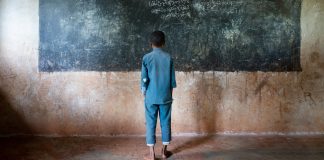
Norma Nashed | Poverty made her a mother to thousands of children
Norma Nashed has been running the Restore a Child organisation for more than two decades, helping 4,000 children in ten African countries.
COVID-19: The pandemic that transforms us into different people
In Europe, one in twenty people suffer from depression, and one in four will experience depression during their lifetime. In the United States, major depressive disorder affects about five percent of the population.
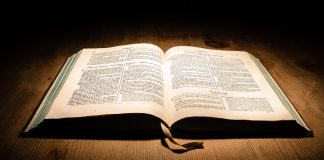
A Bible for everyone
Little Welsh girl Mary Jones anxiously walked the 40 kilometres. She couldn't wait to buy a Bible in her language, as she had been saving for it for more than six years. But when she reached the shop of Mr Charles, her pastor and teacher, she found with despair that all the Bibles were either sold or already spoken for.

Understanding suffering better
"And we know that in all things God works for the good of those who love Him" (Romans 8:28).

I believe in God even when He is silent…
I have always liked to participate in public worship and to practice some of the spiritual disciplines. I did not experience a stormy conversion. God revealed himself to me, instead, like “a gentle whisper” (1 Kings 19:12).
“The Harrowing of Hell” asks: Who was Jesus?
There is perhaps no historical figure who is more frequently the topic of debates than the figure of Jesus Christ. Prophet or Conman? Divine or Human? Martyr or Madman?